You may have heard of Robert T. Kiyosaki. He wrote several best selling books on money management and wealth creation, often referred to as the “Rich Dad – Poor Dad” series. The book that provided an overview of the basic structure for understanding his philosophy is known as the “Cash Flow Quadrant”. What follows presumes you have a fundamental understanding of the Cash Flow Quadrant (Ref. 1). If that is not the case, before going further, read this article: “Looking for Financial Freedom?”
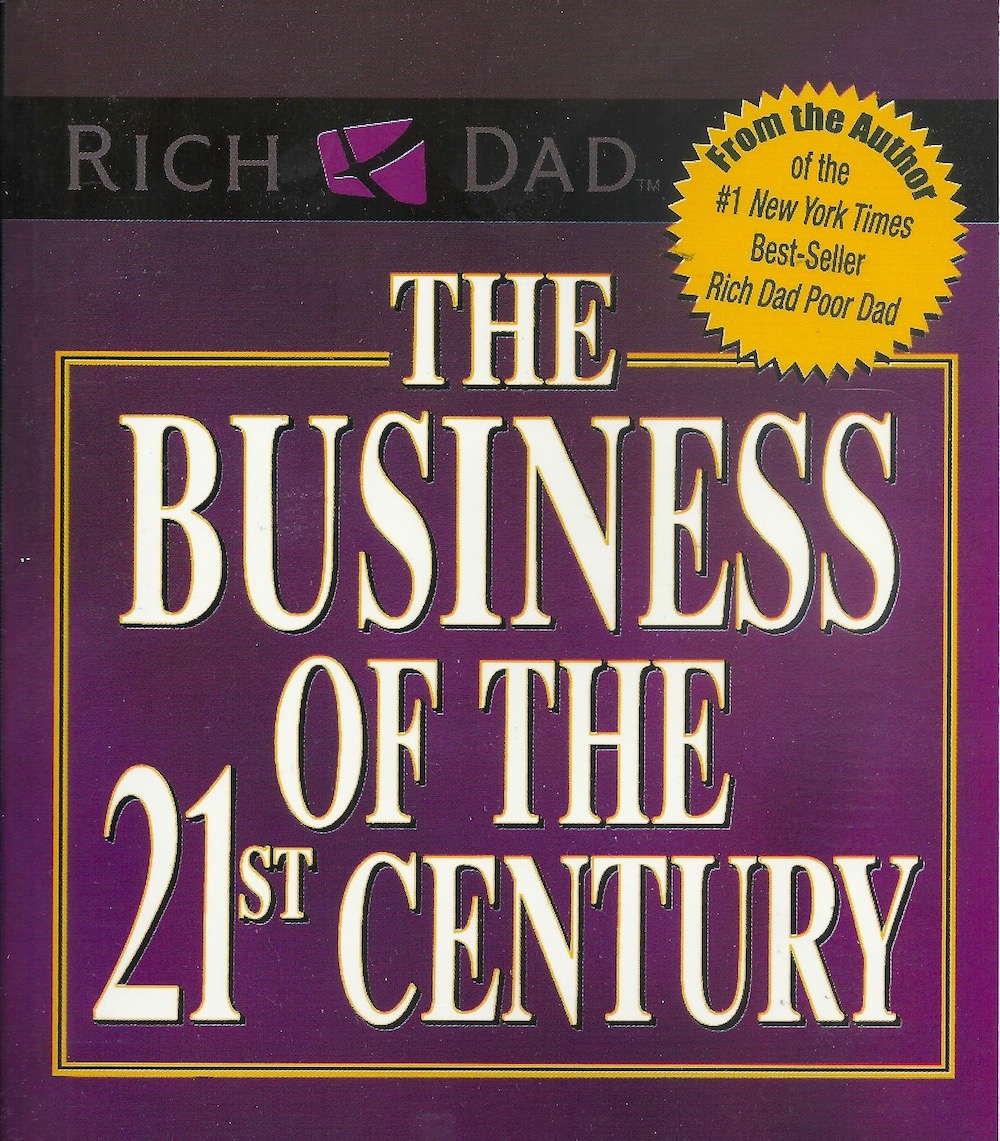
Kiyosaki spent the last several decades of the 20th Century building his wealth by establishing traditional businesses (B-Quadrant). He then went on to attain financial freedom by using the money generated from those businesses to invest in income-generating real estate (I-Quadrant). In 2010 he published a book entitled “The Business of the 21st Century” (Ref. 2). In that book he said that if he had to start from scratch and do it all over again, he would not establish old-style traditional businesses – but he would focus exclusively on this B-Quadrant business model to build his wealth to fund his I-Quadrant investments.
What is Wealth?
Wealth is not the same thing as money. Wealth is not measured by the size of income. Wealth is measured in time.
If all I have to my name is $1,000 in savings and checking combined, and my living expenses are $100 a day, then my wealth equals ten days. Wealth is the ability to survive so many number of days forward. Ask yourself, “If I stop working today, how long could I survive financially?” Your answer is equal to your wealth at this moment.
The truly wealthy can live for the rest of their lives, and the lives of their children, in a very opulent lifestyle if that is what they wish, without having to work for income again.
What is Rich?
And on a related topic, Kiyosaki had this to say about the concepts of “rich” and “poor.”
In the first decade of the 21st century, Forbes magazine defined “rich” as someone who earns in excess of $1 million per year (or just under $20,000 per week). And they defined “poor” as someone who earns less than $25,000 per year.
But even more important than the quantity of money you make is the quality of money you make. In other words, not just how much you make, but how you make it – where it comes from. There are actually four distinct sources of cash flow. Each is quite different from the other, and each defines and determines a very different lifestyle, regardless of the cash you earn.
These sources of income are described in Kiyosaki’s book Cash Flow Quadrant.
If You Aspire to be Wealthy and Rich…
If you aspire to be wealthy and rich, you need to be living in both the B – Business quadrant (Business Owner/Big Business) and the I – Investor quadrant at the same time. And there is no better business model for most people than that of network marketing to become a business owner.
“I came to appreciate this business as an outsider, and after I had already built my own wealth and established my own financial freedom.
“All the same, if I had to do it all over again today and start from scratch, rather than building an old-style business, I would start out by building a network marketing business.”
Robert T. Kiyosaki
One of the observations I would make is that, if you work at it and are diligent, network marketing on its own can make you rich. But it takes things beyond your network marketing business to make you truly wealthy as described above.
What does it take to become Financially Free?
We hear the phrase “It takes money to make money.” That is not true. Also, it does not take a good formal education.
If it doesn’t take money to make money, and it doesn’t take a formal education to learn how to become financially free, then what does it take? It takes a dream, a lot of determination, a willingness to learn quickly, and an understanding of which sector of the cash flow quadrant you’re operating in.
Network Marketing is Not About Selling Products or Earning Income!
A salesperson has a job. If you work behind the counter in a department store, you’re in the E-quadrant (Employee); if you’re in business for yourself, selling insurance or homes or jewelry, you’re in the S-Quadrant (Self-employed/Small Business). But either way, you have a job, and your job is to sell.
That is not going to build your wealth or your freedom.
In network marketing, the whole point is not to sell a product but to build a network, an army of people who are all representing the same product or service to share with others.
The goal is not for you or any other individual to sell a lot of product; it’s for a lot of people to:
- be their own best customer,
- sell and service a reasonable number of customers, and
- show a lot of other people how to do the same thing.
Network marketing is not about earning more income; it’s about building an asset!
What is an Asset?
Conceptually, an “asset” is something that represents value. However, the way an account thinks of an asset and the way an entrepreneur business owner thinks of an asset are different. And you must think like an entrepreneur and not as an accountant.
The accountant’s view is always from the perspective of “what is the value of things if we have to shut everything down right now?” And in the same vein a liability is something that requires you to pay money out when you shut down. So the accountant views the house you live in as an asset. That’s because if you die today, the house can be sold for a certain amount of money (say $350,000).
The problem with this view of the world is that in practical terms the liquidation scenario is not how we operate on an ongoing basis. The house we live in is only worth $350,000 when we sell it. But if we sell it we still have to live somewhere – another house that may cost us more. While we are living in the house, it has no value. In fact a person’s home has been described as a hole in the ground you pour money into. There is money need for maintenance, for upgrades, for electrical power, for heating and cooling, and the list goes on.
Your entrepreneur mind must view it differently. You have no intent of ever shutting down your business. (Nor ever moving out of your house to live on the street.) So liquidating everything is not a consideration. Your view of the world says that an asset is something that pays you money and a liability is something that costs you money. Your entrepreneur view of the house you live in is as a liability – because of all the money you have to pour into it every year.
Network Marketing is about Building Assets
Network marketing is not about earning more income; it’s about building an asset.
Actually it’s about building eight assets, all at the same time. Over time all these will pay you money.
Asset #1: A Real-World Business Education
If you are going to be successful in business, there are technical skills you need to learn that you probably did not learn in school.
For example, a critical one is the ability to get organized and set your own agenda. This is bigger than it might sound. People who enter the area of network marketing sometimes experience a type of culture shock, because they are used to being told what to do.
There are over a dozen other such skills that people must learn to run their business.
Asset #2: A Profitable Path of Personal Development
Network marketing gives you the opportunity to face your fears, deal with them, overcome them, and bring out the winner that you have living inside you.
Most people don’t have the ability to keep going, to handle disappointment and never lose sight of the vision of where they’re going. They simply haven’t been trained in that skill. But that’s critically important. That’s the real skill of someone who has mastered the B Quadrant.
Asset #3: A Circle of Friends Who Share Your Dreams and Values
You may have heard that your income tends to be about equal to the average income of the five friends you spend the most time with.
If you are considering building your own business, you need to be acutely aware of who you’re spending your time with and who your teachers are. It’s a crucial consideration.
Asset #4: The Power of Your Own Network
The richest people in the world build networks. Everyone else looks for work.
The power is not in the product; the power is in the network. If you want to become rich, the best strategy is to find a way to build a strong, viable, growing network.
That’s why network marketing is so brilliant. The companies that make up the network marketing industry now offer millions of people just like yourself the opportunity to build their own network rather than spending their lives working for someone else’s network.
Asset #5: A Duplicatable, Fully Scalable Business
If you are an amazing, uniquely skilled, superstar salesperson, then you can do great in sales – and chances are good, you will do lousy in network marketing.
The key to success in sales is what you can do.
The key to success in network marketing is what you can duplicate.
What gives your network marketing business its real power is not what you can do yourself; it’s what you can duplicate across your team. You want to build your business in a way that virtually anyone else can readily copy. And specifically, you want all your team members to copy it.
Asset #6: Incomparable Leadership Skills
While many people repeat the same overused words and phrases about dreams, more time with family, and freedom, few people inspire enough trust and inspiration to cause others to follow those words and phrases.
It is not a matter of memorizing and repeating the right words; it’s developing the ability to speak directly to other people’s spirits. This is a quality that goes beyond words. This is genuine leadership.
The truth is that having the capacity to lead is a skill set so valuable, so powerful, and so rare that it is genuinely an asset unto itself. Leadership is what builds great businesses.
Asset #7: Moving Toward Financial Freedom
A Mechanism for Genuine Wealth Creation
One of the most profound values of a network marketing business – and it is one that the great majority of people who look at this business do not quite grasp – is that it is an engine of personal wealth creation.
Robert. T. Kiyosaki, the wealth creation guru, recommends a four-step path to financial freedom:
- Build a business
- Reinvest in your business
- Invest in real estate
- Let your assets buy luxuries
In this context, steps 1 and 2 involve your network marketing business.
Asset #8: Big Dreams and the Capacity to Live Them
One of the most valuable things about network marketing companies is that they stress the importance of going for your dreams. They don’t want you to just “have” dreams; they want you to “live” those dreams! What’s more, they encourage you to dream big.
What most people fail to realize (or perhaps just don’t believe) is that the size of your dreams, psychologically, limits the size of your plans, which limits the size of your actions, which limits the size of your accomplishments.
It is the striving, learning, and doing your best to develop your personal power to be able to afford the big house (or whatever other component of your dream) and who you become in the process that are important.
The huge dream is the key starting point.
A Business Where Women Excel
During my 50 year systems career, my observation has been that the women were far more successful at developing rapport and a significant level of trust with people than men were. And that showed in the level of detail and understanding of the issues that they were able to uncover during their interactions on many projects I managed.
Why is this important? Because network marketers are in the human relationships business not the products business! And in my (admittedly biased) opinion, women are far better at developing and maintaining human relationships than their male counterparts.
Network marketing is not about making sales; it is a business that revolves around making connections. The actual day-to-day work of building a network is less like carving out a sales territory than it is like building a community.
And the supporting, coaching, and nurturing relationship of a network marketing sponsor to her growing network of apprentice networkers is the kind of relationship and interaction in which women do very well.
Understand this: Network marketing is a business model where women excel.
Bottom Line…
Network Marketing is the business model of the future. The Industrial Age with its need for huge capital investment and central control is dead.
Low Cost of Entry
In the United States, the average investment to start a small business pre-pandemic was about US$55,000. And over 50% of those failed in the first 12 months.
In most network marketing companies you can start for under US$500.
So relative to traditional business, there is a VERY low cost of entry to start your business.
Egalitarian Business
Network marketing is an equal opportunity business model. There is no discrimination with respect to a person’s gender, ethnicity, religious beliefs, sexual orientation, age or any other intrinsic characteristic of a person. It is open to anyone who has drive, determination and perseverance.
There is little of the “office politics” generally found in traditional business organizations. This is because there is no competition to get promotions and move up in the hierarchy. You get success by helping those in your organization get success.
Earn While You Learn
Network marketing is a business where you “earn while you learn.” This is CRITICAL. You do not have to learn it all before you start!
In network marketing, the training is more than theory; it’s experiential – learning by actually doing.
Huge Leverage Potential
The concept of LEVERAGE can be described simply as “small amount in — large amount out”. In this case you are leveraging your TIME by building a team of distributors who are all independently investing THEIR time and you are a beneficiary of those extra hours.
This is beneficial for you as a distributor in that you can realize the advantages of exponential leverage. The more distributors in the various levels of your distributor team, the more total sales will be made and the more commission you can earn.
What does it take to make it in network marketing?
If you can answer ‘yes’ to all of these questions you have a good chance of succeeding.
- Are you able to carry on intelligent conversations?
- Are you willing to put in huge amounts of personal effort? And initially, large effort for small returns?
- Are you honest? Trustworthy? Generous with your time and expertise?
- Do you feel emotionally rewarded by helping others?
- Are you diligent? Are you willing to keep going in the face of adversity?
- Are you prepared to learn new skills (e.g., business skills, communications skills)? new ways of thinking (e.g., personal initiative rather than waiting to be told what to do, business and project planning)?
- Are you willing to endure the discomfort of trying new things, and failing, and trying again until you master them?
Network Marketing is The Business of the 21st Century!
References:
Ref 1: Kiyosaki, Robert T., Rich Dad’s Cashflow Quadrant Guide to Financial Freedom. Scottsdale, AZ: Plata Publishing, LLC 2011
Ref 2: Kiyosaki, Robert T.; J. Flemming; K. Kiyosaki, The Business of the 21st Century. Lake Dallas, TX: DREAMBUILDERS 2010
#entrepreneurship #wealthcreation #business