In the ever-evolving landscape of health and wellness, a 2023 McKinsey study has shed light on a significant trend among US consumers: the increasing preference for proven supplements over organic ones. This shift underscores a broader narrative in the health-conscious community, where efficacy and evidence-based benefits are becoming paramount.
The study’s findings reveal that consumers are becoming more discerning in their choices, prioritizing supplements that offer tangible health benefits backed by scientific research. This trend is a departure from the previous inclination towards organic supplements, which was driven by a desire for natural and unprocessed products. While the appeal of organic items remains, the emphasis has shifted towards products that can demonstrate a clear impact on health and well-being.
One of the key factors driving this change is the growing body of research on the health benefits of certain supplements. For instance, omega-3 fatty acids, found in fish oil, have been extensively studied for their role in reducing inflammation, lowering blood pressure, and improving heart health. Similarly, probiotics, which are live microorganisms, have been shown to support gut health and immune function. These proven benefits resonate with consumers who are looking for reliable ways to enhance their health.
Moreover, the study suggests that consumers are increasingly seeking out products with transparent labeling and evidence of clinical trials. This demand for transparency and proof of efficacy reflects a broader trend towards informed decision-making in health and wellness.
In conclusion, the McKinsey study highlights a pivotal shift in consumer behavior, with a clear preference for supplements that offer proven health benefits. As the market continues to evolve, it will be interesting to see how supplement manufacturers respond to this demand for evidence-based products. This trend not only speaks to the changing priorities of health-conscious consumers but also underscores the importance of scientific research in guiding these choices.
When I was growing up in the 50s and 60s it was common that we would have an occasional Sunday meal with grandparents on either mom’s or dad’s side of the family. Sometimes, on special occasions, both sides were represented at the same event.
During these gatherings the adults often talked among themselves about the goings-on in the town. Usually those conversations just flowed past me because I did not know the people involved. Occasionally there was mention of so and so getting cancer. The thing is that this was not the rare occurrence you might expect. The way the adults talked about it, this was a major concern because of the apparently large numbers of people contracting the disease in our area, just West of Ottawa.
The fear was warranted. At that time, a diagnosis of cancer was a death sentence. There were no effective treatments. The doctors used antibiotics to fight the infections that appeared routinely because the patient’s immune system was weakened. Toward the end they provided strong narcotics to deal with the pain of organs shutting down. But there was virtually nothing that was effective against the cancer itself. Later, chemotherapy was employed to attack the tumors – but that often was perceived as worse than the disease itself.
Certainly smoking contributed to the cancer rate (at the time loudly denied by the tobacco companies). However, smoking was a common pastime across the country. So that did not account for the much higher cancer rate apparent in our area.
If you asked anyone in town why so many people were getting cancer, the uniform answer was that we were downwind of the Chalk River nuclear research site. But the government told us it was safe and there had been no leaks at any time. Based on my rudimentary research years later, I concluded that the cancer rate in the Ottawa Valley downwind of the Chalk River facility was higher than anywhere else in the country. In the face of government denials, we were simply left with our own suspicions.
Regardless, this increasingly high incidence of what, at the time, was a fatal chronic disease had a lasting impact on me. And it seemed, as time passed, that the incidence of a variety of other chronic diseases was also on the rise. However, I concluded that there did not appear to be much I could do about it. So I pushed the concern into the background.
A few years ago I got involved with at business that seemed to have a positive impact on a variety of chronic conditions and other health challenges. That provided the opportunity for me to channel this passion to help people who were fighting chronic disease. It is rewarding to make a difference in people’s lives.
So why am I writing about this now?
I recently read a post that contained this: “President Carter, the 39th President of the United States, once personally saved Ottawa from a Nuclear Disaster, at risk to his own life, suffering from the effects of radiation poisoning all his life. Canada had a Nuclear Accident in the 50s and asked the US for help. Lieutenant Jimmy Carter lead a team out of New York.”
Despite government assurances at the time, we now have evidence that there was indeed a nuclear accident at Chalk River (Ref. 1 and Ref.2). Who knows – there may have been others.
It is interesting how the human mind works. Snippets of conversation around a dining room table. Stories of friends and relatives becoming ill at rates that were historically unusual. All that percolating in the subconscious over years. And then, an opportunity to have perhaps a positive impact.
Result: a personal mission.
My father died of cancer. My aunt, my mother’s sister, died of cancer. Her husband died of cancer. My brother died far too soon of leukemia, a form of cancer. Other family members have experienced a variety of different chronic diseases.
My doctor told me that every male over 50 had prostate cancer! Well that got my attention. This was during a discussion that occurred at the conclusion of a general physical when I was in my late 50s. The process for the physical included a variety of blood tests and a physical examination.
He then went on to say that generally it progressed at such a slow rate that it was not a problem and would have no impact on longevity. He said that what they were worried about was catching a prostate cancer that was progressing very quickly, since that could cause serious issues. [After some personal research it would appear that he was exaggerating somewhat. But that startling stark statement did achieve his objective of getting me to focus intently on what he was saying!]
The prostate gland is found below the bladder, with the urethra passing through it. When doctors conduct a physical (rectal) examination, one of the things they are looking for is an enlarged prostate which could indicate a problem.
He told me about the PSA test. The Prostate Specific Antigen (PSA) test is a blood test that measures the level of PSA in a man’s blood. PSA is a protein produced by cells in the prostate gland, and it is a marker for various prostate conditions, including prostate cancer. Elevated levels of PSA in the blood may indicate the presence of cancer or other prostate conditions. He told me that if the result was above a certain threshold level there was a high probability that there was a cancer evolving and that action would need to be taken, possibly surgery.
When I was 64 he ordered the PSA test despite no problems indicated by the physical examination. At that point I had been on a glutathione accelerator for about two years. Later, when I asked about the results, he said there was “no problem.”
Well being the analytical person that I am, I conducted some personal research. The unit of measure for PSA tests is nanograms per milliliter (ng/mL). The normal range for PSA levels can vary depending on a man’s age, ethnicity, and other factors.
Separate research indicated readings in the 4–10 ng/mL range represents a 20 to 30 percent increased risk of cancer, 10–20 ng/mL represents a 50 to 75 percent increased risk of cancer, and anything over 20 ng/mL represents a 90 percent probability of the risk of prostate cancer developing. I found further that what was considered “normal” levels increased with age. Someone in the 60-69 age category (like me at the time) should not worry much if they got a reading of about 4 ng/mL.
It turns out that:
For men under age 50: A PSA level of 1–2.5 ng/mL is considered normal.
For men ages 50 to 59: A PSA level of 1–3.5 ng/mL is considered normal.
For men ages 60 to 69: A PSA level of 1–4.5 ng/mL is considered normal.
For men over age 70: A PSA level of 1–6.5 ng/mL is considered normal.
These normal ranges for PSA levels are based on general guidelines from the American Urological Association (AUA).
Some time later I pressed my doctor to tell me what the actual reading was. He looked up the test and told me the result was ZERO! Remember, at that point I was considerably older than the age 50 my doctor mentioned originally.
I don’t know what you concluded from this set of facts. But I know what my conclusion was! And on that basis, I will be taking large doses of glutathione accelerators for the rest of my life.
Seven years later I asked my doctor to run the PSA test again to see what had transpired. At that time I was now in my 70s and, due to my age, I had doubled the glutathione accelerators I was already taking. For my current age, normal readings are considered to be anything in the 1–6.5 range. My reading was still in the ZERO range! (For those who want details, the actual reading was 0.15 ng/mL.)
p.s. To find out what I used to elevate glutathione levels, go to the Contact John menu item and send me a message.
Some time ago I wrote an article about wound healing in the context of a surgical procedure (Are You Facing Surgery?). This time I’m going to tell you about something that happened to me that drove the message home very clearly.
Day +0
It was Friday, October 23, 2020 late in the afternoon. I was walking with my daughter across a parking lot toward a grocery store. I went to step up onto the walk in front to the store but didn’t raise my foot quite high enough. My toe caught on the curb and I tripped. My forward motion meant that my centre of mass was well in front of my feet, so I was about to fall on my face.
Fortunately (?) there was a concrete pillar just in front of me, so I put my hands out to the pillar to break my fall. That worked. Unfortunately, my head maintained its forward momentum and came in resounding contact with the corner of the pillar. I put my hand up to the point of impact on my forehead and it came away quite bloody. I tried to use a few facial tissues to staunch the flow but to no avail. Head wounds tend to bleed heavily as a matter or course. Add to that the blood thinner I was taking and things got messy very quickly.
My daughter asked a store staff person for some paper towels to use as a pressure bandage. Fortunately in her younger years she was a lifeguard and had extensive training in rescue and first aid. (She won several competitions as well.) When I asked if we could just put a band-aid on it and get on with things she told me no, the cut was too deep. (What she told me the next day was that she could see the scull bone! But she didn’t want to upset me so kept quiet at the time.)
She asked the same helpful staff person to get a chair for me to sit on. Then she proceeded to call Emergency Services and asked for a Paramedic unit to attend. When they arrived, first they put on their Covid protective equipment and then examined me. Apparently standard protocol for someone over 65 with a head injury is immediately to apply a neck brace. (I’m over 70.) Then they applied a pressure bandage. But because of the position of the wound on my forehead, they had to wrap my head to hold it in place. Then off to the Emergency Room at a local hospital.
I won’t go into all that happened during the six hours at the hospital. (I will tell you that Covid protocols mean everything takes longer.) The doctor who treated me had to apply 4 dissolving stitches deep in the wound and 8 regular stitches on the surface. She told me that due to gravity some of the excess blood in the wound area would drift down my face. I was to go to my regular doctor to get the stitches removed in seven days. The nurse later applied some antiseptic ointment and a bandage over the wound. They sent me on my way about midnight.
I recalled the wound healing study (peer reviewed and published in 2015) that demonstrated several benefits for wound healing by elevating glutathione levels. Because of my age I was already taking multiple doses of glutathione accelerators (Xxxxxxxxxx, XxxXxx, and XxxXXX). So as soon as I got home I started a program of increasing the amounts by 50% with the intent of continuing that for at least a couple of weeks.
Day +2
I decided to leave everything alone for a day. On the second day after the injury I took off the bandage so I could have a shower, clean the wound, apply some antiseptic ointment and put on another clean bandage.
There was still dried blood in my hair. And recalling the doctor’s warning about the blood drifting downward to my face, I can now positively confirm that my eye is part of my face. That’s ugly!
Given my age, I expected that I would have a very nasty “zipper” scar on my forehead. But the reports in the wound healing study gave me some hope for a better outcome.
Day +7
Managed to get an appointment with my doctor to have the surface stitches removed a week after the injury.
Most of the blood around my eye had dissipated.
The wound itself was looking better than I expected. But I still anticipated that evidence of the stitching job would be visible.
Day +14
Clearly the wound healing study has been validated in this human. The scar will always be there. But it looks like what I might expect if a 12 year old had a similar injury. But I am in my early 70s!
The range of benefits delivered by elevated glutathione levels continues to empress!
Update: Day +180
As noted earlier, for the two week period following the injury I increased my intake of glutathione accelerators by about 50%. Then I reverted to pre-injury levels. However, you should note that my usual level is over three times standard doses! This is due to my age (early 70s). Natural glutathione production drops as we age. Most people in their 30s and 40s need some level of supplementation. Those over 60 need even more.
When glutathione levels are raised in the body a wide variety of the body’s systems are impacted. Some of these improvements may happen within minutes, others over several hours, others over days or weeks. Whenever I recommend a glutathione accelerator, I ask the person to undertake a self-evaluation exercise to track the improvements they notice over time. (Ten criteria, self-evaluation, baseline assessment before they start, and then a fresh evaluation every week over a 12 week period.) What we have observed is that for middle-age people (those in their 40s and 50s) who have no significant health challenges, over 90% of them record noticeable benefits within three months (90 days). People with health challenges tend to notice improvements sooner.
So I thought it would be useful to track the progress of the healing of my wound over time as well. Here is the final photo taken six months after the injury.
Over the course of taking progress photos weekly for the first three months, I observed that the wound images were impacted by a couple of factors in addition to the healing itself. One was the characteristics of the lighting when the photo was taken. So I tried to take the photos in a fairly consistent setting. (Saturday late mornings, diffuse natural light coming in a North facing window, supplemented by a ceiling light fixture with CF bulbs. The natural light was impacted on different days by current weather conditions.)
The other thing I noticed at other times was that the redness of the wound would be impacted by my level of physical activity. Immediately following some of my workout routines the redness was more pronounced due to increased blood flow and temporarily higher blood pressure. I think this is to be expected.
Finally, over time the visible width of he scar seemed to diminish, but very slowly. The scar will never disappear. But given the original condition of the wound, I am both surprised and pleased with the impact that elevated glutathione levels had on the wound.
As
most people know, infections caused by a bacterium are different from
those caused by a virus. Bacteria are living organisms that can grow
and reproduce.
Bacterial
infections can be countered by a range of antibiotics. But lately we
have begun to see some bacteria evolving
to become resistant to antibiotics. Antibiotics have no impact on a
virus.
A virus is a
microorganism that is smaller than a bacterium and
it
cannot grow or reproduce apart from a living cell. A
virus is not really alive. A virus particle is nothing but a fragment
of DNA in a protective coat. The virus comes in contact with a cell,
attaches itself to the cell wall and injects its DNA (and perhaps a
few enzymes) into the cell. The DNA uses the machinery inside the
living cell to reproduce new virus particles.
The Immune System
Viral and bacterial infections are by far the most common causes
of illness for most people. They cause things like colds, influenza,
measles, mumps, malaria, AIDS and so on. The job of your immune
system is to protect your body from these infections. The immune
system protects you in three different ways:
It creates a barrier that prevents bacteria and viruses from entering your body.
If a bacteria or virus does get into the body, the immune system tries to detect and eliminate it before it can make itself at home and reproduce.
If the bacteria or virus is able to reproduce and start causing problems, your immune system is in charge of eliminating it.
There are many diseases that, if you catch them once, you will
never catch again. Measles is a good example. What happens with these
diseases is that they make it into your body and start reproducing.
The immune system gears up to eliminate them. It produces antibodies
designed to eliminate the specific disease.
A vaccine is a weakened form of a disease. It is either a killed form of the disease, or it is a similar but less virulent strain. Once inside your body your immune system mounts the same defence as it would for the real thing, but because the disease is different or weaker you get few or no symptoms of the disease. Later, when the real disease invades your body, your body is able to eliminate it immediately because the antibodies are already there.
In the absence of a vaccine administered in advance, the body is largely dependent on the strength of its immune system to fight off an initial viral attack. There is nothing similar to an antibiotic to help the way there is for a bacterial infection.
Key Health Resilience Indicator
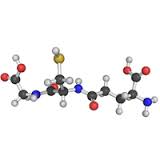
Glutathione is a tripeptide produced on demand in each cell in the body. Glutathione levels tend to be lower in the elderly and in those suffering health challenges. In these trying times, this is a significant fact.
Glutathione is necessary for the proper functioning of the immune
system. If glutathione levels are low, the body may be sluggish in
trying to defend itself against a bacterial or viral attack.
Glutathione is key to keeping you healthy overall. Not only is glutathione vital for the immune system, it plays a variety of other important roles in the body as well. (Refer to the article Why Does Your Health Depend on Glutathione). They include:
Master antioxidant in each cell
Only antioxidant that can recycle itself
Helps recycle certain other antioxidants
Primary synthesizing agent for other antioxidants
Critical for the production of ATP to provide energy to each cell
Major synthesizing agent to allow proteins to be used by the body
Major anti-inflammatory in each cell
Master detoxifier of chemical toxins in each cell
Primary chelator of heavy metals, removing them from the body
Transforms hemoglobin into its reduced state, enabling it to carry oxygen and transport that to the cells
Major protector of mitochondrial DNA against radiation damage
Enhances the body’s immune system
Enhances the body’s ability to heal wounds
Lowers “bad cholesterol” by lowering LDL, Lp(a) and oxidised lipid concentrations
The level of glutathione is a key indicator of the body’s resilience against health threats. Raising blood serum glutathione levels is helpful; but what is critical is raising intracellular glutathione levels, particularly in the organs.