According to Autism Canada, “Autism Spectrum Disorder, or
autism, is a neurodevelopmental disorder that impacts brain
development causing most individuals to experience communication
problems, difficulty with social interactions and a tendency to
repeat specific patterns of behaviour. There is also a markedly
restricted repertoire of activities and interests.”
Rising Incidence of Autism is Alarming
More children than ever before are being diagnosed with ASD. It is
unclear how much of this increase is due to a broader definition of
ASD and better efforts in diagnosis. However, a true increase in the
number of people with an ASD cannot be ruled out. The increase in ASD
diagnosis is likely due to a combination of these factors.
According to the U.S. Centres for Disease Control (Ref 1), the
incidence of ASD was 1 in 59 children in 2014. This estimate is
roughly 30% higher than the estimate for 2008 (1 in 88), roughly 60%
higher than the estimate for 2006 (1 in 110), and roughly 120% higher
than the estimates for 2002 and 2000 (1 in 150). There is no sign
that this worsening trend is slowing.
ASD Characteristics
As its name implies, individuals with ASD may exhibit a spectrum
of challenging behaviours.
Individuals with severe autism conditions may have serious
cognitive disability, sensory problems and symptoms of extremely
repetitive and unusual behaviour. This can include tantrums,
self-injury, defensiveness and aggression. Without appropriate
intervention, these symptoms may be very persistent and difficult to
change. Living or working with a person with severe autism can be
very challenging, requiring tremendous patience and understanding of
the condition.
Individuals with mild autism conditions, however, may seem more
like they have personality differences, making it challenging to form
relationships.
The primary symptoms of autism include problems with communication
and social interaction, as well as repetitive interests and
activities.
Various Treatment Options
As one might imagine, with such a wide variety of factors like
number and particular kinds of symptoms, severity (mild to severe),
age, levels of functioning and challenges with social interactions,
there is a wide variety of treatment options.
Approaches vary from intensive behaviour therapy, to education for both parents and children, to administration of pharmaceuticals (e.g., to suppress aggressive behaviour), to diet changes, to consumption of dietary supplements that address nutrient deficiencies. The options available to parents of an ASD child can be daunting. Autism Canada has some useful information about the evolving options. (Ref 2)
The basic problem is that, as with most modern chronic disease,
treatments tend to address observed symptoms rather than trying to
tackle underlying causes.
What Causes Autism?
Over the years there has been much research and speculation about
the cause of ASD. There is even the possibility that, given the range
of symptoms, there may be multiple different causes.
Some of this speculation has received sensational reporting in the
news media. Who has not heard the claim by many parents that certain
vaccines administered to young children provoked the development of
ASD? This story has seen its ups and downs, involving emotional
claims by parents and condescending reassurances from pharmaceutical
companies. (I haven’t seen a really good response to the parents’
question of “why on earth would a pharmaceutical company include
toxic mercury in a preserving agent for a vaccine directed at very
young children, since its only function seems to be to save the
company money by extending the shelf life of the vaccine?”) On the
other hand, apparently valid studies have shown no correlation
between vaccines and incidence of ASD.
But some relevant analysis seems to shed light, not just on the
cause of ASD but also on a possible cause of a variety of other
neurological disorders that have seen increasing occurrence trends in
recent decades. Although this may be new to many people, this is not
new research. The relevant science and analysis is well laid out in a
report entitled “Environmental contamination and autism: Special
report from UPHE”. UPHE is the Utah Physicians for a Healthy
Environment and the report was published in January of 2015 (Ref.
3) I encourage you to read the entire report.
In addition, on Jan, 29, 2015, six physicians with expertise on
how air pollution affects the brain gave a 75 minute presentation on
the latest research on this critical public health topic. (Ref. 4) On
that page is a link to the audio of the presentation and a summary of
the highlights. For those with specific interest, I recommend it.
Quoting from the report:
In early 2014 leading
scientists in pediatrics and public health warned of a “silent
pandemic,” of brain disorders citing strong evidence that “children
worldwide are being exposed to unrecognized toxic chemicals that are
silently eroding intelligence, disrupting behaviors, truncating
future achievements and damaging societies.”
These toxins — heavy metals, fluoride, chemicals like PCBs,
toluene, solvents, flame retardants, BPA, phalates, pesticides, and
PAHs (polycyclic aromatic hydrocarbons) — are found in the air you
breathe, the food you eat, the water you drink, and the grass your
kids play soccer on. Dramatically escalating rates of autism are
part of this “silent pandemic.” Autism rates have climbed another
30% just since the last survey of two years ago, with Utah having the
second highest rates of autism in the country, double the national
average. As of 2012, one in every 32 Utah boys had autism. This
“silent pandemic” warning should be a real wake up call for Utah
physicians and policy makers.
Evidence is mounting that autism is likely caused by
environmental exposures in genetically susceptible individuals.
Supporting an environmental/genetic tag team are other studies
showing autistic children and their mothers have a high rate of a
genetic deficiency in the production of glutathione, an antioxidant
and the body’s primary means of detoxifying heavy metals. High
levels of toxic metals in children are strongly correlated with the
severity of autism. Low levels of glutathione, coupled with high
production of homocysteine, increase the chance of a mother having an
autistic child to one in three. That autism is four to five times
more common among boys than girls is likely related to a defect in
the single male X chromosome contributing to antioxidant deficiency.
But there is no such thing as a genetic disease epidemic because
genes don’t change that quickly, so the alarming rise in autism
must be the result of increased environmental exposures that exploit
these genetic defects.
While numerous environmental exposures have been implicated,
including pharmaceuticals like anti-depressants, in the last few
years a growing body of epidemiological studies have been published
linking autism to air pollution, including a highly regarded one from
the Harvard School of Public Health just last month that showed a
strong correlation between prenatal air pollution, especially in the
third trimester, and autism.
Enhanced GSH Levels as a Key Countermeasure
If we look at the highlights:
- heavy metal and toxic chemical concentrations in the mother during pregnancy,
- heavy metal and toxic chemical concentrations in the ASD child,
- co-occurring conditions (Ref 5) that correlate to low glutathione levels, and
- oxidative stress as a common theme across the board
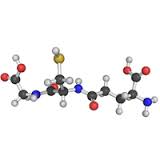
it becomes obvious that glutathione (GSH) is a critical factor.
If we review the various roles that glutathione plays in your body (refer to Why Does Your Health Depend on Glutathione) we can see a possible strategy. The major threat factors identified in the UPHE analysis are chemical toxins, heavy metals, oxidative stress and inflammation.
Glutathione:
-
is the body’s master detoxifier, removing chemical toxins
from the body,
-
chelates a variety of heavy metals out of the body,
-
is the body’s master antioxidant, neutralizing free
radicals and thereby reducing oxidative stress, and
-
reduces cellular inflammation.
The countermeasures seem obvious. Increase the body’s
intracellular glutathione levels.
Possible Actions to Take
If we assume that the analysis published by UPHE is valid, there
are a few things that you could do to protect against neurological
harm, both for your baby and for yourself:
- If you are pregnant or considering pregnancy, take action immediately to increase your intracellular glutathione levels at least until you stop breastfeeding.
- If you are an adult, understand that this harmful pollution is also a risk to your health. Take action to increase your intracellular glutathione levels on an ongoing basis.
- If you have a new baby or young child, have their glutathione levels checked periodically. And if indicated, take action to increase their intracellular glutathione levels. Or consider doing this anyway as a general preventive measure.
- If you are an adult with ASD, your body is no doubt in a state of oxidative stress. Take action to increase your intracellular glutathione levels on an ongoing basis.
- Finally, get behind any initiative that will get governments to severely reduce industrial air pollution worldwide. It’s either that or get used to the idea of every individual, including young children, wearing a functional Darth Vader mask to help keep the toxic pollution out of their bodies.
References
Reference 1: https://www.cdc.gov/ncbddd/autism/data.html
Reference 2: https://autismcanada.org/living-with-autism/treatments/
Reference 3: http://uphe.org/air-pollution-health/the-brain/environmental-contamination-and-autism-special-report-from-uphe/ January 2015
Reference 4: http://uphe.org/air-pollution-health/the-brain/ January 2015
Reference 5: https://autismcanada.org/about-autism/comorbid-conditions/
#chronicdisease #autism #glutathione