
My doctor told me that every male over 50 had prostate cancer! Well that got my attention. This was during a discussion that occurred at the conclusion of a general physical when I was in my late 50s. The process for the physical included a variety of blood tests and a physical examination.
He then went on to say that generally it progressed at such a slow rate that it was not a problem and would have no impact on longevity. He said that what they were worried about was catching a prostate cancer that was progressing very quickly, since that could cause serious issues. [After some personal research it would appear that he was exaggerating somewhat. But that startling stark statement did achieve his objective of getting me to focus intently on what he was saying!]
The prostate gland is found below the bladder, with the urethra passing through it. When doctors conduct a physical (rectal) examination, one of the things they are looking for is an enlarged prostate which could indicate a problem.
He told me about the PSA test. The Prostate Specific Antigen (PSA) test is a blood test that measures the level of PSA in a man’s blood. PSA is a protein produced by cells in the prostate gland, and it is a marker for various prostate conditions, including prostate cancer. Elevated levels of PSA in the blood may indicate the presence of cancer or other prostate conditions. He told me that if the result was above a certain threshold level there was a high probability that there was a cancer evolving and that action would need to be taken, possibly surgery.
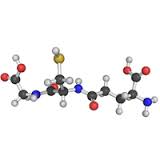
When I was 64 he ordered the PSA test despite no problems indicated by the physical examination. At that point I had been on a glutathione accelerator for about two years. Later, when I asked about the results, he said there was “no problem.”
Well being the analytical person that I am, I conducted some personal research. The unit of measure for PSA tests is nanograms per milliliter (ng/mL). The normal range for PSA levels can vary depending on a man’s age, ethnicity, and other factors.
Separate research indicated readings in the 4–10 ng/mL range represents a 20 to 30 percent increased risk of cancer, 10–20 ng/mL represents a 50 to 75 percent increased risk of cancer, and anything over 20 ng/mL represents a 90 percent probability of the risk of prostate cancer developing. I found further that what was considered “normal” levels increased with age. Someone in the 60-69 age category (like me at the time) should not worry much if they got a reading of about 4 ng/mL.
It turns out that:
- For men under age 50: A PSA level of 1–2.5 ng/mL is considered normal.
- For men ages 50 to 59: A PSA level of 1–3.5 ng/mL is considered normal.
- For men ages 60 to 69: A PSA level of 1–4.5 ng/mL is considered normal.
- For men over age 70: A PSA level of 1–6.5 ng/mL is considered normal.
These normal ranges for PSA levels are based on general guidelines from the American Urological Association (AUA).
Some time later I pressed my doctor to tell me what the actual reading was. He looked up the test and told me the result was ZERO! Remember, at that point I was considerably older than the age 50 my doctor mentioned originally.
I don’t know what you concluded from this set of facts. But I know what my conclusion was! And on that basis, I will be taking large doses of glutathione accelerators for the rest of my life.
Seven years later I asked my doctor to run the PSA test again to see what had transpired. At that time I was now in my 70s and, due to my age, I had doubled the glutathione accelerators I was already taking. For my current age, normal readings are considered to be anything in the 1–6.5 range. My reading was still in the ZERO range! (For those who want details, the actual reading was 0.15 ng/mL.)
p.s. To find out what I used to elevate glutathione levels, go to the Contact John menu item and send me a message.