 Yesterday I was in the gym change room just getting ready to go home after a workout. A fellow came in after finishing his workout. There was a light clunk when he opened his locker, a few down from mine. On the floor between us was a small bottle, with a protrusion at right angles out the side of the bottle. I asked if that was his puffer.
It turns out he has had asthma from the time he was a small child. Given that he appeared to be in his mid-thirties, that meant he had been dealing with the condition for three decades or more. He told me he has not had any major episodes in recent years. But he said, “I always use my puffer when at the gym – so that I can breathe.”
According to the Mayo clinic:
Asthma is a condition in which your airways narrow and swell and produce extra mucus. This can make breathing difficult and trigger coughing, wheezing and shortness of breath.
For some people, asthma is a minor nuisance. For others, it can be a major problem that interferes with daily activities and may lead to a life-threatening asthma attack.
According to the Asthma Society of Canada, doctors generally prescribe inhaled corticosteroids over oral (tablet or liquid) corticosteroids, because the inhaled medication is more targeted. In other words, when it’s inhaled, medication goes directly into the lungs where it’s needed. The intent is to reduce the inflammation in the airways for a time.
However, this does not address the underlying issue of the inflammation itself. In the paper entitled Glutathione Redox Control of Asthma: From Molecular Mechanisms to Therapeutic Opportunities, the authors examined a range of studies that looked at the role of glutathione at the cellular level in people with asthma.
 One of the conclusions seemed to be that if there is insufficient glutathione (GSH) available in the cell, the level of free radicals will increase. An imbalance represented by high levels of free radicals results in oxidative stress and cellular inflammation. This state of affairs diminishes normal cell function by interfering with internal cell signalling.
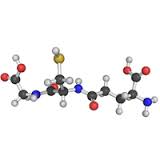
I mentioned before that glutathione is The Body’s Miracle Molecule. One of its functions is to act as the body’s master antioxidant, to maintain a proper balance of free radicals.
In addition to maintaining free radical balance, glutathione in the lungs is also instrumental in the transfer of oxygen from the airways to the bloodstream. A low level of available glutathione is likely to impede that function.
For most of us, breathing is so natural we don’t even think about it. But for someone with asthma, particularly children with smaller lungs, taking a breath is something they are always very aware of.
I was sorely tempted to dump all over this guy, whom I has just met, to tell him all about glutathione and the supplement I was taking that dramatically increased intracellular glutathione and how it might help with his asthma. But I resisted the temptation and bit my tongue. I can just imagine his reaction if I had done that. “Who is this nut case? How quickly can I get away from him?”
But you can bet that if I see him at the gym again I will try to get into conversation. At some point it might be possible to get to a state where he would be receptive to information that might help.
What I find difficult to understand is that our medical community does not seem to want to explore natural compounds as effective, and in many cases superior, alternatives to man-made chemicals. But that is a topic for another time.
Anne M. Fitzpatrick, Dean P. Jones, and Lou Ann S. Brown. Antioxidants & Redox Signaling. May 2012, 17(2): 375-408. doi:10.1089/ars.2011.4198.
#asthma #healthscience #glutathione
 Every living cell in your body has this miracle molecule. As with oxygen, water and fuel (food), if this molecule is absent from a cell the cell will die. If it is not at an optimum level the cell will struggle to do its work. This molecule is made by your body and every cell in your body needs it.