
Cancer is Not a Disease

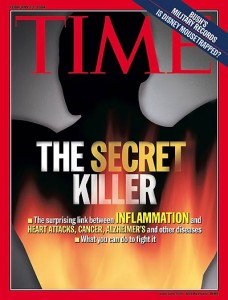
Time Cover 2004-02-23There are probably more years behind me than in front of me. My analytical approach over that time caused me to observe random things and store them. Then later I would try to make sense of them – how did they fit together? Was there a pattern? One of the things I noticed, and I think epidemiologists would confirm it, is that there seems to have been an increase in the incidence of a variety of physical conditions that did not have as a root cause either bacterial infection or a virus. The pattern seems to have started shortly after World War II, but may have originated earlier. You may have noticed the same trend.

The Pattern

When I was growing up in the 50s and 60s, asthma was rare and now it is common among young people. Autism was virtually unheard of and now the incidence seems to be higher than 1 in 100 male births in Western society. Cancer was not as rare, probably because smoking was a standard pastime, cigarettes were unfiltered at the time, and people were dying from lung cancer. But the rate of all different kinds of cancers has climbed dramatically over the past 50 years. The same holds true, to varying degrees, for things like Parkinson’s, Rheumatoid Arthritis, Fibromyalgia, Multiple Sclerosis and most other chronic diseases. What was going on? All of these conditions are quite different from each other; but they were all displaying a similar incidence pattern.

The ‘ah-ha’ Moment

Occasionally I like to do a bit of personal research in the area of science and health. Recently I came across an online article entitled What Is Cancer? And in the body of the article was the heading “Cancer is a symptom not a disease.” That brought me up short. And to be honest, I didn’t finish reading the article. My mind went off in a totally different direction.

Cancer is a symptom, not a disease. If that is true, of what is it a symptom? And could it also be true for those other conditions that were displaying this common incidence trend that I found intellectually irritating? I know that there are over 70 diseases and conditions associated with low glutathione. And all of the conditions displaying the trend are on the list. That commonality could not be a fluke.

Sometimes research involves serendipity. A few days later I saw that Time magazine, on the cover of its February 23, 2004 issue, had proclaimed “The surprising link between INFLAMMATION and HEART ATTACKS, CANCER, ALZHEIMER’S and other diseases.” The article inside said:

What does a stubbed toe or a splinter in a finger have to do with your risk of developing Alzheimer’s disease, suffering a heart attack or succumbing to colon cancer? More than you might think. As scientists delve deeper into the fundamental causes of those and other illnesses, they are starting to see links to an age-old immunological defense mechanism called inflammation…

The Mechanism

There seems to be increasing agreement in the medical research community that cellular inflammation is a common cause of most chronic disease in the world. Here’s where things get interesting.

  • Most cellular inflammation results from oxidative stress.
  • Oxidative stress is caused by an over abundance of free radicals in the cell. In fact it is defined as the condition that occurs when the sum of free radicals in a cell exceeds the antioxidant capacity of the cell.
  • Free radicals are produced when the cell does some work. Work can include normal things like breathing, moving, and thinking (depending on the type of cell). The ‘work’ uses oxygen and the result of that process (the exhaust of the oxygen burn if you will) is the production of free radicals. But where things start to go wrong is when the work involved is the cell trying to deal with toxins and other substances that don’t belong in the cell. This activity represents a lot of work and produces huge amounts of free radicals.
  • Antioxidants are the compounds that rid the cell of free radicals. If there is an adequate supply of antioxidants in the cell, the level of free radicals can be maintained at a manageable level. However, if the level of free radical production is excessive (e.g. from the work of trying to deal with a buildup of toxins) the cell’s antioxidants are unable maintain a reasonable balance. The level of antioxidants decreases as they are used to get rid of the free radicals. In this situation, the cell works less and less efficiently, oxidative stress increases and, if left unchecked for a significant period of time, disease results.

Glutathione is the body’s master antioxidant. In addition to being an antioxidant in its own right it also facilitates the work of other antioxidants. For example, in the absence of glutathione Vitamin C would be unable to perform as an antioxidant. Glutathione is produced on demand in every living cell in the body. It is also a key component needed for many of the cell’s base functions to work. So if there is not an adequate supply of glutathione in the cell, not only is the cell unable to deal with free radicals but it is also unable to perform its main cellular functions at an optimal level.

Since glutathione is key to ridding the cell of free radicals, most researchers use the level of glutathione in the body as the primary measure of oxidative stress. Low levels of glutathione equals high levels of oxidative stress.

The Key Component

Glutathione is a tripeptide composed of three amino acids. These are glutamic acid, cysteine, and glycine. The cysteine amino acid contains a sulphur group responsible for many of the chemical properties of the whole glutathione protein.

Glutathione is produced on demand in the cell. The level of glutathione produced by the body is normally high during childhood and is at its natural peak at about age 20. The level then diminishes at an average rate of about 1% to 1.5% per year. Production is dependent on the availability of the raw materials – the glutamic acid, cysteine, and glycine. In most people there is an adequate supply of glutamic acid and glycine. The limiting factor is the availability of cysteine with an intact sulphur group. This compound is not normally found in abundant quantities in our diet.

The natural result of all of this is that by the time people reach their 40s and 50s they are starting to feel their age and the incidence of chronic disease increases dramatically. This is not surprising since their glutathione levels are half of what they were at 20. The level of exposure in our modern society to untold numbers of environmental toxins and other stressors makes the situation worse than it might be otherwise. So in recent decades we see the incidence of chronic diseases, that used to be associated with old age, occurring when people are younger and younger.

The Theory

It would seem that increasing intracellular glutathione (glutathione inside the cell, produced by the cell) would go a long way to reducing a variety of chronic diseases.

There are many ways to increase glutathione levels. Some have minimal effect while others increase intracellular glutathione considerably. I take a glutathione enhancing supplement that study results show increases intracellular glutathione levels several times more effectively than the next best method.

So if there is evolving consensus that cellular inflammation is the root cause of cancer and a variety of other chronic conditions, why have there not been studies done on treatment and prevention of these conditions with large amounts of antioxidants, including increasing glutathione levels within the cells?

The Black Hats

Such clinical studies can be expensive. Most of the money for treatment studies has traditionally come, in one form or another, from the pharmaceutical industry. But the pharmaceutical industry is big business, apparently in the Trillion Dollar range. In May of 2015, Forbes published an article with a headline that read “The Cancer Drug Market Just Hit $100 Billion And Could Jump 50% In Four Years”.

Mom, why isn't there a cure for cancer? Because Jimmy, there is far more money to be made treating a disease for a lifetime rather than curing it in a day.This means that a full 10% of big pharma revenue comes from cancer alone. It is not in the best interests of these companies to fund studies that could result in identification of effective cancer treatments that involve inexpensive natural antioxidants. In fact, it is in their interests to actively prevent that happening. And the committees that make funding decisions in the various disease-focused charities are heavily influenced by the medical and pharmaceutical industries.

It is interesting to note that, because most pharmaceutical drugs are toxic poisons, treatments for diseases like chemo for cancer end up making the cellular inflammation worse – for all the cells in the body, not just the lumps and bumps that they are trying to target. Does anybody wonder why when the doctors manage to kill a tumor, some time later in some formerly unaffected part of the body, a “new” cancer pops up? (But the doctor doesn’t tell you that. He says that the cancer spread.)

The Conclusion

There are many documented cases of non-traditional treatments being successful. The common thread that ties most of them together is each has elements that increase the body’s antioxidant levels significantly. These successes should be applauded and explored for broader adoption – not attacked.

Was the information in the Time article followed up at all with further research? Not that I can see. And it would appear that further articles on the same topic in other major publications were actively discouraged. I find the situation frustrating in the extreme! And if my suppositions are true, what is happening is criminal.

Cancer is not a disease. It is a symptom. First and foremost it is a symptom of prolonged periods of oxidative stress in the body. But it is also a symptom of unnaturally high levels of toxins in our environment, a symptom of a pattern that applies to many other diseases, and a symptom of a powerful segment of the business community putting profits ahead of human life.

What is your view? I urge you to leave a comment.


Fact vs. Hypothesis vs. Opinion

It is a fact that all forms of cancer and most other chronic diseases have cellular inflammation as a fundamental characteristic.

To verify this for yourself, you can use Pubmed. Pubmed is the U.S. government site, operated by the National Institutes of Health, that is a global library of published papers on medical science. Go to pubmed.gov and enter the search terms ‘glutathione’ and the name of any disease of interest (e.g., cancer, melanoma, asthma). You will get a (potentially long) list of published papers. Randomly look at the studies and you will see that all of them show low glutathione levels for those subjects with the condition. Virtually any researcher in the field will tell you that this indicates high levels of oxidative stress and consequently high levels of cellular inflammation.

The corollary is also true. If glutathione levels are raised to optimum levels in the cells in the presence of supporting nutrients, free radicals will be eliminated, oxidative stress will be reduced and cellular inflammation will be reduced.

It is my hypothesis that increasing intracellular glutathione levels to nominal levels will reduce the symptoms of the condition in question and possibly prevent the condition from occurring in the first place. This assertion is based on the logic that the body’s natural functions will protect itself if the necessary ‘raw materials’ are available to do the job. Low glutathione levels represent one such lack of ‘raw materials’. By having an optimum level of glutathione and other supporting antioxidants available in the cells, free radical levels will stay in healthy balance, energy will be available to the mitochondria, and the immune system will be able to function as it was designed.

It is my opinion, based on the mountain of evidence found in the Pubmed studies which suggest my hypothesis holds true, that the pharmaceutical industry is actively preventing the conduct of suitable studies to validate the hypothesis. The evidence that links inflammation to disease has been building for decades. I can’t believe I am the only person to have seen the pattern. The 2004 article in Time verifies that I’m not.

Forensic accountants always tell you to “follow the money” to look for motive. Who benefits from this lack of action? Clearly it is the pharmaceutical industry. More than $100 Billion EACH YEAR can buy quite a few votes in various legislative bodies around the world, can buy modified research results, can buy doctors willing to toe the line on what constitutes acceptable medical practice. Thus my opinion. It is a nasty conclusion to reach; but one I think is justified by the available facts.

#cancer #glutathione #chronicdisease #healthscience

Home Based Business? What You Need to Know

Networking VisualI have been running my businesses out of my home for about 30 years. I started by running a successful international information management conference for several years, I owned and managed two consulting companies, and I got involved with a network marketing company. That last one didn’t work out very well and I swore I would never get involved with another one again.

But the experience wasn’t wasted. I learned some things. And then a few years ago I was introduced to another network marketing business. I was very skeptical, because of my earlier unpleasant experience. But after considerable analysis and thought I realized that this one was different. I will likely continue to be involved with this venture for the rest of my life.

What this shows is that you can run many kinds of businesses from your home. But when we talk about home based business, we usually think of a network marketing or multi-level marketing (MLM) business. Network marketing or direct sales refers to the business model; and MLM refers to a type of compensation model.

In a network marketing business, you buy a distributorship which gives you the rights to sell the company’s products or services wherever the company is set up to do business. The way you do that is by approaching the people you know or meet in the course of living your life – your network of family, friends and acquaintances. This is word of mouth advertising (which is the most effective marketing method known) and it got its name because you are approaching your network of contacts. It is a very legitimate and effective business model.

Most (probably all) network marketing companies have a multi-level compensation plan. There are as many variations as there are companies. But the common theme is that you, as a distributor, in addition to selling your product or service also recruit other distributors. Because you were their sponsor, you are entitled to a small commission based on whatever sales they make. The exact rules are different for each company. Each of the distributors you recruit are independent businesses that can do just what you did, recruit more distributors. And they get a commission based on the sales of their team of distributors. This why it is called a multi-level compensation plan.

The MLM compensation plan is beneficial for the company in that they only pay for sales, not effort. It is much more efficient. It is beneficial for the distributor in that you can realize the advantages of exponential leverage. The more distributors in the various levels of your distributor team, the more total sales will be made and the more commission you can earn. As I said, the specific rules vary from company to company.

As long as compensation is based on actual sales of products or services this is a very legitimate compensation plan. (As a point of clarification, in a “pyramid scheme” the focus is on a distributor being paid for recruiting more distributors. In companies that do that, the product or service generally is secondary. In most jurisdictions in the world this is illegal. But some people still try to set up companies that do that; so exercise caution.)

There are literally thousands of network marketing companies out there. The vast majority of them I wouldn’t touch with a barge pole. As noted above, there are a few that are probably illegal – but only a few. The vast majority are legitimate companies with great products or services. But there are characteristics of many of them that, at least from my perspective, represent risk. The risk comes in two forms: risk of the long term viability of the company and risk that the income you earn may not be worth the effort you had to put in.

So what would I look for in a network marketing company?

Who are the owners? Who is in control?

Look at the founders of the company and those who have a significant stake in it. Did they have solid business experience with a sound track record of success in selling products or services before this network marketing company? Or did they just get into MLM to sell the product or service they came up with? Do they exhibit high levels of ethical behaviour or is it all about the money regardless of what might be right? Do they show, by their actions not just their words, that they respect and care about their customers and their distributors and their staff? Are they people you would be proud to be associated with?

If you are not able to answer positively to all of these questions, there is a risk that the company will not survive in the long run. Or if they survive, you may not be treated well. And those friends and relatives that you introduce to the company may not be treated well either.

I would walk away from such an opportunity because, for me, the risk to either my income or my sense of self worth would be too high. You are betting a large chunk of your future on these people. You must be able to trust them.

What about the product or service?

Is the product or service consumable? Network marketing and the MLM compensation model have residual income as a foundation. In order to ensure a steady stream of commission income month after month following a sale, the customer must be consuming the product each month. Something that is purchased once or only occasionally means you cannot rely on your residual income and you must expend more effort to make sales repeatedly or to repeatedly acquire new customers to maintain a steady income stream.

Is the product or service unique? If it is a commodity item then competition in the marketplace will drive the price down to the point that it is very difficult for the company to pay adequate commission to make it worth your while. For example, if you are in the nutritional supplement business and you are selling vitamin C, you won’t likely get much commission. There are two reasons. First, you won’t have customer loyalty because the local grocery store may have a special on this month that beats your price and they cancel their order. And second, the margins are so thin that there isn’t enough to pay commissions that make selling the product worth your time. If the company’s main selling proposition is saving a little on the price of a product or service, that is a dead giveaway that it is in the commodity space and I would stay away.

Are the product/service claims verifiable? For example, if you are considering a company that sells nutritional supplements, are their claims backed up not just by scientific studies paid for by the company, but by studies where the results are peer reviewed and published in respected professional journals.

If the product or service satisfies these criteria, then ask is the product or service strategic? Is there a large and growing market segment that has a need for what they are selling?

For example, the population is aging and they want to stay healthy and young as long as possible. Health and wellness products and services, if they address real needs, could do well. But a company selling training DVDs when the world is moving to solid state media and internet streaming might not be such a good bet.

Does the compensation plan make it worth your time?

Eric Worre, in his documentary video Rise of the Entrepreneur, says you need to ask three questions: Can you generate some income quickly? Can you develop moderate part-time income in a reasonable time? Is there a possibility of serious full time income?

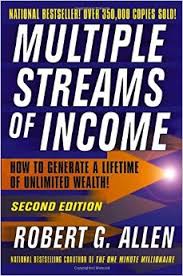
Robert G. Allen, in his book Multiple Streams of Income, has an additional specific question: In the absence of growing your team, how many customers would it take to earn $500/month in commission? The lower the number the better. (You may want to refer to Comparing MLM Compensation Plans .)

Some company compensation plans are complex. Take the time to figure out the details. Walk through scenarios so that you understand enough to be able to answer these questions.

Also, network marketing is work. If the person trying to recruit you says you can get rich quick or make a lot of money without much effort, don’t walk away – run as fast as you can!

What about the people and supports?

Specifically, are there people and mechanisms in place for you to learn, be coached and be supported so that you can be successful?

Can your sponsor and others provide mentoring and coaching? Is there skills training as well as training on the company’s system? Does the company provide your own company web site? Is there a useful back office site for you to manage your business? Is there a capability (an app) for you to conduct your business from your mobile phone?

And what about the culture of the company? Is it friendly and supportive with distributors helping each other regardless of where they are in the organization? Or are the distributor teams competitive, where they help only those in their own downline?

Another characteristic to consider is, are the people trustworthy? To illustrate my point I’ll tell you a brief story. Recently I attended an opportunity meeting. The presenter had been a customer of the company for a few years but became an associate less than a year ago. He spent the first third of the presentation knocking the competition’s products. It doesn’t say much about your products if their best selling feature is how bad the other guys are.

But what really got to me, and to me it is an ethical issue, is that he lied. Several times during the early part of the presentation he made a point of saying that this was not a network marketing business. Yet when he described how you could earn some money, it involved telling your network of contacts about the opportunity (network marketing by definition) and he outlined a layered compensation plan (MLM). If he was twisting the truth about something this fundamental, how could I have confidence in anything else he said?

Bottom line: Do you like the people and the culture? Would you be comfortable working with the people and the company?

It’s a Business – Not a Job

And finally, remember this is a business. It is based on a residual income stream. It is not a job. In a traditional job you are trading time for money – it is linear. You put in some hours and you get paid for them – end of story. In a non-linear residual income business model, you put in effort without getting paid until you make a sale. Then you get paid commission every month that the customer continues to order the product. And this happens without you having to put more effort into making that sale again. (Refer to Non-linear Income is Key to Wealth.) You need a different mind set when you are running your own business.Say yes now and learn it later

If you need to trade time for money in a job in order to survive, focus on that first. But then get serious about starting a home-based business on a part-time basis.

It can be worth it.

If you would like some help evaluating an opportunity, please contact me directly. I will help in any way I can, bringing to bear my understanding and experience with both the good and not so good.


Worre, Eric. Rise of the Entrepreneur – In Search of a Better way: A Documentary. Wichita: Go Pro Productions, LLC. 2014

Allen, Robert G. Multiple Streams of Income: How to Generate a Lifetime of Unlimited Wealth. Hoboken, NJ: John Wiley & Sons, Inc. 2004

#wealth #mlm #entrepreneur

The Black Telephone

Antique wall phoneI have a friend that sends emails from time to time to a group of his friends. Sometimes they contain jokes. Occasionally there’s some suggestive photos of attractive young women. (I think he’s got two lists – one for general content and one more restricted. I appear to be on both.) Sometimes there are stories or photos of the “do you remember when…” variety. (I’m old enough that I actually do remember most of those things.) And occasionally there is a story with a message.

A few days ago I received one of the latter variety. I have no idea where he got it. But I thought it was worth passing along. What follows is the content of his email. And I actually remember when our first telephone was installed, a black box attached to the wall. Thanks, Wally.


When I was a young boy, my father had one of the first telephones in our neighborhood. I remember the polished, old case fastened to the wall. The shiny receiver hung on the side of the box. I was too little to reach the telephone, but used to listen with fascination when my mother talked to it.

Then I discovered that somewhere inside the wonderful device lived an amazing person. Her name was “Information Please” and there was nothing she did not know. Information Please could supply anyone’s number and the correct time.

My personal experience with the genie-in-a-bottle came one day while my mother was visiting a neighbor. Amusing myself at the tool bench in the basement, I whacked my finger with a hammer, the pain was terrible, but there seemed no point in crying because there was no one home to give sympathy. I walked around the house sucking my throbbing finger, finally arriving at the stairway. The telephone! Quickly, I ran for the footstool in the parlor and dragged it to the landing.

Climbing up, I unhooked the receiver and held it to my ear.

“Information, please,” I said into the mouthpiece just above my head. A click or two and a small clear voice spoke into my ear.

“Information.”

“I hurt my finger…” I wailed into the phone, the tears came readily enough now that I had an audience.

“Isn’t your mother home?” came the question.

“Nobody’s home but me,” I blubbered.

“Are you bleeding?” the voice asked.

“No, “I replied. “I hit my finger with the hammer and it hurts.”

“Can you open the icebox?” she asked.

I said I could.

“Then chip off a little bit of ice and hold it to your finger,” said the voice.

After that, I called “Information Please” for everything. I asked her for help with my geography, and she told me where Philadelphia was. She helped me with my math.

She told me my pet chipmunk that I had caught in the park just the day before, would eat fruit and nuts.

Then, there was the time Petey, our pet canary, died. I called,
“Information Please,” and told her the sad story. She listened, and then said things grown-ups say to soothe a child. But I was not consoled. I asked her, “Why is it that birds should sing so beautifully and bring joy to all families, only to end up as a heap of feathers on the bottom of a cage?”

She must have sensed my deep concern, for she said quietly, “Wayne, always remember that there are other worlds to sing in.”

Somehow I felt better.

Another day I was on the telephone, “Information Please.”

“Information,” said in the now familiar voice.

“How do I spell fix?” I asked.

All this took place in a small town in the Pacific Northwest. When I was nine years old, we moved across the country to Boston. I missed my friend very much.

“Information Please” belonged in that old wooden box back home and I somehow never thought of trying the shiny new phone that sat on the table in the hall. As I grew into my teens, the memories of those childhood conversations never really left me.

Often, in moments of doubt and perplexity I would recall the serene sense of security I had then. I appreciated now how patient, understanding, and kind she was to have spent her time on a little boy.

A few years later, on my way west to college, my plane put down in Seattle. I had about a half-hour or so between planes. I spent 15 minutes or so on the phone with my sister, who lived there now. Then without thinking what I was doing, I dialed my hometown operator and said, “Information Please.”

Miraculously, I heard the small, clear voice I knew so well.

“Information.”

Information operatorI hadn’t planned this, but I heard myself saying, “Could you please tell me how to spell fix?”

There was a long pause. Then came the soft spoken answer, “I guess your finger must have healed by now.”

I laughed, “So it’s really you,” I said. “I wonder if you have any idea how much you meant to me during that time?”

“I wonder,” she said, “if you know how much your calls meant to me. I never had any children and I used to look forward to your calls.”

I told her how often I had thought of her over the years and I asked if I could call her again when I came back to visit my sister.

“Please do,” she said. “Just ask for Sally.”

Three months later I was back in Seattle.

A different voice answered, “Information.”

I asked for Sally.

“Are you a friend?” she said.

“Yes, a very old friend,” I answered.

“I’m sorry to have to tell you this,” She said. “Sally had been working part time the last few years because she was sick. She died five weeks ago.”

Before I could hang up, she said, “Wait a minute, did you say your name was Wayne ?”

“Yes.” I answered.

“Well, Sally left a message for you. She wrote it down in case you called. Let me read it to you.”

The note said, “Tell him there are other worlds to sing in. He’ll know what I mean.”

I thanked her and hung up. I knew what Sally meant.

Never underestimate the impression you may make on others.

Whose life have you touched today?

#inspirational #personal

Taking a Breath

Asthma Puffer 234x234Yesterday I was in the gym change room just getting ready to go home after a workout. A fellow came in after finishing his workout. There was a light clunk when he opened his locker, a few down from mine. On the floor between us was a small bottle, with a protrusion at right angles out the side of the bottle. I asked if that was his puffer.

It turns out he has had asthma from the time he was a small child. Given that he appeared to be in his mid-thirties, that meant he had been dealing with the condition for three decades or more. He told me he has not had any major episodes in recent years. But he said, “I always use my puffer when at the gym – so that I can breathe.”

According to the Mayo clinic:

Asthma is a condition in which your airways narrow and swell and produce extra mucus. This can make breathing difficult and trigger coughing, wheezing and shortness of breath.

For some people, asthma is a minor nuisance. For others, it can be a major problem that interferes with daily activities and may lead to a life-threatening asthma attack.

According to the Asthma Society of Canada, doctors generally prescribe inhaled corticosteroids over oral (tablet or liquid) corticosteroids, because the inhaled medication is more targeted. In other words, when it’s inhaled, medication goes directly into the lungs where it’s needed. The intent is to reduce the inflammation in the airways for a time.

However, this does not address the underlying issue of the inflammation itself. In the paper entitled Glutathione Redox Control of Asthma: From Molecular Mechanisms to Therapeutic Opportunities, the authors examined a range of studies that looked at the role of glutathione at the cellular level in people with asthma.

GSH and Reducing Free Radicals - 300x196One of the conclusions seemed to be that if there is insufficient glutathione (GSH) available in the cell, the level of free radicals will increase. An imbalance represented by high levels of free radicals results in oxidative stress and cellular inflammation. This state of affairs diminishes normal cell function by interfering with internal cell signalling.
I mentioned before that glutathione is The Body’s Miracle Molecule. One of its functions is to act as the body’s master antioxidant, to maintain a proper balance of free radicals.

In addition to maintaining free radical balance, glutathione in the lungs is also instrumental in the transfer of oxygen from the airways to the bloodstream. A low level of available glutathione is likely to impede that function.

For most of us, breathing is so natural we don’t even think about it. But for someone with asthma, particularly children with smaller lungs, taking a breath is something they are always very aware of.

I was sorely tempted to dump all over this guy, whom I has just met, to tell him all about glutathione and the supplement I was taking that dramatically increased intracellular glutathione and how it might help with his asthma. But I resisted the temptation and bit my tongue. I can just imagine his reaction if I had done that. “Who is this nut case? How quickly can I get away from him?”

But you can bet that if I see him at the gym again I will try to get into conversation. At some point it might be possible to get to a state where he would be receptive to information that might help.

What I find difficult to understand is that our medical community does not seem to want to explore natural compounds as effective, and in many cases superior, alternatives to man-made chemicals. But that is a topic for another time.


Anne M. Fitzpatrick, Dean P. Jones, and Lou Ann S. Brown. Antioxidants & Redox Signaling. May 2012, 17(2): 375-408. doi:10.1089/ars.2011.4198.

#asthma #healthscience #glutathione

Non-linear Income is Key to Wealth

Multiple Streams Of Income book cover imageSome time ago a friend recommended a book. It sounded interesting; but based on the title I already had an idea of the message. So I didn’t get around to looking at it until recently. Before investing in a purchase I borrowed it from the local library. Mere minutes after I started skimming the content, its value became obvious. And a few minutes later, after a visit to Amazon, I had my own electronic version of a book that in my view holds some important wisdom. It was entitled Multiple Streams of Income: How to Generate a Lifetime of Unlimited Wealth by Robert G. Allen.

But, you may ask, why multiple streams? The following is directly from the book.

To answer that question, I’ll ask another: How many streams of income did it take in the 1950s for most families to survive – even prosper? One. Compare that to today, when very few families can survive on fewer than two streams of income. And even those won’t be enough in the future. It’s a volatile future, and you’d be wise to have multiple streams of income flowing into your life.

If you think about it, most people have a job working for someone else and that is their sole source of financial support. But who is in control of your income? Your employer could terminate you, change the nature of your job in ways you might not like, or perhaps go out of business. You are not in control of a vital element of your life. Is it any wonder that people feel stressed?

In the book, Allen offers principles, strategies and other guidance to managing and enhancing your wealth. One of the key principles is that of identifying the type of income stream. Is it linear or non-linear? His position is that only non-linear streams should be considered moving forward.

Let’s start by looking at linear income. There is a simple test. Ask the question ‘How many times do you get paid for an hour of work?’ If you answer ‘only once’ then your income is linear. You are trading time for money.

A unit of your time, whether measured in hours, weeks, months or a year, results in payment only once. After you have put in two hours, or two weeks, or whatever and you get paid for it, you will not get paid again for that time you expended. This is true whether you are a laborer or a lawyer or a dentist or a senior manager with an annual salary. The unit of time, pay period and rate may vary; but that does not change the underlying fact that you got paid only once for the effort spent. In the case of the dentist, you may get paid based on a procedure performed rather than a unit of time; but the principle holds. Once you have spent the time performing the procedure you will get paid only once for it.

Now let’s look at non-linear income. As you might guess, with a non-linear income stream you could get paid multiple times for a given set of effort expended. An example might illustrate this. Consider a famous author like John Grisham. He may have spent hundreds and hundreds of hours writing one of his best sellers. While he is working on the book he is getting paid zero dollars. But after it’s published, he gets paid every time one of his books gets sold. He gets paid over and over again without having to expend any further effort. In the publishing and entertainment industry this is called royalty income. In other areas, it is referred to as residual income.

When you are earning linear income, regardless of how well you may be paid, your income is capped by the number of hours you can expend each day to earn that income. If your effective rate per hour is very high you may appear to be rich, but you have limits just like everyone else with linear income.

What non-linear or residual income provides is leverage. Once you have done the effort to start the income flow you can then focus on something else, like perhaps generating more residual income. This represents a multiplying effect. Each unit of effort expended results in an indeterminate amount of income over time. And there is no inherent limit to the amount of income that can flow in. The result is time freedom.

Earning income is no longer directly tied to the ongoing effort you expend. If you chooses to take a few days off to spend with family, your residual income will continue to flow in.

Allen’s advice:

What percentage of your income is residual? If you’re smart, you’ll start shifting your income streams from linear to residual. This will give you the time freedom to do what you want when you want. And that starts with turning on at least one new residual stream every year.

Another of his principles that caught my attention was to select a stream of income that is “employee resistant.” He provides a solid rationale; but the essence of the advice is to try to find businesses that do not require employees. If you need help, outsource. To me this translated into home-based businesses where your office or base of operations can be anywhere. You don’t want to be tied to an office building, a storefront, a factory or a warehouse with staff to be managed.

I won’t try to talk about the 10 different income streams he identified. Nor will I attempt to summarize all of the solid strategies he outlined. Suffice it to say that I found value in the material and I haven’t yet read it from cover to cover.

I commend it to you for your consideration.


Allen, Robert G. Multiple Streams of Income: How to Generate a Lifetime of Unlimited Wealth. Hoboken, NJ: John Wiley & Sons, Inc. 2004

# business #wealth #entrepreneur