Are You Facing Surgery?


I tell this to everyone facing any kind of surgery.

A wound healing study was completed in 2014 and subsequently peer reviewed and published in March of 2015 in the American Journal Of Surgery (Reference 1). It clearly showed that raising glutathione levels before surgery (a surgical incision is considered a wound in medicine) and keeping the level elevated after surgery dramatically reduced the healing time, increased the strength of the healed wound, and significantly reduced any resulting scar.

It was an animal based study that involved genetically identical rodents. This was necessary since the animals would be dissected to understand what healing was happening below the skin.

A friend of mine, Fran, had a double knee replacement done about three years ago. (On a side note, I told her I thought she was nuts trying to have both knees done at the same time. I was thinking of practical things like getting down onto and up from the toilet. Although her surgeon was originally resistant, she convinced him. Clearly a very determined woman.) She was aware of the study and listened to my related recommendations. For a month before the surgery she took a set of supplements aimed at increasing her intracellular glutathione levels. She continued for a month after the surgery, then gradually went back to her normal levels.

At her 10 day followup visit, her doctor was amazed at how completely she had healed and couldn’t figure it out. Well she explained it to him and referred him to the study. But according to the rules he operates under he is unable to tell any of his patients about it. Such is the world of modern medicine.

She conformed religiously to the required post-surgery physiotherapy regimen. And not long after she was walking normally with no pain.

References

Reference 1: Saltman, Adam E., d-ribose-l-cysteine supplementation enhances wound healing in a rodent model, American Journal Of Surgery. (March 2015)

#surgery #glutathione #health #healthscience

You CAN Prevent High Blood Pressure

Persistent uncontrolled high blood pressure is a significant risk factor for a number of potentially fatal health conditions including heart attack, stroke, diabetes, and kidney failure.

Measuring Blood Pressure

Blood is pumped through the body’s blood vessels by the beating of your heart. Each beat represents a contraction of your heart muscles that pushes the blood through your arteries. That push exerts pressure on the walls of the blood vessels as a wave of blood is moved along. Between beats the heart is not actively pushing the blood and so, for that period of time, there is less pressure exerted on the walls of the blood vessels.

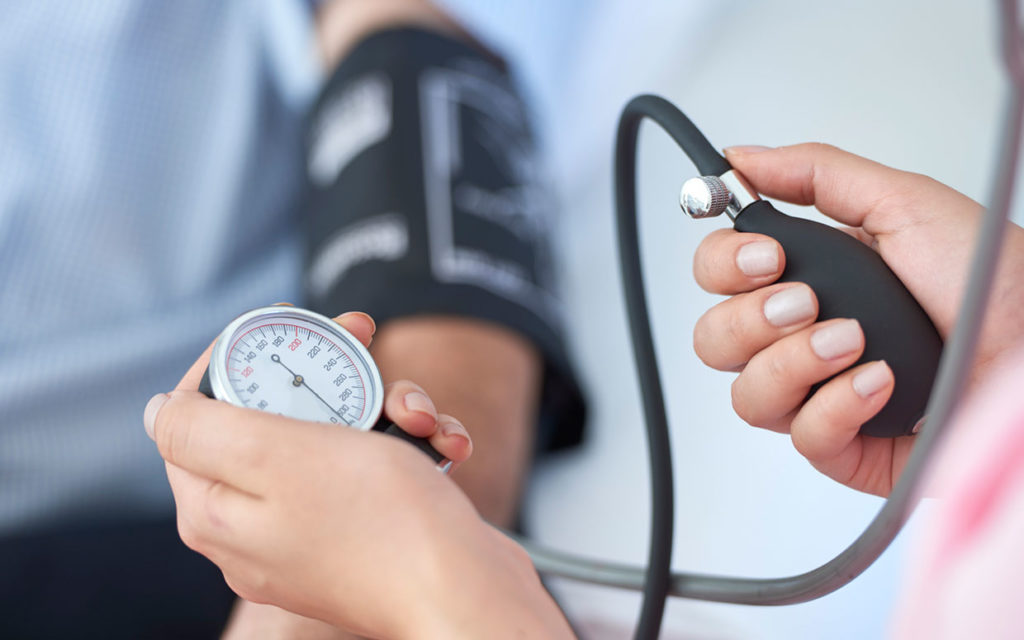
A device is used to measure the pressure exerted on the walls of the blood vessels. The result of the measurement produces two numbers that are usually written as a fraction like 116/78. This is usually read as “one sixteen over seventy-eight.” The top number represents the pressure resulting from the heart contraction and is referred to as the “systolic” pressure. The bottom number represents the lower pressure between beats and is called the “diastolic” pressure.

Physical Factors Affecting Blood Pressure

There are essentially two physical factors that impact blood pressure: the force with which the heart muscle pumps the blood into the arteries and the elasticity or flexibility of the walls of the blood vessels. Blood pressure may also be impacted if there is material stuck to the walls of the blood vessel which would constrain the flow and thus increase the pressure.

For the most part, the heart pumps blood with a fairly consistent force. In a high stress situation, where the body has dumped adrenaline into your system in a “fight or flight” response, the heart muscles might pump more vigorously and thus increase the pressure. But this is typically a short-lived phenomenon. If such a situation persists over a protracted period, the heart itself might incur some damage.

On the other hand, the heart may not have sufficient strength to pump the blood into the arteries at an adequate pressure level. This situation is known as heart failure. There are several physiological conditions that may lead to heart failure (including protracted periods of high stress which overloads the heart muscles) and there are varying degrees of heart failure.

However, the biggest factor affecting blood pressure is the flexibility of the blood vessel walls, followed closely by the extent to which a blood vessel may have deposits that constrain blood flow. It is this constraint on the flow of the blood through the blood vessels, whether by blockage or blood vessel inflexibility, that represents a significant health risk and is identified by high blood pressure readings. Healthy blood vessels are very flexible and can accommodate the surges of blood flow by easily expanding as a blood pressure wave moves through. Unhealthy blood vessels are more rigid or are blocked to some extent, resulting in a higher systolic pressure reading.

What Constitutes High Blood Pressure?

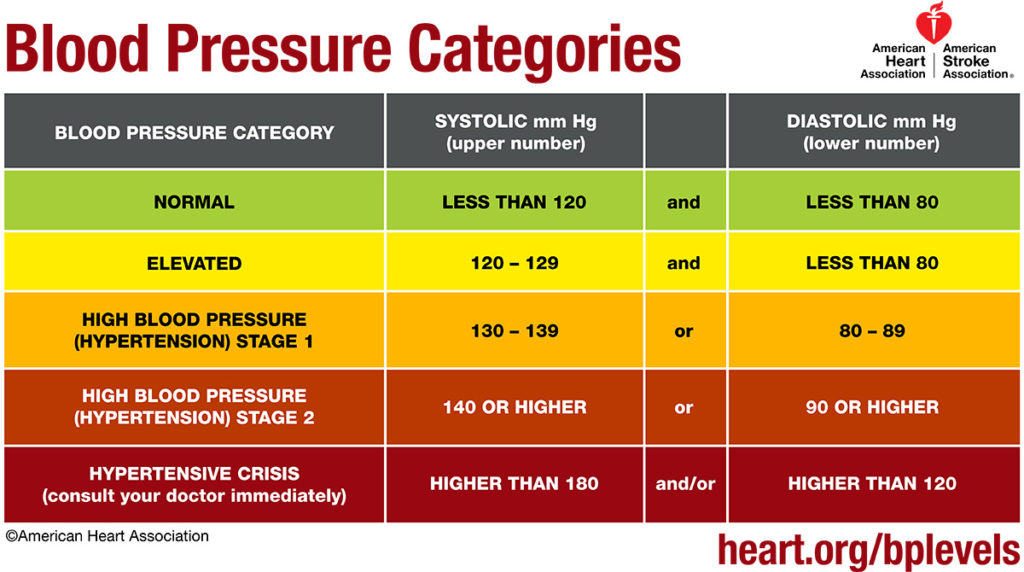
It might be easier to assert what constitutes “normal” blood pressure. According to the American Heart Association, normal blood pressure has a systolic reading of less than 120 and a diastolic reading of less than 80. Higher readings for either or both of these values represents risk, with higher numbers representing higher risk. Refer to the accompanying chart.

Preventing High Blood Pressure

The focus of most high blood pressure prevention strategies is to reduce any blockages of the blood vessels and to maintain the flexibility of the blood vessel walls. This maximizes the flow of oxygen to the cells throughout the body by maximizing blood flow.

According to the World Health Organization (WHO), a United Nations body, there are six things you can do to prevent high blood pressure.

  • Reduce Salt Intake

WHO recommends a daily maximum of five grams (5000mg). However, most other authorities recommend less than half of that, with some stating that 2300mg should be the maximum while other authorities set the bar at 1200-1500mg (and some much lower than that).

Salt is essential to certain body functions. However, excess amounts have a negative impact. Too much salt causes the body to retain excess fluid which increases the pressure on blood vessels and other organs in the body.

  • Eat Fruits and Vegetables Regularly

In addition to providing necessary nutrients, fruits and vegetables provide a natural source of fiber. This helps remove toxins from the body and aids in the stabilization of blood sugar levels. All of these things together promote healthy blood vessel maintenance.

  • Avoid Saturated Fats and Trans Fats

Trans Fats are not a natural material and are considered by the body to be a harmful toxin. Trans fats interfere with a variety of the body’s natural functions.

Some saturated fat is used by the body to maintain good health. However, excess amounts of saturated fats can lead to the significant production of “bad” cholesterol in the blood stream. This “bad” cholesterol can get deposited on the walls of the blood vessels and, over time, can cause a buildup that constrains blood flow. This pushes up the blood pressure readings.

  • Avoid Tobacco Smoking

Tobacco smoke contains a nasty combination of chemical toxins. This interferes with the transfer of oxygen from the lungs to the red blood cells. This means that the body has to work harder to get the necessary volume of oxygen carrying red blood cells to the cells of the body. Higher blood pressure can result from this extra effort to push blood through the system.

In addition, the body’s glutathione reserves are used to try to remove these toxins from the body. Lower glutathione levels can lead to problems as described below.

  • Reduce Alcohol Consumption

As with tobacco smoke, the body considers alcohol to be a toxin. Processing significant amounts of toxins reduces glutathione levels and puts stress on the body, including the circulatory system. Again, lower glutathione levels can lead to problems as described below.

  • Be Physically Active Every Day

Vigorous physical activity exercises not only your major muscle groups, it also exercises the heart muscle. This in turn causes the blood vessels to expand and contract more frequently which enhances flexibility in the vessel walls. Flexibility is a healthy desirable condition for your blood vessels.

And I would add two more:

  • Reduce Excess Body Fat

Some body fat is necessary. However, excess body fat exerts additional pressure on not only the various vital organs of the body but also puts additional pressure on the blood vessels, reducing their natural flexibility. There is a reason that we see a high correlation between high body fat levels and high blood pressure.

  • Increase Intracellular Glutathione Levels

Studies have shown that abundant glutathione in the cells can reduce the levels of Low Density Lipoprotein (LDL), also called the “bad” cholesterol. This kind of cholesterol is known for attaching itself to blood vessel walls. The resulting build-up can increase blood pressure. Increasing intracellular glutathione is a drug-free way to reduce LDL and thereby promote healthy blood pressure levels.

Summary

High blood pressure is a significant risk factor associated with a number of potentially serious (even fatal) health conditions. There are things you can do to prevent high blood pressure and thereby avoid this real risk to your wellbeing and your life. Most of these things are lifestyle choices that are well within your control.

#health #heartdisease #highbloodpressure

Heart Disease is Preventable

image of heart and stethoscopeRecently I listened to an interview with a reputable heart specialist. What he had to say was so important I knew I had to share the information. What follows contains so much direct quote and paraphrase of things said in the interview that I am sure it is violating somebody’s copyright. I hope they will understand. This is not a transcript of the interview; it contains excerpts of key messages.

About Dr. Harrington

Dr. Douglas Harrington earned his B.A. in Molecular Biology and his M.D. from the University of Colorado. He is board certified in atomic and clinical pathology and hematology. He is a member of the American Society of Preventive Cardiology. He has authored over 90 peer-reviewed publications.

Facts About Heart Disease

Heart disease is the greatest cause of death in the United States.

Since 2010, more women in the United States are having heart attacks than men. Five times as many women die from heart attacks than die from breast cancer. Heart disease is the primary killer of women, taking more lives than all forms of cancer combined.

An American Heart Association study of hospitalization of people with a first heart attack from unstable angina showed 83% had normal cholesterol levels. If you look at all people who had heart attacks, 50% had normal cholesterol. (So some historical assumptions about the causes of heart disease may be incorrect.)

The World Health Organization (WHO) did an inter-country study that looked at 32 countries. They determined that 90% of heart disease is due to lifestyle. 80% of that is preventable by actions the person can take themselves.

The Cause of Heart Disease

Most people think that heart disease is fundamentally a ‘plumbing problem’. That is not the case.

Free radicals are produced in excess by the body in response to a variety of factors like exposure to environmental toxins and eating excess amounts of certain types of foods like sugar. The cells in your body perform a lot of work trying to get rid of these substances and in so doing produce excess amounts of free radicals. (Refer to the article Get Rid of the Radicals.)

When free radicals come in contact with the artery walls, they damage the lining of the arteries in your heart. This is the start of heart disease. Over time this damage can evolve to become lesions.

Lesions on the wall of the arteries from the free radical damage are like blisters or pimples. They don’t cause any symptoms; they don’t cause pain; and they don’t restrict blood flow. But when the lesions ‘pop’, which they are prone to do if they become unstable, they cause an immediate blood clot. That is the most common cause of heart attacks and strokes.

How to Prevent or Reverse This Damage

There are several things you can do to help the situation:

  • Exercise
  • Diet
  • Medications
  • Supplements

Exercise

Exercise can help prevent or reverse lesions damage – but not just any exercise. The most beneficial is exercise in the form of resistance training like weight lifting or doing push-ups. Cardio exercise is good for burning calories and increasing the the strength of you heart and the fitness of your cardiovascular system. But it does not do much to convert unstable lesions to a level of stability; it just makes your heart do more work.

Diet

A “Mediterranean Diet” will help.

Historically the medical community focus has been on bloodstream cholesterol. However, the advice given in the past to avoid saturated fats is probably wrong. Trans fats are deadly. On the other hand animal fat, like butter, in reasonable quantities is actually good for you.

Excess sugar, excess refined carbs, and excess deep fried foods in the diet should be avoided. Certain types of oils like soy bean oil with preservatives should also be avoided. These things set up an environment in our body that allows or promotes the production of free radicals.

Grass fed beef can be good and has about the same amount of omega-3 as wild caught fish. But penned beef that is fattened up and fed chemicals to keep them healthy and gain weight are a problem. Farmed fish is problematic because of the omega-6, hormones, antibiotics and other substances. But wild caught fish like salmon is very healthy. Unfortunately much of the commercial fish in the market comes from fish farms.

Avoid processed foods. If you pick up something in the grocery store and you need an advanced chemistry degree to understand what is on the list of ingredients, you probably should not eat it.

Artificial man-made chemicals, whether in our food, in our water or in our air are a principal cause of free radicals. And high levels of free radicals is the root cause of heart disease.

Medications

Certain medications like statins will also help stabilize arterial lesions. But the down side is that they have a lot of negative side effects.

Supplements

You must ensure that your body has an adequate amount of necessary vitamins and minerals. Some of this can be supplied by your diet. However, you may have to augment that with nutritional supplements. Mass farming techniques have reduced the level of nutrients in much of the food that we buy so supplementation has become a necessity.

In addition to exercise and a healthy diet, the most effective thing you can do is to help your body get rid of the free radicals that are produced.

The body’s master antioxidant is glutathione. It is produced by every living cell in the body. But usually production of glutathione is insufficient, particularly in face of the onslaught of substances that produce free radicals.

However, glutathione is an endogenous antioxidant. That means that it originates from within the body. You can’t get much glutathione from food. The only effective way to raise your glutathione to scavenge the free radicals is to take a supplement that has a necessary glutathione precursor.

It was interesting, but not surprising, to note that Dr. Harrington recommended the use of the same supplement that I use to increase glutathione levels. Even after adopting a healthy diet you are still exposed to huge numbers of environmental toxins, so you need some way to enhance glutathione levels.

The Challenge

Because heart disease has little in the way of noticeable symptoms like pain or discomfort, doing the right things appears to show no improvement that can be felt. So people tend not to do what needs to be done to remove the threat.

The objective of prevention is to keep you out of the hospital. Understand that doing the things necessary to keep you healthy may not show obvious signs – other than you not experiencing a sudden life threatening event.

The Risk

Consider this scenario. You have blood pressure in the normal range. You have cholesterol readings in an acceptable range. You are not excessively overweight. According to your doctor you are pretty healthy. Your diet is not as healthy as it should be; but you feel fine. The first indication that you have heart disease is a sudden heart attack. There is a 50% probability that this heart attack will be fatal.

If you want to avoid that you must, at the very least, eat healthier and increase your intracellular glutathione levels – even if you currently feel healthy.


Addendum: Dr. Harrington and his team has developed a test for the existence of unstable arterial lesions. What this means is that you can have a clear indication of the risk of having a heart attack within the next five years. This is a simple blood test that is currently available in the United States and other countries. A positive result may allow the person to take corrective action in time to avoid the heart attack.

#heartdisease #glutathione #heartattack
Get Rid of the Radicals!

radicalsIn this day and age there are far too many of them. They are responsible for the deaths of untold numbers of people. Left unchecked they will continue to maim and kill. And you can do something about it. They must be neutralized and eliminated!
I’m not talking about those religious extremist nut-cases that figure they have the god-given right to violate the basic principles of human rights and their own religious teachings to impose their warped views on the rest of the world. What I am talking about are the radicals that are appearing in ever increasing numbers in the cells of your body. They are the cause of most chronic disease in the world. And it is possible to do something about it.

In order to undertake effective action, however, it would be useful to understand the general mechanics of how they get created and how they can be dealt with.

How are Free Radicals Created?

Let’s start with something we all understand. In order to live you need to breathe. The reason for that is that you need oxygen to survive; and breathing allows you to extract oxygen from the air and pass it to the red blood cells in your body. Flowing through your blood vessels, your red blood cells deliver oxygen to all of the living cells throughout your body.

There is an on-demand system in operation here. The more work a cell has to do, the more oxygen it will try to extract from the blood as it flows past. Each of your cells uses oxygen as a key element of the process of doing work. You can verify this yourself. Get on an exercise bike, set a reasonable resistance and peddle as fast as you can. What happens to your heart rate and respiration rate? They both go up as your body tries to increase the transfer of oxygen from the air and deliver it more quickly to the muscle cells that are demanding it to fuel the work they are doing.

In chemistry, a free radical is an atom, molecule, or ion that has unpaired valence electrons – it has a negative charge. With some exceptions, these unpaired electrons make free radicals highly chemically reactive towards other substances. Some important oxygen-centered free radicals include peroxide, the superoxide radical and the hydroxyl radical. They are produced from molecular oxygen under reducing conditions.

So, molecular oxygen is delivered to the cell by the bloodstream. The chemical reaction that uses (reduces) the oxygen to do its work results in a negatively charged oxygen-based free radical (like a hydroxyl radical).

Normal cell activity produces free radicals.

Unfortunately, we live in a world that has huge amounts of environmental toxins – in the air we breathe, in the food we eat and in the water we drink. The cells try to deal with these foreign toxins when they enter the cell. Dealing with toxins represents quite a lot of work for the cell, with the cell producing extensive amounts of free radicals. This is not good a good thing.

How do Free Radicals Cause Damage?

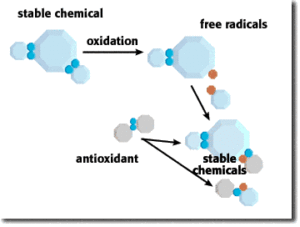
Because they are highly reactive (due to the unbalanced number of electrons), these same free radicals can participate in unwanted side reactions with various other molecules that are part of the cell, resulting in cell damage. They do this by stealing an electron from a nearby molecule in the cell, disabling that molecule’s function.

This is not good. Excessive amounts of these free radicals can lead to cell injury and death, which may contribute to many diseases. (Refer to Wikipedia article on Radical chemistry.) Fortunately, that is not the end of the story.

How do Antioxidants Neutralize Free Radicals?

According to an article by the American HealthCare Foundation:

antioxidantsAntioxidants are stable molecules that have electrons to spare. When antioxidants come in contact with free-radical molecules – they hand over their electrons and stop the degenerative chain reaction of free-radical oxidation.
Antioxidant molecules are able to give up an electron and subsequently become electrically stable.

Some antioxidants are produced naturally in our cells. Other antioxidants can be be found in the food we eat. The body’s primary antioxidant is Glutathione (GSH) which is produced internally by the cells. Some foods high in antioxidants are those containing Vitamin C, Vitamin E, and beta-carotene (which converts to Vitamin A in the body).

However, most people don’t have enough antioxidants to deal with the volume of free radicals being produced.

How can you Avoid Free Radical Damage?

The key to maintaining good cellular health is to ensure that the cell has within it an adequate supply of antioxidants to deal with the free radicals produced as the cell creates energy to do its work.

In part you can achieve this by ingesting foods that are high in dietary antioxidants. However, perhaps the most effective approach is to increase your body’s intracellular glutathione levels (glutathione produced in the cell, by the cell). (Refer to The Body’s Miracle Molecule.)

We live in an ever increasingly toxic world. Our cells have to work overtime to try to deal with the toxins they are exposed to. So we need even more antioxidants than our ancestors needed just to maintain a reasonable balance. You would have to consume huge amounts of antioxidant rich foods to deal with your body’s demand. In today’s toxic environment, that is not enough.

High quality dietary supplements may be the only effective way to maintain adequately high antioxidant levels. And one of the best approaches is a dietary supplement that promotes the body’s own production of glutathione. Intracellular glutathione is many times more effective as an antioxidant than all of the other antioxidants you may ingest.

Get rid of the radicals! If all the cells of your body are healthy, you will be healthy.


Reference: “Role of Oxidative Stress,” American HealthCare Foundation

#freeradical #antioxidant #glutathione

The Body’s Miracle Molecule

image of glutathione molecule structureEvery living cell in your body has this miracle molecule. As with oxygen, water and fuel (food), if this molecule is absent from a cell the cell will die. If it is not at an optimum level the cell will struggle to do its work. This molecule is made by your body and every cell in your body needs it.

This miracle molecule is called glutathione. Glutathione is a tripeptide composed of three amino acids – glutamic acid, cysteine, and glycine. The cysteine amino acid contains a sulphur group which is responsible for many of the beneficial chemical properties of the whole glutathione protein.

The U.S. government website PubMed tracks scientific and medical studies globally. If you go to www.pubmed.gov and search for studies on Vitamin_C you will find about 55,000 articles; for Vitamin_E you will find about 38,000; but if you look for studies involving glutathione you will find about 124,000. And the rate at which research studies involving glutathione are added to that total far exceeds the corresponding rate for other antioxidants. This indicates a high level of glutathione-related research activity in the medical community worldwide.

The Glutathione molecule was discovered over 120 years ago. Referred to as a guardian molecule, glutathione is:

  • the Master Anti-Oxidant in each cell (removes free radicals)
  • the Master Anti-Inflammatory in each cell
  • the Master Detoxifier in each cell
  • necessary for the production of energy (ATP) by each cell

In terms of energy production, if the mitochondria detects insufficient glutathione, energy production will slow down to prevent the cell from killing itself by using up all the available glutathione.

Abundant glutathione:

  • increases energy
  • slows the ageing process (by protecting DNA from damage)
  • aids muscle and joint recovery
  • strengthens immune system
  • aids cell detoxification
  • fights cellular inflammation
  • robustly supports liver function
  • improves mental focus and clarity
  • improves quality of sleep
  • reduces the effects of stress
  • supports peak athletic performance
  • improves the health and look of skin

Glutathione is diminished by:

  • ageing
  • stress
  • inflammation
  • sun exposure
  • athletic activity
  • sleep deprivation
  • environmental toxins
  • acetaminophen (Tylenol)

These various things diminish glutathione. The cells produce glutathione. If the demand for glutathione exceeds the production levels, the cells in your body will function less and less efficiently, leading to a variety of undesirable effects (e.g., disease).

In terms of ageing, from about age 20 the level of glutathione will go down about one percent or so per year.

Extreme overdoses of Tylenol can kill you and it does so by consuming the glutathione from your liver as the liver tries to dispose of the acetaminophen. This is because the liver is the main detoxifier of the body and it uses glutathione in that process. If all of the glutathione in the liver is used to deal with the Tylenol overdose, the liver will die – and if the liver dies the body will die.

Low glutathione levels have been linked to over 70 diseases and conditions.

Cysteine is an amino acid. Production of glutathione is limited by the level of delivery of intact cysteine (cysteine that has an intact sulphur group) into the cell. This is because there typically is not sufficient cysteine in your diet.

There are a number of ways that can be used to impact glutathione levels:

  • Glutathione taken orally: Glutathione when take orally is simply broken down by the digestive system and rarely survives to render any benefit. The sulphydryl group on the cysteine component is very delicate and it is this that is destroyed by digestion. Generally, taking glutathione capsules is a waste of money. It may increase glutathione levels by 3%.
  • Glutathione taken intravenously: This does deliver glutathione into the system. It is short acting since it does not promote new generation of glutathione and is an expensive medical treatment. In addition, the glutathione molecule is too large to go through the cell wall. So it does not get inside the cell where it is needed to do its job.
  • Large doses of whey protein taken orally: Whey protein does contain cysteine and some of that has the sulphydryl group. Some of this will get through the digestive process. This requires people to take a huge amount to realize benefit. If a person is prepared to do this they might see an increase of 15-20% in glutathione levels.
  • l-cysteine taken orally: Cysteine by itself (exposed sulphydryl group) will typically not survive the trip through the digestive system. Effective treatment would require large doses.

There are a couple of nutritional supplements that deliver intact cysteine to the cells by protecting the delicate cysteine molecule through the digestive system and the bloodstream. These are probably the most effective ways to help the body increase its intracellular glutathione levels naturally.

Look again at the list of what happens when you have abundant levels of glutathione in the cells of your body.

  • increases energy
  • slows the ageing process (by protecting DNA from damage)
  • aids muscle and joint recovery
  • strengthens immune system
  • aids cell detoxification
  • fights cellular inflammation
  • robustly supports liver function
  • improves mental focus and clarity
  • improves quality of sleep
  • reduces the effects of stress
  • supports peak athletic performance
  • improves the health and look of skin

If all the cells of your body are healthy, you will be healthy.  When you think about it, it’s no wonder that glutathione is referred to as the body’s miracle molecule.

#health #science #glutathione


Resources:  goglutathione.com