Are You Facing Surgery?


I tell this to everyone facing any kind of surgery.

A wound healing study was completed in 2014 and subsequently peer reviewed and published in March of 2015 in the American Journal Of Surgery (Reference 1). It clearly showed that raising glutathione levels before surgery (a surgical incision is considered a wound in medicine) and keeping the level elevated after surgery dramatically reduced the healing time, increased the strength of the healed wound, and significantly reduced any resulting scar.

It was an animal based study that involved genetically identical rodents. This was necessary since the animals would be dissected to understand what healing was happening below the skin.

A friend of mine, Fran, had a double knee replacement done about three years ago. (On a side note, I told her I thought she was nuts trying to have both knees done at the same time. I was thinking of practical things like getting down onto and up from the toilet. Although her surgeon was originally resistant, she convinced him. Clearly a very determined woman.) She was aware of the study and listened to my related recommendations. For a month before the surgery she took a set of supplements aimed at increasing her intracellular glutathione levels. She continued for a month after the surgery, then gradually went back to her normal levels.

At her 10 day followup visit, her doctor was amazed at how completely she had healed and couldn’t figure it out. Well she explained it to him and referred him to the study. But according to the rules he operates under he is unable to tell any of his patients about it. Such is the world of modern medicine.

She conformed religiously to the required post-surgery physiotherapy regimen. And not long after she was walking normally with no pain.

References

Reference 1: Saltman, Adam E., d-ribose-l-cysteine supplementation enhances wound healing in a rodent model, American Journal Of Surgery. (March 2015)

#surgery #glutathione #health #healthscience

You CAN Prevent High Blood Pressure

Persistent uncontrolled high blood pressure is a significant risk factor for a number of potentially fatal health conditions including heart attack, stroke, diabetes, and kidney failure.

Measuring Blood Pressure

Blood is pumped through the body’s blood vessels by the beating of your heart. Each beat represents a contraction of your heart muscles that pushes the blood through your arteries. That push exerts pressure on the walls of the blood vessels as a wave of blood is moved along. Between beats the heart is not actively pushing the blood and so, for that period of time, there is less pressure exerted on the walls of the blood vessels.

A device is used to measure the pressure exerted on the walls of the blood vessels. The result of the measurement produces two numbers that are usually written as a fraction like 116/78. This is usually read as “one sixteen over seventy-eight.” The top number represents the pressure resulting from the heart contraction and is referred to as the “systolic” pressure. The bottom number represents the lower pressure between beats and is called the “diastolic” pressure.

Physical Factors Affecting Blood Pressure

There are essentially two physical factors that impact blood pressure: the force with which the heart muscle pumps the blood into the arteries and the elasticity or flexibility of the walls of the blood vessels. Blood pressure may also be impacted if there is material stuck to the walls of the blood vessel which would constrain the flow and thus increase the pressure.

For the most part, the heart pumps blood with a fairly consistent force. In a high stress situation, where the body has dumped adrenaline into your system in a “fight or flight” response, the heart muscles might pump more vigorously and thus increase the pressure. But this is typically a short-lived phenomenon. If such a situation persists over a protracted period, the heart itself might incur some damage.

On the other hand, the heart may not have sufficient strength to pump the blood into the arteries at an adequate pressure level. This situation is known as heart failure. There are several physiological conditions that may lead to heart failure (including protracted periods of high stress which overloads the heart muscles) and there are varying degrees of heart failure.

However, the biggest factor affecting blood pressure is the flexibility of the blood vessel walls, followed closely by the extent to which a blood vessel may have deposits that constrain blood flow. It is this constraint on the flow of the blood through the blood vessels, whether by blockage or blood vessel inflexibility, that represents a significant health risk and is identified by high blood pressure readings. Healthy blood vessels are very flexible and can accommodate the surges of blood flow by easily expanding as a blood pressure wave moves through. Unhealthy blood vessels are more rigid or are blocked to some extent, resulting in a higher systolic pressure reading.

What Constitutes High Blood Pressure?

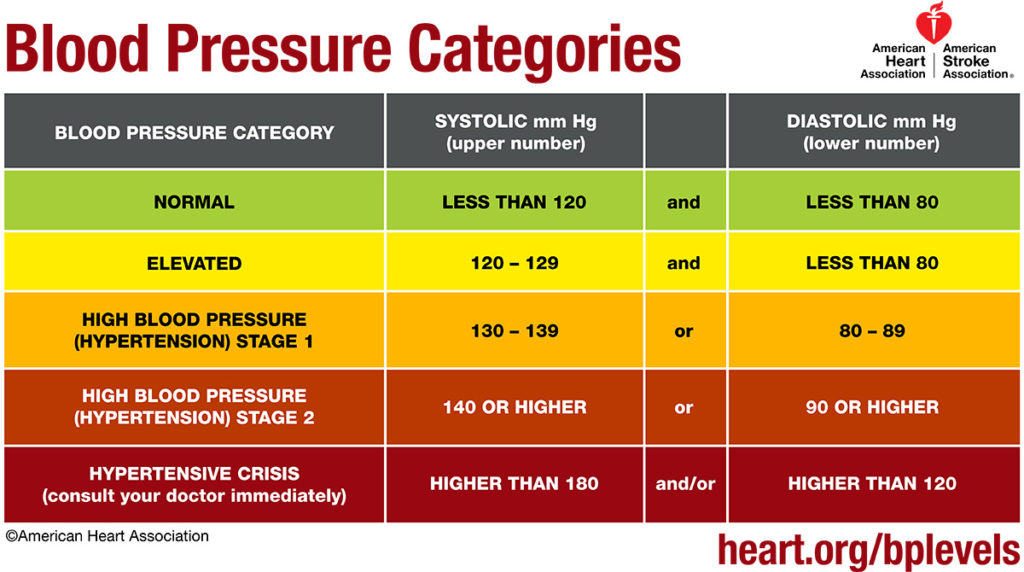
It might be easier to assert what constitutes “normal” blood pressure. According to the American Heart Association, normal blood pressure has a systolic reading of less than 120 and a diastolic reading of less than 80. Higher readings for either or both of these values represents risk, with higher numbers representing higher risk. Refer to the accompanying chart.

Preventing High Blood Pressure

The focus of most high blood pressure prevention strategies is to reduce any blockages of the blood vessels and to maintain the flexibility of the blood vessel walls. This maximizes the flow of oxygen to the cells throughout the body by maximizing blood flow.

According to the World Health Organization (WHO), a United Nations body, there are six things you can do to prevent high blood pressure.

  • Reduce Salt Intake

WHO recommends a daily maximum of five grams (5000mg). However, most other authorities recommend less than half of that, with some stating that 2300mg should be the maximum while other authorities set the bar at 1200-1500mg (and some much lower than that).

Salt is essential to certain body functions. However, excess amounts have a negative impact. Too much salt causes the body to retain excess fluid which increases the pressure on blood vessels and other organs in the body.

  • Eat Fruits and Vegetables Regularly

In addition to providing necessary nutrients, fruits and vegetables provide a natural source of fiber. This helps remove toxins from the body and aids in the stabilization of blood sugar levels. All of these things together promote healthy blood vessel maintenance.

  • Avoid Saturated Fats and Trans Fats

Trans Fats are not a natural material and are considered by the body to be a harmful toxin. Trans fats interfere with a variety of the body’s natural functions.

Some saturated fat is used by the body to maintain good health. However, excess amounts of saturated fats can lead to the significant production of “bad” cholesterol in the blood stream. This “bad” cholesterol can get deposited on the walls of the blood vessels and, over time, can cause a buildup that constrains blood flow. This pushes up the blood pressure readings.

  • Avoid Tobacco Smoking

Tobacco smoke contains a nasty combination of chemical toxins. This interferes with the transfer of oxygen from the lungs to the red blood cells. This means that the body has to work harder to get the necessary volume of oxygen carrying red blood cells to the cells of the body. Higher blood pressure can result from this extra effort to push blood through the system.

In addition, the body’s glutathione reserves are used to try to remove these toxins from the body. Lower glutathione levels can lead to problems as described below.

  • Reduce Alcohol Consumption

As with tobacco smoke, the body considers alcohol to be a toxin. Processing significant amounts of toxins reduces glutathione levels and puts stress on the body, including the circulatory system. Again, lower glutathione levels can lead to problems as described below.

  • Be Physically Active Every Day

Vigorous physical activity exercises not only your major muscle groups, it also exercises the heart muscle. This in turn causes the blood vessels to expand and contract more frequently which enhances flexibility in the vessel walls. Flexibility is a healthy desirable condition for your blood vessels.

And I would add two more:

  • Reduce Excess Body Fat

Some body fat is necessary. However, excess body fat exerts additional pressure on not only the various vital organs of the body but also puts additional pressure on the blood vessels, reducing their natural flexibility. There is a reason that we see a high correlation between high body fat levels and high blood pressure.

  • Increase Intracellular Glutathione Levels

Studies have shown that abundant glutathione in the cells can reduce the levels of Low Density Lipoprotein (LDL), also called the “bad” cholesterol. This kind of cholesterol is known for attaching itself to blood vessel walls. The resulting build-up can increase blood pressure. Increasing intracellular glutathione is a drug-free way to reduce LDL and thereby promote healthy blood pressure levels.

Summary

High blood pressure is a significant risk factor associated with a number of potentially serious (even fatal) health conditions. There are things you can do to prevent high blood pressure and thereby avoid this real risk to your wellbeing and your life. Most of these things are lifestyle choices that are well within your control.

#health #heartdisease #highbloodpressure

What About Autism?

According to Autism Canada, “Autism Spectrum Disorder, or autism, is a neurodevelopmental disorder that impacts brain development causing most individuals to experience communication problems, difficulty with social interactions and a tendency to repeat specific patterns of behaviour. There is also a markedly restricted repertoire of activities and interests.

Rising Incidence of Autism is Alarming

More children than ever before are being diagnosed with ASD. It is unclear how much of this increase is due to a broader definition of ASD and better efforts in diagnosis. However, a true increase in the number of people with an ASD cannot be ruled out. The increase in ASD diagnosis is likely due to a combination of these factors.

According to the U.S. Centres for Disease Control (Ref 1), the incidence of ASD was 1 in 59 children in 2014. This estimate is roughly 30% higher than the estimate for 2008 (1 in 88), roughly 60% higher than the estimate for 2006 (1 in 110), and roughly 120% higher than the estimates for 2002 and 2000 (1 in 150). There is no sign that this worsening trend is slowing.

ASD Characteristics

As its name implies, individuals with ASD may exhibit a spectrum of challenging behaviours.

Individuals with severe autism conditions may have serious cognitive disability, sensory problems and symptoms of extremely repetitive and unusual behaviour. This can include tantrums, self-injury, defensiveness and aggression. Without appropriate intervention, these symptoms may be very persistent and difficult to change. Living or working with a person with severe autism can be very challenging, requiring tremendous patience and understanding of the condition.

Individuals with mild autism conditions, however, may seem more like they have personality differences, making it challenging to form relationships.

The primary symptoms of autism include problems with communication and social interaction, as well as repetitive interests and activities.

Various Treatment Options

As one might imagine, with such a wide variety of factors like number and particular kinds of symptoms, severity (mild to severe), age, levels of functioning and challenges with social interactions, there is a wide variety of treatment options.

Approaches vary from intensive behaviour therapy, to education for both parents and children, to administration of pharmaceuticals (e.g., to suppress aggressive behaviour), to diet changes, to consumption of dietary supplements that address nutrient deficiencies. The options available to parents of an ASD child can be daunting. Autism Canada has some useful information about the evolving options. (Ref 2)

The basic problem is that, as with most modern chronic disease, treatments tend to address observed symptoms rather than trying to tackle underlying causes.

What Causes Autism?

Over the years there has been much research and speculation about the cause of ASD. There is even the possibility that, given the range of symptoms, there may be multiple different causes.

Some of this speculation has received sensational reporting in the news media. Who has not heard the claim by many parents that certain vaccines administered to young children provoked the development of ASD? This story has seen its ups and downs, involving emotional claims by parents and condescending reassurances from pharmaceutical companies. (I haven’t seen a really good response to the parents’ question of “why on earth would a pharmaceutical company include toxic mercury in a preserving agent for a vaccine directed at very young children, since its only function seems to be to save the company money by extending the shelf life of the vaccine?”) On the other hand, apparently valid studies have shown no correlation between vaccines and incidence of ASD.

But some relevant analysis seems to shed light, not just on the cause of ASD but also on a possible cause of a variety of other neurological disorders that have seen increasing occurrence trends in recent decades. Although this may be new to many people, this is not new research. The relevant science and analysis is well laid out in a report entitled “Environmental contamination and autism: Special report from UPHE”. UPHE is the Utah Physicians for a Healthy Environment and the report was published in January of 2015 (Ref. 3) I encourage you to read the entire report.

In addition, on Jan, 29, 2015, six physicians with expertise on how air pollution affects the brain gave a 75 minute presentation on the latest research on this critical public health topic. (Ref. 4) On that page is a link to the audio of the presentation and a summary of the highlights. For those with specific interest, I recommend it.

Quoting from the report:

In early 2014 leading scientists in pediatrics and public health warned of a “silent pandemic,” of brain disorders citing strong evidence that “children worldwide are being exposed to unrecognized toxic chemicals that are silently eroding intelligence, disrupting behaviors, truncating future achievements and damaging societies.”

These toxins — heavy metals, fluoride, chemicals like PCBs, toluene, solvents, flame retardants, BPA, phalates, pesticides, and PAHs (polycyclic aromatic hydrocarbons) — are found in the air you breathe, the food you eat, the water you drink, and the grass your kids play soccer on. Dramatically escalating rates of autism are part of this “silent pandemic.” Autism rates have climbed another 30% just since the last survey of two years ago, with Utah having the second highest rates of autism in the country, double the national average. As of 2012, one in every 32 Utah boys had autism. This “silent pandemic” warning should be a real wake up call for Utah physicians and policy makers.

Evidence is mounting that autism is likely caused by environmental exposures in genetically susceptible individuals. Supporting an environmental/genetic tag team are other studies showing autistic children and their mothers have a high rate of a genetic deficiency in the production of glutathione, an antioxidant and the body’s primary means of detoxifying heavy metals. High levels of toxic metals in children are strongly correlated with the severity of autism. Low levels of glutathione, coupled with high production of homocysteine, increase the chance of a mother having an autistic child to one in three. That autism is four to five times more common among boys than girls is likely related to a defect in the single male X chromosome contributing to antioxidant deficiency. But there is no such thing as a genetic disease epidemic because genes don’t change that quickly, so the alarming rise in autism must be the result of increased environmental exposures that exploit these genetic defects.

While numerous environmental exposures have been implicated, including pharmaceuticals like anti-depressants, in the last few years a growing body of epidemiological studies have been published linking autism to air pollution, including a highly regarded one from the Harvard School of Public Health just last month that showed a strong correlation between prenatal air pollution, especially in the third trimester, and autism.

Enhanced GSH Levels as a Key Countermeasure

If we look at the highlights:

  • heavy metal and toxic chemical concentrations in the mother during pregnancy,
  • heavy metal and toxic chemical concentrations in the ASD child,
  • co-occurring conditions (Ref 5) that correlate to low glutathione levels, and
  • oxidative stress as a common theme across the board

it becomes obvious that glutathione (GSH) is a critical factor.

If we review the various roles that glutathione plays in your body (refer to Why Does Your Health Depend on Glutathione) we can see a possible strategy. The major threat factors identified in the UPHE analysis are chemical toxins, heavy metals, oxidative stress and inflammation.

Glutathione:

  • is the body’s master detoxifier, removing chemical toxins from the body,
  • chelates a variety of heavy metals out of the body,
  • is the body’s master antioxidant, neutralizing free radicals and thereby reducing oxidative stress, and
  • reduces cellular inflammation.

The countermeasures seem obvious. Increase the body’s intracellular glutathione levels.

Possible Actions to Take

If we assume that the analysis published by UPHE is valid, there are a few things that you could do to protect against neurological harm, both for your baby and for yourself:

  • If you are pregnant or considering pregnancy, take action immediately to increase your intracellular glutathione levels at least until you stop breastfeeding.
  • If you are an adult, understand that this harmful pollution is also a risk to your health. Take action to increase your intracellular glutathione levels on an ongoing basis.
  • If you have a new baby or young child, have their glutathione levels checked periodically. And if indicated, take action to increase their intracellular glutathione levels. Or consider doing this anyway as a general preventive measure.
  • If you are an adult with ASD, your body is no doubt in a state of oxidative stress. Take action to increase your intracellular glutathione levels on an ongoing basis.
  • Finally, get behind any initiative that will get governments to severely reduce industrial air pollution worldwide. It’s either that or get used to the idea of every individual, including young children, wearing a functional Darth Vader mask to help keep the toxic pollution out of their bodies.

References

Reference 1: https://www.cdc.gov/ncbddd/autism/data.html

Reference 2: https://autismcanada.org/living-with-autism/treatments/

Reference 3: http://uphe.org/air-pollution-health/the-brain/environmental-contamination-and-autism-special-report-from-uphe/ January 2015

Reference 4: http://uphe.org/air-pollution-health/the-brain/ January 2015

Reference 5: https://autismcanada.org/about-autism/comorbid-conditions/

#chronicdisease #autism #glutathione
Macular Degeneration and Oxidative Stress

Recently I discovered that an online friend had been diagnosed with Age-related Macular Degeneration (AMD). My instant reaction was ‘I have something that I believe will help.’ But I decided to do a little research to be sure I had my facts right.

What is AMD?

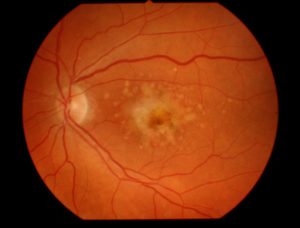
According to the U.S. National Institutes of Health, “AMD is a common eye condition and a leading cause of vision loss among people age 50 and older. It causes damage to the macula, a small spot near the center of the retina and the part of the eye needed for sharp, central vision, which lets us see objects that are straight ahead.

AMD is usually first detected with a standard visual acuity test. Other diagnostic tests (e.g., dilated eye exam, Amsler Grid, Fluorescein Angiogram, Optical Coherence Tomography) may be used to confirm the diagnosis and monitor the progress of the condition.

According to the American Macular Degeneration Foundation, there are two general types of AMD, the “dry” and the “wet” variety.

  • In the “dry” type of macular degeneration, the deterioration of the retina is associated with the formation of small yellow deposits, known as drusen, under the macula. This phenomenon leads to a thinning and drying out of the macula, causing the macula to lose its function. The amount of central vision loss is directly related to the location and amount of retinal thinning caused by the drusen.
  • In the “wet” type of macular degeneration, abnormal blood vessels (known as choroidal neovascularization or CNV) grow under the retina and macula. These new blood vessels may then bleed and leak fluid, causing the macula to bulge or lift up from its normally flat position, thus distorting or destroying central vision. Under these circumstances, vision loss may be rapid and severe.

Apparently there is no known cure for AMD; however there are some treatments that appear to slow its progress, including monthly injections.

Relevance of Oxidative Stress

Research confirms that AMD, as with most chronic diseases, correlates with abnormally low blood glutathione levels – which means the body is experiencing high levels of oxidative stress (Reference 1 and Reference 2). Oxidative stress is a state in which the body has more damaging free radicals than it has the antioxidant capacity to neutralize. High levels of free radicals can do much harm across a variety of the body’s systems, including its visual sensory systems.

Glutathione (rhymes with ‘glue-da-tie-on’) is a molecule that is produced by every living cell in your body. It is necessary for life in every mammal, including humans. If all of the glutathione were to leave your body, you would not survive two seconds. If you don’t have enough glutathione bad things happen, including disease.

Since glutathione (GSH) is the body’s master antioxidant, a low level of GSH means high oxidative stress. With some exceptions, glutathione is in adequate supply in children. However, from about age 20 onward the natural production of glutathione tends to drop at an average rate of about 10-15 percent per decade. This is a concern because the glutathione molecule is involved in many necessary processes in your body.

In the case of AMD, the “age-related” portion of the name is indicative of the root cause of the condition. The older a person gets the lower their natural intracellular glutathione levels are. AMD is always associated with low glutathione. Therefore it is reasonable to presume that those who are able to keep their intracellular GSH at nominal levels will not develop AMD.

Possible Treatment Option

The natural conclusion this implies is that to slow or stop the progress of the condition in the person who has AMD, they should increase their intracellular glutathione levels substantially. This is a conclusion that was reached in a 2013 study (Reference 3). But as with similar research findings for other chronic diseases, no follow-up work is done to bring this to standard treatment practice. Many folk believe this is because there is no money to be made by the medical and pharmaceutical industries from the use of relatively inexpensive nutritional supplements.

When I heard about my online friend having the “wet” form of AMD, I put a question out to a group of folk that know about glutathione.

Here’s what I asked: Increasing glutathione is supposed to help with macular degeneration. Does anyone know of someone who experienced this effect? I’m unsure what I can tell a friend who I just found out has the condition. Thanks.

After a couple of days, here’s a response I got from a personal friend in the group: Hi John, I have had macular degeneration for many years. My ophthalmologist takes a picture of my left eye every year. It was full of blood spots and lines of blood. Now it is smooth and no blood at all. Big change in about one year. Yeah for <product name>.

The product he named is one that increases intracellular GSH levels. This is one person’s experience. By itself it does not mean this constitutes a confirmed treatment or a cure. But in my mind it is further evidence that the medical community really needs to take a look at increasing intracellular glutathione levels as a bona fide treatment option for chronic diseases like AMD.

References:

Reference 1: Qin L, Mroczkowska SA, Ekart A, Patel SR, Gibson JM, Gherghel D., Patients with early age-related macular degeneration exhibit signs of macro- and micro-vascular disease and abnormal blood glutathione levels, Graefe’s archive for clinical and experimental ophthalmology, (January 2014)

Reference 2: Mrowicka M, Mrowicki J, Szaflik JP, Szaflik MS, Ulińska M, Szaflik J, Majsterek I., Evaluation pro/antioxidant balance in patients with wet form of age-related macular degeneration, Klin Oczna. 2016;118(4):284-8 (original article in Polish)

Reference 3: Zafrilla P, Losada M, Perez A, Caravaca G, Mulero J., Biomarkers of oxidative stress in patients with wet age related macular degeneration, The Journal of Nutrition, Health & Aging. (March 2013)

#amd  #chronicdisease #glutathione

The Impact of ROS on ME/CFS and FMS

This is a topic that is somewhat dear to my heart. My sister was diagnosed with Fibromyalgia a couple of decades ago. And her life has been miserable for much of that time.

Terminology

For clarification, ME refers to Myalgic Encephalomyelitis or Myalgic Encephalopathy, CFS refers to Chronic Fatigue Syndrome, and FMS refers to Fibromyalgia Syndrome (more commonly just Fibromyalgia).

ME/CFS

Chronic Fatigue Syndrome is a term that has been in use for quite some time. A name less recognized in Canada but moving into more common use is myalgic encephalomyelitis (ME). This lengthy name can be easily broken down into its parts, where “myalgic” refers to muscle pain; “encephalo” refers to the brain; “myel” refers to the spinal cord; and “itis” refers to inflammation.

In 2001, Health Canada appointed an international panel of experts in this emerging field of medicine to establish a clinical working-case definition, diagnostic guidelines, and treatment procedures. The panel released a set of guidelines in 2003 and their choice of name to describe the condition was both “myalgic encephalomyelitis” and “chronic fatigue syndrome” – with acronyms shortening it down to a manageable size: ME/CFS.

It is estimated that more than 1 million people in the US population have ME/CFS – 422 per every 100,000 people. It is 4 times as common in women as in men (522 out of 100,000 women have it), and women suffer from ME/CFS in greater numbers than from breast cancer (26 per 100,000), HIV/AIDS (12 per 100,000), or lung cancer (33 per 100,000).

In Canada, Statistics Canada reported in 2005 that over 341,000 Canadians were diagnosed with ME/CFS.

~~ Source: medbroadcast.com

Refer also to a more recent definition from the U.S. Centres for Disease Control and Prevention. Myalgic encephalomyelitis/chronic fatigue syndrome (ME/CFS).

FMS

FMS stands for Fibromyalgia Syndrome. With Fibromyalgia, pain with its devastating and demoralizing effects remains a challenging problem for both patients and care givers. Fibromyalgia is one of the most common diseases affecting the muscles manifested with pain, stiffness, and tenderness of the muscles, tendons, and joints. The painful tissues involved are not accompanied by tissue inflammation. Therefore, despite potentially disabling body pain; patients with fibromyalgia do not develop tissue damage or deformity. The pain of fibromyalgia is generally widespread, involving both sides of the body. Pain usually affects the neck, buttocks, shoulders, arms, the upper back, and the chest. “Tender points” are localized tender areas of the body that can bring on widespread pain and muscle spasm when touched.

FMS typically presents in young or middle-aged females as persistent widespread pain, stiffness, fatigue, disrupted unrefreshing sleep, and cognitive difficulties, often accompanied by multiple other unexplained symptoms, anxiety and/or depression, and functional impairment of daily living activities. There is an overall 6% to 15% prevalence rate in the United States with a five times greater incidence among women than men.

~~ Source: Oman Medical Journal, published May 2012.

ROS

ROS stands for Reactive Oxygen Species, otherwise known as “free radicals.” Oxidative Stress is a condition in which the level of free radicals exceeds the antioxidant capacity of the body – there’s not enough antioxidants to neutralize the radicals and maintain a balance. (Refer to the article Get Rid of the Radicals.) As most people know, radicals are bad for your health. Prolonged periods of oxidative stress lead to disease and disfunction.

Both ME/CFS and FMS exhibit oxidative stress as a common characteristic.

According to a study published in 2014, “Many studies involving peripheral blood measurements have demonstrated significant abnormalities related to increased O&NS [oxidative stress and nitrosative stress] in many patients with ME/CFS.” (Ref. 1)

According to a study published in 2015, “FMS patients have higher oxidative stress index and lower total nitrite levels than healthy controls. In particular, patients with FMS demonstrated higher serum prolidase activity, total oxidative status, and oxidative stress index than healthy controls, and serum prolidase activity positively correlated with pain and fatigue scores.” (Ref. 2)

My Sister’s Story

My sister had been living with a diagnosis of Fibromyalgia for at least a couple of decades. Several days a week she would have difficulty getting out of bed in the morning. Either not enough energy or too much pain or both. And when she did get up and going, everything she did caused pain and drained her energy. This was no way to live. I’m sure I have just glossed over the situation since I have not experienced what she goes through on a daily basis. I could not do justice to her challenges.

A few years ago I became aware of a nutritional supplement that increased the body’s intracellular glutathione levels. And I saw a list of conditions associated with low glutathione. When I saw Fibromyalgia on the list, my attention perked up.

My Mom and my sister live separately but in the same house. And they live about a five hour drive away from where I live. One weekend when I went to visit, I told my sister about the supplement and urged her to try it. I would be her supplier. She agreed – but I think it was because I was her brother and not because she thought it would make a difference.

After I went home I would call my Mom every couple of weeks to see how she was doing. During those calls I would ask about my sister.

“How’s Sue doing?”

My Mom would answer, “Oh, she’s doing alright.”

A few weeks later, “How’s Sue doing?”

“She’s doing alright.”

“How’s Sue doing?”

“She’s doing alright.”

I was starting to get frustrated. This supplement was supposed to help her.

About 8-10 weeks after she started on the supplements, “How’s Sue doing?”

“Oh, she’s had a particularly bad day today.”

I was thinking, “Damn, the stuff was supposed to help.” But before I could say anything, my Mom went on, “You know those pills you gave her?”

“Yeeesss.” I said somewhat hesitantly. I feared she was going to tell me she thought the supplement had caused problems.

Mom said, “Well, her energy levels are up so much and her pain levels are down so much that she’s doing stuff she hasn’t done in 20 years and her muscles are complaining.”

I was shocked. But before I could even think of a response, my mother starts crying and says, “Thank you for giving your sister her life back.”

All I did was suggest that she take some supplements, based on some science research I had done. But I must admit that it felt pretty good.

We later determined that she needed to take more than the standard dose recommended by the manufacturer to see adequate benefits. Things will never get back to the way they were when she was twenty. But they are an order of magnitude better than what they used to be.

Summary

Both ME/CFS and FMS exhibit high levels of oxidative stress (high levels of damaging free radicals). The high level of oxidative stress correlates to high pain and fatigue scores. Glutathione is the body’s master antioxidant. It is produced by the body inside each living cell. Researchers use the level of glutathione as the primary indicator of the level of oxidative stress – the lower the glutathione level the higher the oxidative stress.

Experience shows that increasing intracellular glutathione reduces oxidative stress levels, which leads to a reduction of pain and fatigue. This approach is not a cure; but it may be an effective way to improve the quality of life of those dealing with these conditions.

References:

Reference 1: Gerwyn Morris and Michael Maes, Oxidative and Nitrosative Stress and Immune-Inflammatory Pathways in Patients with Myalgic Encephalomyelitis (ME)/Chronic Fatigue Syndrome (CFS), Current Neuropharmacology, 2014 Mar; 12(2): 168–185. Mar. doi: 10.2174/1570159X11666131120224653

Reference 2: Theoharis C. Theoharides, Irene Tsilioni, Lauren Arbetman, Smaro Panagiotidou, Julia M. Stewart, Rae M. Gleason, and Irwin J. Russell, Fibromyalgia Syndrome in Need of Effective Treatments, The Journal of Pharmacology and Experimental Therapeutics, 2015 Nov; 355(2): 255–263. Published online 2015 Nov. doi: 10.1124/jpet.115.227298

#Fibromyalgia #ChronicFatigue #ME/CFS #glutathione