
Thoughts and Observations about PTSD

Post Traumatic Stress Disorder (PTSD) has probably been around for thousands of years. But it is only in the last hundred years or so that it has been recognized as a distinct psychological disorder. Its prevalence first came to public awareness during World War I. Front line soldiers in the trenches of Europe, who were the target of massive artillery barrages, were under constant stress, never knowing whether the next artillery round or bullet had their name on it. And this went on sporadically over several years.

It is not surprising that some men broke under the pressure. If the symptoms manifested at the front line during battle, there was a good chance that the soldier would be charged with ‘cowardice in the face of the enemy’ and summarily shot in front of his comrades as a lesson in discipline. If the thousand yard stare and erratic behaviour occurred after battle, while on leave or after the soldier returned home it was called ‘shell shock.’

The same thing happened in WW II, the Korean Conflict and the Viet Nam War. The condition started to become a matter of public concern in the face of television reporting during and after the war in Viet Nam. This is when some level of research started and ultimately the PTSD designation was applied. It is now recognized as a specific condition by most military forces in the world. In recent years we see more and more veterans of the Gulf Wars and ongoing military operations struggling with PTSD, both in the war zone and after they return home. It has been characterized by an increasing number of suicides among serving members as well as veterans.

But we need to remember that PTSD is not exclusive to the military. The intense traumatic stress that may trigger the condition can occur in civilian populations in a war zone, among people who experience natural disasters, and people who are the victims of sexual abuse or violence. This is particularly true if the stressful situation, over which the person has little control, extends over a protracted period of time.

What Is PTSD?

The U.S. National Institute of Mental Health says this.

It is natural to feel afraid during and after a traumatic situation. Fear triggers many split-second changes in the body to help defend against danger or to avoid it. This “fight-or-flight” response is a typical reaction meant to protect a person from harm. Nearly everyone will experience a range of reactions after trauma, yet most people recover from initial symptoms naturally. Those who continue to experience problems may be diagnosed with PTSD. People who have PTSD may feel stressed or frightened even when they are not in danger.
Symptoms can include:

  • Flashbacks—reliving the trauma over and over, including physical symptoms like a racing heart or sweating
  • Bad dreams
  • Frightening thoughts
  • Staying away from places, events, or objects that are reminders of the traumatic experience
  • Avoiding thoughts or feelings related to the traumatic event
  • Being easily startled
  • Feeling tense or “on edge”
  • Having difficulty sleeping
  • Having angry outbursts
  • Trouble remembering key features of the traumatic event
  • Negative thoughts about oneself or the world
  • Distorted feelings like guilt or blame
  • Loss of interest in enjoyable activities

Other ongoing problems can include:

  • Avoiding relationships
  • Substance abuse
  • Panic disorder
  • Depression
  • Feeling suicidal

It’s More Than a Psychological Problem

The root cause of PTSD is a specific or ongoing traumatic stress-inducing event. We experience some level of stress every day. Some situations are more stressful than others. But traumatic stress raises the bar.

Cortisol is called the stress hormone because it is produced in response to a perceived threat. Cortisol’s effects are particularly noted in the brain, which make sense since the brain is the body’s control centre for the fight-or-flight response to the perceived threat. Many studies over the years have confirmed that prolonged increases in cortisol levels result in increased levels of free radicals. Therefore there is a risk that these radicals will cause damage to brain cells and, if significant enough, may result in altered brain function.

A recent study, involving military personnel as the subjects of the study, concluded that “oxidative stress, increased free radical level beyond excitotoxity, is a possible causal factor for clinical manifestation of PTSD.” (Ref. 1) Since many people with PTSD experience ongoing stress as a result of their symptoms, including re-experiencing the original stressful event, we can presume that additional damage may continue to be done if the level of free radical production due to the cortisol generation exceeds the antioxidant capacity of the subject. (Note: Oxidative Stress is a condition in which the level of damaging free radicals exceeds the anti-oxidant capacity of the body to neutralize them. A state of oxidative stress causes damage to the body’s cells and, if it persists, disease results.)

A Possible Way Forward

Current treatment involves medications and psychotherapy. People with PTSD are advised to seek competent professional help. Having a support network available and taking advantage of it is also strongly recommended.

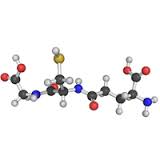
However, given the possibility that PTSD symptoms are to some degree a result of physical brain chemistry issues due to oxidative stress, one wonders if tackling the oxidative stress situation head on might produce positive results. Increasing the body’s level of intracellular glutathione may be the key. Glutathione is the body’s master anti-oxidant and it is produced in every living cell in the body. Having optimum glutathione levels reduces or eliminates oxidative stress. There are several different ways to help the body increase its glutathione levels. Some are more effective than others; but none involve the administration of pharmaceutical drugs.

References:

Reference 1: Vladimirs Voicehovskis, et al, Oxidative Stress Parameters In Post-traumatic Stress Disorder Risk Group Patients, Proceedings of The Latvian Academy of Sciences, published 2012, Section B, Vol. 66 (2012), No. 6 (681), pp. 242–250. DOI: 10.2478/v10046-012-0016-x

#ptsd #healthscience #glutathione
Benefits of Activating the Body’s AMPK Pathway

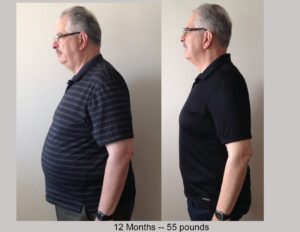
before and after image showing 55 pound weight lossA few years ago my daughters started expressing concern for my health. They nagged and cajoled at every opportunity, telling me I needed to get in better shape. I knew they were right but I didn’t want to go to the effort to change. I would huff and puff going up a flight of stairs. I admit that I was a little overweight. (Alright, I’ll tell the truth. I was obese.) I paid a premium price for most of my clothes because I had to shop in a large men’s specialty clothing store.

Finally, to put an end to the nagging, I joined the same gym where they worked out. I had never been to a gym in my life since phys ed in high school. I had no clue about how to use the machines or how to approach this working-out thing. In order to reduce the risk of injury, I engaged the services of a personal trainer. I endured an hour of cruel torture err… training three times a week religiously. I must admit that as time went by I started to feel better and was able to do more physically. My weight loss, however, was less than spectacular. After three months of torture I had lost a total of one pound!!

As you may have suspected, I really enjoy good food. And as most dieters will tell you, the biggest challenge to losing weight is the HUNGER. The truth is that, unless you exercise vigorously many hours a day, about 90% of weight loss has to do with what you put in your mouth and only about 10% is from exercise. You need to reduce your caloric intake. And when your body is used to eating at certain levels and you significantly reduce that, hunger results. Absent adequate motivation and strong will power, it’s really tough to stick to a weight loss regimen for any length of time in the face of perpetual hunger.

A Weight Management System

About the end of this initial three month period I was introduced to a weight loss system. One of the key components was some capsules, a nutritional supplement, that I took a short while before each meal. According to the documentation, the capsules would do two things. They would reduce the hunger pangs so your eating was not driven by food cravings. And they would burn off fat and reduce the conversion of carbs to be stored as fat. And all of this was heart healthy!

At the end of the next 90 days I had lost 15 pounds while not changing the level of physical activity. Still endured torture three time a week. But more than the pounds lost was the change in body shape. The fat was melting off and my clothes started to hang on me. I had to buy a smaller belt to keep my trousers up. The promise of the weight loss system was met. I was less hungry. I was satisfied with smaller portions. So my caloric intake was much less.

What was strange, and not mentioned in any of the promotional material, was that I started to crave healthier food. I used to hate fresh fruit and vegetables. But now I would munch on some grapes or some raw veggies with dip. That was a side effect for which I have no explanation.

At the end of 12 months I had lost 55 pounds. I had to replace my entire wardrobe, except my shoes and my ties! (And my daughters, wonderful women that they are, suggested that I do the world a favour and get rid of many of my ties. I’m not letting either one of them near my closet.)

This should not have been called a weight management system but rather a fat management system.

Under the Covers

If you have seen some of my writing you know that I am curious and have an analytical mind. I wanted to know what was behind this healthy nutritional supplement. The simple answer was that some of the ingredients in the capsules activated something in the body called the AMPK pathway. (I’m going to spell it out just this once – AMPK: Adenosine Monophosphate-activated Protein Kinase.)

Based on my research, switching on the AMPK pathway has many more health benefits than just helping with weight loss. As a result, I will probably continue to take the capsules even after I reach my target weight.

So what are these other benefits? I’m glad you asked.

  • As we already saw, reduced levels of obesity: Reduction of hunger, reduction of fat storage, accelerated burning off stored fat
  • Treatment and prevention of cancer: “… phytochemicals activate AMPK to increase cancer cell apoptosis (cancer cell death) and inhibit cell proliferation …” (Ref. 1) Refer also to (Ref. 2)
  • Improvement of Type II Diabetes indicators: reduction in fasting glucose, reduction in hemoglobin A1c, decrease in insulin resistance (Ref. 3)
  • Improved cardiovascular health: reduced LDL (bad cholesterol) and triglyceride levels, and improved heart health (Ref. 4)

Here is another case of solid benefits of healthy nutritional supplements not being adequately promoted for the prevention and treatment of disease. Why is that? Because the pharmaceutical industry can’t make obscene profits from well known nutritional supplements. And in most countries, nutritional supplement companies are prohibited by law from making specific health claims about their products.

References:

Reference 1: InYoung Kim and Yu-Ying He, Targeting the AMP-activated protein kinase for cancer prevention and therapy , Frontiers in Oncology, Published 15 July 2013.

Reference 2: Weidong Li, Shakir M. Saud, Matthew R. Young, Guohong Chen, and Baojin Hua, Targeting AMPK for cancer prevention and treatment, Oncotarget Open Access Impact Journal, Published 10 April 2015, doi: 10.18632/oncotarget.3629

Reference 3: Sandeep Rana, Elizabeth C. Blowers, and Amarnath Natarajan, Small molecule adenosine 5′-monophosphate activated protein kinase (AMPK) modulators and human diseases, Journal of Medicinal Chemistry, Published 8 January 2015, doi: 10.1021/jm401994c

Reference 4: Rai Ajit K. Srivastava, Stephen L. Pinkosky, Sergey Filippov, Jeffrey C. Hanselman, Clay T. Cramer, and Roger S. Newton, AMP-activated protein kinase: an emerging drug target to regulate imbalances in lipid and carbohydrate metabolism to treat cardio-metabolic diseases, Journal of Lipid Research, Published December 2012, v.53(12); 2012 DecPMC3494254

#healthscience #obesity #diabetes #heartdisease #cancer

A Good Night’s Sleep

woman-sleeping-with-smile 1000x560If you suffer from insomnia or if you do not awaken refreshed each morning ready to face the day, you need to pay attention to this.
According to the National Institutes of Health, sleep deficiency is a broad concept that occurs (a) if an individual does not get enough sleep (sleep deprivation), (b) if an individual’s sleeping habits are out of sync with the body’s natural circadian rhythm (sleeping during the wrong time of the day), and (c) if the quality or quantity of sleep is diminished due to a sleep disorder or external factors.

In a 2013 study, the National Sleep Foundation reported that less than half of all Americans (44%) and Canadians (49%) receive a good night’s sleep almost every night. This is a significant health issue.

Adequate Sleep is Important

Sleep is essential to human health. According to a study published in 2005 (Ref. 1) sleep deprivation results in the potential for cell injury and disease due primarily to the resulting reduction in antioxidant levels, particularly glutathione.

Catalase activity and glutathione content, which normally are tightly regulated, were both decreased in liver by 23–36% by 5 and 10 days of sleep deprivation. Such levels are associated with impaired health in other animal models of oxidative stress-associated disease. The decreases were accompanied by markers of generalized cell injury and absence of responses by the other enzymatic antioxidants under study. Enzymatic activities in the heart indicated an increased rate of oxidative pentose phosphate pathway activity during sleep deprivation.

Lack of sleep could increase risk factors for heart disease. According to a 2015 study (Ref. 2):

Decreased quantity and quality of sleep, whether due to sleep disorders or just through lack of proper sleep patterns, have been linked to cardiovascular disease (CVD) risk factors, such as hypertension, obesity, diabetes, and dyslipidemia. Studies have shown that short durations of sleep are associated with greater risk of developing or dying from CVD.

Furthermore, REM (Rapid Eye Movement) sleep is essential to memory and cognitive function. According to a study published in 2009 (Ref. 3):

Compared with quiet rest and non-REM sleep, REM enhanced the formation of associative networks and the integration of unassociated information. Furthermore, these REM sleep benefits were not the result of an improved memory for the primed items. This study shows that compared with quiet rest and non-REM sleep, REM enhances the integration of unassociated information for creative problem solving.

As a side note, intentional sleep deprivation is used as an interrogation technique by police and military forces around the world to take advantage of this phenomenon. There is evidence to suggest that sleep deprivation can lead to false confessions.

REM sleep, however, only occurs during longer periods of deep sleep. It is also during REM sleep cycles that many of the body’s self repair functions are undertaken. People who experience REM sleep tend to dream; but perhaps more importantly, they tend to wake up refreshed and energetic.

What Can You Do?

I would offer four concrete suggestions to improve your sleep situation: avoid stimulants late in the day, schedule your sleep, increase your glutathione levels and get rid of blue light at bed time. Let’s take a look at each of these.

Avoid Stimulants

This is rather obvious but needs to be stated. Many people are in the habit of having coffee or tea after their evening meal. Nicotine (e.g., from smoking) is also a stimulant. But if there is a stimulant like caffeine floating around in their blood stream when it’s time to go to bed, people are unlikely to feel the need to go to bed; when they do go to bed, they are unlikely to go to sleep quickly; and their sleep may not be as restful as it needs to be.

Recommendation: Avoid consuming stimulants in any form for at least eight hours before bed time.

Schedule Sleep

I like to read and do so often in the evening. I guess I inherited that from my dad. He would read Westerns by authors like Zane Grey and Louis L’Amour until all hours. When he was reading he was totally absorbed in the book. Mom used to say she could announce the outbreak of World War Three and he would be oblivious.

I’m the same way. But my preferred genre for escaping reality is sappy romances. (Please don’t tell anyone. It would destroy my macho image.) There have been times when reading late at night that pressure on my bladder forced me to become aware of my surroundings again – and I would realize it was two in the morning. I have had to set the alarm on my mobile phone to remind me to go to bed.

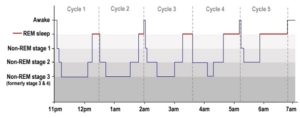
REM Sleep CyclesWhen planning the amount of sleep you need, remember that the beneficial effects of sleep occur during REM sleep cycles. The first cycle lasts about 90 minutes while later cycles last 100-120 minutes. Optimally you should experience five cycles for a good night’s sleep. This forms the scientific basis for the common recommendation that you need 7-8 hours sleep each night.

Recommendation: Determine when you need to get up the next day. Then figure out when you need to get to bed in order to have the time to get an adequate amount of sleep. Then set an alarm for that time so that you actually have a chance of getting your needed sleep.

Remember: An inadequate amount of sleep constitutes sleep deprivation and that is bad for you.

Increase Glutathione Levels

Studies have shown that people with primary insomnia have low levels of glutathione in their bodies. (Ref. 4) If you have low levels of glutathione in your body there is a high probability that, even if you don’t suffer insomnia, you may not experience restful sleep. People with normal levels of glutathione tend to experience REM sleep cycles and awaken refreshed. From about age 20, the body’s natural glutathione production drops by 1 to 1.5% annually. Other environmental factors further diminish the level of available glutathione in most people. Therefore it is not surprising that so many report inadequate sleep patterns.

Recommendation: One important way to counter this situation is to increase your body’s intracellular glutathione levels.

Avoid Blue Light

As I mentioned, I like to read late in the evening to relax. I used to read physical books. But in the past few years I have taken to reading e-books on my laptop or on my phone instead. Coincidentally I have quite frequently found myself reading well into the early hours of the morning without feeling sleepy. This was disastrous when I had morning business meetings. Having my morning alarm sound after only a couple of hours sleep was not pleasant.

I have had reason to monitor my blood pressure more diligently over the last few months (following a cardiac event). My blood pressure tended to stay in a good range. But I noticed a blood pressure increase later in the day on many days. I worked with some professionals to try to get a handle on what was going on but the results of our analysis have so far been inconclusive. During the course of this, one of the health professionals that was helping with this analysis mentioned that there is a correlation of sleep deprivation to higher blood pressure.

Serendipity. I came across an article that shed some light on the issue (no pun intended). The following is an extract from an article entitled Sleep Disorders by Lisa Marshall in the July/August 2016 issue of Discover Magazine.

As recently as the 1980s, researchers assumed the human sleep-wake cycle was not sensitive to light, recalls Charles Czeisler, chief of the sleep and circadian disorders division at Brigham and Women’s Hospital. “In reality it is the most important synchronizer of human circadian rhythms.” In the 80s, Czeisler discovered that specialized ganglion cells in the retina are finely tuned to tell the brain to cut melatonin production when they are hit by a short wavelength, (around 480 nanometers) – precisely that of morning light. Unfortunately, most phone and tablet screens and LEDs emit a similar bluish wavelength, making them exponentially more potent than older yellowish-orange incandescent bulbs. One 2014 study found sleep lab subjects who read from an iPad before bed say nighttime melatonin levels plummet 55 percent after five days (paper book readers saw no reduction). They also took longer to fall asleep, had less REM-stage sleep and were groggy in the morning.

sleeping-man-iphone-apple-bed 1300x867This mirrored my experience pretty closely. So what could I do?
I discovered that my laptop and my phone had a setting that would remove this blue spectrum from the display for selected time periods. I turned this setting on and then proceeded to follow my normal reading patterns. What I discovered was that I would get sleepy while reading on my laptop well before midnight (a change from the past several years). And when I went to bed I was able to get to sleep much more quickly and my sleep was more rejuvenating.

Recommendation: Go to the display settings for your electronic devices and set the Night Shift setting to go on at sunset and off at sunrise.

Summary

I’m starting to sleep pretty well.

  • I haven’t had coffee on a regular basis for several years and I don’t smoke. So I have managed to avoid stimulants before bed.
  • I have my alarm set on my phone to remind me when it’s time to go to bed.
  • I take a nutritional supplement that allows my body to produce glutathione on demand so my glutathione levels are much higher than would be expected for someone my age.
  • And finally I avoid exposure to the troublesome blue spectrum light from my electronic devices in the hours leading to bed time.

Let me know what your experience has been.

References:

Reference 1: Carol A. Everson, Christa D. Laatsch, and Neil Hogg, Antioxidant defense responses to sleep loss and sleep recovery, American Journal of Physiology – Regulatory, Integrative and Comparative Physiology, Published 1 February 2005 Vol. 288 no. 2, R374-R383 DOI: 10.1152/ajpregu.00565.2004

Reference 2: Michelle Kohansieh and Amgad N. Makaryus, Sleep Deficiency and Deprivation Leading to Cardiovascular Disease, Published May 2015, International Journal of Hypertension, Volume 2015 (2015), Article ID 615681

Reference 3: Denise J. Cai, Sarnoff A. Mednick, Elizabeth M. Harrison, Jennifer C. Kanady and Sara C. Mednick, REM, not incubation, improves creativity by priming associative networks, Proceedings of the National Academy of Sciences of the United States of America, Published 23 June 2009, vol. 106 no. 25 10130-10134, 10.1073/pnas.0900271106

Reference 4: Mustafa Guleca, Halil Ozkolb, Yavuz Selvic, Yasin Tuluceb, Adem Aydinc, Lutfullah Besirogluc, Pınar Guzel Ozdemirc, Oxidative stress in patients with primary insomnia, Progress in Neuro-Psychopharmacology and Biological Psychiatry, Volume 37, Issue 2, 1 June 2012, Pages 247–251

#sleep #glutathione #health

About Multiple Sclerosis

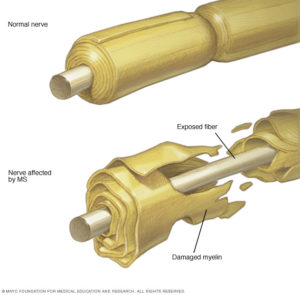
multiplesclerosisnervedamageschematicAccording to the Mayo Clinic, “Multiple sclerosis (MS) is a potentially disabling disease of the brain and spinal cord (central nervous system). In MS, the immune system attacks the protective sheath (myelin) that covers nerve fibers and causes communication problems between your brain and the rest of your body. Eventually, the disease can cause the nerves themselves to deteriorate or become permanently damaged.”
The MS Society of Canada says that this country has the highest incidence of MS in the world. From Statistics Canada we learn that about 1 in every 350 people has been diagnosed with MS. That is a disturbing number.

Despite decades of research, the cause remains a mystery. Current evidence suggests that lifestyle, environmental, genetic and biological factors may all contribute. MS is unpredictable and can result in symptoms such as extreme fatigue, lack of coordination, weakness, tingling, impaired sensation, vision problems, bladder problems, cognitive impairment and mood changes.

Because there is no known cure, treatments tend to focus on speeding recovery from attacks, slowing the progression of the disease and managing MS symptoms. Different drugs are used to address different specific symptoms. For example, as with asthma the problematic inflammation is treated with corticosteroids. But there is nothing to treat the disease as a whole.

What is known for certain is that all forms of MS are associated with oxidative stress. You can verify this by referencing PubMed. There is a 100% correlation. To confirm this, go to PubMed and search for ‘multiple sclerosis glutathione’ and you will be presented with a list of hundreds of published papers. Each one will identify low levels of glutathione, which correlates to high levels of oxidative stress. Oxidative stress means that the body has more free radicals than it has antioxidants to neutralize them. Free radicals cause harm to the body and produce cellular inflammation.

In a research paper published in February of 2011 entitled “Radical changes in multiple sclerosis pathogenesis” the authors state that “ROS [Reactive Oxygen Species – aka ‘free radicals’] initiate extensive cellular damage and tissue injury. ROS have been implicated in the progression of cancer, cardiovascular disease and neurodegenerative and neuroinflammatory disorders, such as multiple sclerosis (MS).” (Reference 1) The paper goes on to discuss clinical and experimental studies highlighting the therapeutic potential of antioxidant protection in the pathogenesis of MS.

There is some anecdotal evidence claiming that dramatically increasing the body’s intracellular glutathione levels can result in reduction of symptoms. (Glutathione is the body’s master antioxidant.) Instances of healing of some lesions has also been reported. And this may be supported by the fact that glutathione is needed for myelination, the creation of myelin sheaths to protect nerve fibres. But the problem with scattered anecdotal reports, despite the credentials of the neurologist involved, is that these do not carry the weight of formal controlled clinical studies. A few single reports of success do not provide sufficient data to form a generalization in which the medical community can have confidence. Clearly formal studies of this nature need to be initiated.

So if you have Multiple Sclerosis, what can you do in addition to following your doctor’s recommendations? There are a couple of suggestions I would offer.

These suggestions are based on a few facts. If you have MS your body is experiencing oxidative stress. Prolonged periods of oxidative stress result in your health deteriorating. You could develop a variety of chronic ailments from heart disease to glaucoma to cancer. The only open question is the rate at which your health will deteriorate. If you want to change this reality you need to address the oxidative stress.

  • First, pay attention to your diet and lifestyle to look for changes you can make that will reduce the volume of free radicals produced in your body (e.g., quit smoking, eliminate processed meat from your diet, reduce your exposure to environmental toxins).
  • Second, increase the levels of antioxidants in your body to deal with the free radical load. Increasing the antioxidants you ingest is a good start. But by far the most effective way is to increase your body’s production of glutathione in the cells. (Refer to the article Get Rid of the Radicals!)

Finally, push for clinical trials that examine the benefits of antioxidants as a treatment regimen.

#multiplesclerosis #glutathione #antioxidants


Reference 1: Molecular Basis of Multiple Sclerosis, Biochimica et Biophysica Acta (BBA) – Molecular Basis of Disease, Volume 1812, Issue 2, Pages 131-282 (February 2011)

Some Things to Know About Rheumatoid Arthritis

rheumatoid-arthritis-522x357I have a bit of a personal interest in Rheumatoid Arthritis (RA). I never knew my grandfather on my mother’s side. In fact, my mother never knew her father (my grandfather). He died from Rheumatoid Arthritis when she was not yet two. He was only 29 and left my grandmother as a single mom to look after three girls, just as the Great Depression began. She managed to get a job and, with the help of close family members, they survived. I respect my grandmother’s achievements as a strong willed independent woman at a time when women generally were not in the workforce. But I know she would have preferred to play the role of housewife and mother with her husband by her side.
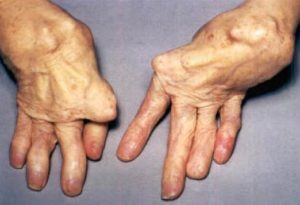
My grandfather Ben died a slow and excruciatingly painful death over several years. Toward the end he was curled up in a ball because all of his muscles were perpetually contracted. His hands were described as curled into the shape of claws. Every part of his body was experiencing the pain of torture non-stop. The doctors had no understanding of the disease and no way to treat it other than prescribing strong pain killers. I believe narcotic drugs were the only thing that dulled the pain somewhat.

In my opinion his occupation probably led to his death. My grandfather was a projectionist at the local motion picture theatre. The projection booth, where he spent many hours a day six days a week, was small and not well ventilated. The film of the time was celluloid based, composed of nitrocellulose and camphor. Camphor is a poison that can undergo sublimation at room temperature. The nitrocellulose is extremely flammable and with exposure to heat the nitrate groups can break off and expose nitrogen gases, such as nitrous oxide and nitric oxide. The movie projectors at the time used high temperature light sources. So in the contained environment of the projection booth, with relatively high temperatures, there was likely a high concentration of various toxins.

Based on my understanding of the pathology of RA, oxidative stress (high levels of free radicals without adequate levels of antioxidants to neutralize them) is associated with Rheumatoid Arthritis. Given that he worked in a highly toxic environment, the body’s master antioxidant glutathione would have been depleted while trying to remove the toxins from his body. The remaining high levels of free radicals would then go about damaging cells in various parts of the body. In addition, the lack of glutathione would weaken the body’s immune system.

Rheumatoid Arthritis is fairly common in industrialized societies. More women get RA than men. A 2005 study in the United States found that the incidence of RA was about 9.8 women per 1,000; and for men the number was about 4.4 per 1,000. Overall in North America, about 0.6% of the adult population over 18 years of age has Rheumatoid Arthritis. Unfortunately statistics show an increasing trend.

What It Is Not

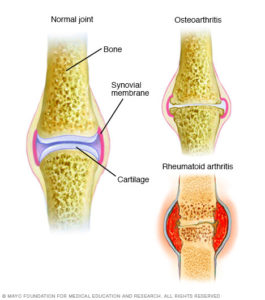
Despite its name, Rheumatoid Arthritis is NOT your grandmother’s Arthritis. When she said her arthritis was acting up, she was most likely referring to the joint pain associated with osteoarthritis.

Rheumatoid Arthritis is a chronic inflammatory disorder that can affect more than just your joints. In some people, the condition also can damage a wide variety of body systems, including the skin, eyes, lungs, heart and blood vessels.

arthritis-comparison-diagram-mayo-clinicRA is believed to be an autoimmune disorder. It occurs when your immune system mistakenly attacks your own body’s tissues. That would put in in the same class as Lupus, which is also an autoimmune disorder.

Unlike the wear-and-tear damage of osteoarthritis, rheumatoid arthritis affects the lining of your joints, causing a painful swelling that can eventually result in bone erosion and joint deformity.

The reason that RA has “arthritis” in its name is that this term is applied to almost any chronic condition that presents as joint pain.

Possible Causes

When it comes down to it, the medical community says it does not know what causes Rheumatoid Arthritis.

There seems to be some consensus, but no definitive proof, that Rheumatoid Arthritis has as its root certain genetic factors. However, when looking at people with RA and those who do not have the disease, there is no solid linkage. There is simply some statistical correlation between those with RA and those with certain gene markers. The CDC identifies some of the correlations on its web site. This means that there is no solid cause-effect relationship proven. The most that can be said is that certain genetic markers may make a person more prone to developing RA should the triggering mechanism present itself.

Several organizations identify a set of risk factors for RA. The Arthritis Foundation is representative in identifying things like smoking, female hormones, physical or emotional trauma, air pollution, insecticides, and others. It is interesting to note that all of these tend to result in increased levels of free radicals in the body.

Accepted Treatments

Since there is no consensus on the actual cause of RA, the medical community is left with only treating symptoms in an attempt to alleviate pain and slow the progress of the disease.

According to the U.S. Centres for Disease Control (CDC), the contemporary recommended approach to treating RA is very aggressive. Non-biologic disease-modifying antirheumatic drugs (DMARDs), which reduce disease activity and prevent joint deformity, are prescribed within three months of diagnosis. In 2012, the American College of Rheumatology updated RA medical management guidelines. These guidelines describe which biologic DMARDs to use for specific RA disease profiles (e.g., features such as disease activity, signs and symptoms, and prognosis).

Options to Consider

Research paper after research paper confirms that Rheumatoid Arthritis is associated with oxidative stress. There is a 100% correlation. To confirm this, go to PubMed and search for ‘rheumatoid arthritis glutathione’ and you will be presented with a list of hundreds of published papers. Each one will identify low levels of glutathione, which correlates to high levels of oxidative stress. Oxidative stress means that the body has more free radicals than it has antioxidants to neutralize them. Free radicals cause harm to the body and produce cellular inflammation.

It is disturbing to note that with all of this research showing that RA patients have high levels of free radicals, no research is being done to determine the effect of dramatically increasing antioxidant levels in the body – particularly levels of the body’s master antioxidant.

I have said before what I believe the reason to be. There is no money in it. Most medical research is funded in some way by the pharmaceutical industry. Research proposals will only be funded if there is some prospect of a patentable medicine being developed as a result. Antioxidants don’t fall into that category. Since disease related charities are highly influenced by medical and pharmaceutical interests, it is unlikely that funding for such research would come from those sources either.

So if you have RA, what can you do in addition to following your doctor’s recommendations? There are a couple of suggestions I would offer.

These suggestions are based on a few facts. If you have Rheumatoid Arthritis your body is experiencing oxidative stress. Prolonged periods of oxidative stress result in your health deteriorating. You could develop a variety of chronic ailments from heart disease to glaucoma to cancer. The only open question is the rate at which your health will deteriorate. If you want to change this reality you need to address the oxidative stress.

  • First, pay attention to your diet and lifestyle to look for changes you can make that will reduce the volume of free radicals produced in your body (e.g., quit smoking, eliminate processed meat from your diet, reduce your exposure to environmental toxins).
  • Second, increase the levels of antioxidants in your body to deal with the free radical load. Increasing the antioxidants you ingest is a good start; but the most effective way is to increase your body’s production of glutathione in the cells. (Refer to the article Get Rid of the Radicals!)

The medical advances in treating Rheumatoid Arthritis were 80 years too late for my grandfather. Perhaps in the near future we will understand the actual cause of the disease and develop ways to prevent it.

#healthscience #rheumatoidarthritis #glutathione