
Why Does Your Health Depend on Glutathione?

image of healthy womanGlutathione (rhymes with ‘glue-da-tie-on’) is a molecule that is produced by every living cell in your body. It is necessary for life in every mammal, including humans. If all of the glutathione were to leave your body, you would not survive two seconds. If you don’t have enough glutathione bad things happen, including disease.

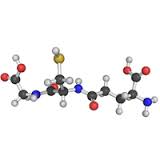
Glutathione (chemical designation GSH) is a protein, specifically a tripeptide. It is composed of three amino acids – glutamic acid, cysteine, and glycine. The cysteine amino acid contains a sulphur group which is responsible for many of the beneficial chemical properties of the whole glutathione protein.

With some exceptions, glutathione is in adequate supply in children. However, from about age 20 onward the natural production of glutathione tends to drop at an average rate of about 10-15 percent per decade. What this means is that when you are in your 40s, 50s, and 60s your natural glutathione production may be about half of what it was when you were a healthy 18 year old. This is a concern because the glutathione molecule is involved in many necessary processes in your body. Only some of them are outlined here.

The Cells of Your Body

It is difficult to get an accurate count. However, there seems to be some consensus that the human body has somewhere between 35 trillion and 70 trillion cells (excluding bacteria), depending on the size of the body and other factors.

Each cell has a role or mission. That mission is programmed by its DNA. The cells have different lifespans. For example red blood cells have a lifespan of about 120 days; whereas the lifespan of a white blood cell is much shorter. The average is about 90 days. What this means is that about every three months your body has completely replaced itself. Before a cell dies, it initiates the creation of its successor. And that successor is an exact duplicate of itself, including any damage or faults it may have. The body produces about 40 billion new cells every day!

Generating Energy in the Cell

In order for a cell to fulfill its mission and do its work it needs motion. The motion is provided by the cell’s mitochondria. You can think of the mitochondria as a tiny motor. Cells have many mitochondria. The number depends on the cell’s mission or type. For example, a fat cell typically has only a couple of mitochondria; whereas a heart cell has about 2,500 mitochondria.

The mitochondria need fuel. That fuel is Adenosine Triphosphate (ATP). Glutathione is part of the process of generating ATP. When glutathione levels are down, the production of ATP slows and a person experiences low energy levels. ATP is needed for muscle contraction, so athletes are particularly concerned about their levels of ATP. Raising glutathione levels can enhance athletic performance.

Neutralizing Free Radicals

When the fuel (ATP) is used to generate energy for the mitochondria to initiate the work of the cell, it produces waste products (that you can think of as exhaust from the motor) called free radicals. Free radicals are dangerous because, with their unbalanced electrical charge, they initiate a chemical reaction with almost any molecule in the cell that they come in contact with. This causes damage to the cell.

In addition, when the cell encounters toxic substances and tries to deal with the toxins, free radicals are produced in alarming numbers.
Glutathione neutralizes the harmful free radical by neutralizing the unbalanced charge on the radical molecule. In fact, glutathione is the body’s primary antioxidant. Adequate levels of glutathione protect the cell by neutralizing the free radicals. However, if there are inadequate amounts of glutathione, the remaining free radicals will do more and more damage.

Oxidative stress is defined as a state where the free radical load on the body exceeds the antioxidant capacity of the body. Prolonged periods of oxidative stress can be shown to result in chronic diseases of various sorts. (Refer to Diseases and Conditions Associated with Oxidative Stress.) There is good reason to want to maintain adequate glutathione levels.

Recycling Antioxidants

Glutathione (GSH) as an antioxidant is able to recycle itself. After neutralizing the free radical by dealing with its negative charge, it combines with another glutathione molecule to form an electrically neutral GSSH molecule that is subsequently transformed back into a GSH molecule.

There are only a few antioxidants that can be recycled (e.g., Vitamin E, Vitamin C, alpha lipoic acid (ALA) and Glutathione). Vitamin E, Vitamin C and ALA are recycled by GSH. So low glutathione levels limit the ability of these other antioxidants to do their job. GSH on the other hand can recycle itself many thousands of times.

Therefore the effectiveness of certain of the antioxidants you ingest and the overall antioxidant capacity of your body is limited by the availability of glutathione.

Synthesizing Antioxidants and Proteins

Each antioxidant must be synthesized into a useable state before it can be used by the cells. The primary synthesizing agent for antioxidants is glutathione.

Proteins must also be synthesized before they can be used by the cells. Glutathione is not the sole synthesizing agent for proteins – but it is a principal agent. So the level of glutathione in the cell is a major factor in the degree to which ingested proteins can be used by the body.

Reducing Cellular Inflammation

For several decades there has been a mounting belief in the medical research community that cellular inflammation is the root cause of virtually all chronic disease. However, in my research I have been unable to unearth the direct cause-effect relationship between inflammation and disease.

What I do know is that cellular inflammation seems to go hand in hand with oxidative stress. It would appear that when the huge volume of free radicals do damage to the cells during periods of oxidative stress, the reaction of the cell to this insult is to become inflamed. If this is the case, the cause of chronic disease is prolonged periods of oxidative stress – and cellular inflammation is just a resulting symptom.

Regardless of the exact mechanism, what we do know with some certainty is that in the presence of abundant glutathione the level of cellular inflammation goes down.

Detoxifying Heavy Metals and Environmental Toxins

Many heavy metals like lead and mercury are toxic to the body and can cause devastating damage. For over a hundred years these substances have been used in a variety industrial processes. Lead was used in oil based paint and in gasoline. It was only after significant portions of the population started to have obvious disease symptoms that laws were passed to reduce or eliminate such use.

Regardless, these substances are still working their way through the environment. For example, mercury has found its way into the food chain and has been detected in disconcerting concentrations in fish like tuna. That is why there are warnings about limiting the amount of tuna you include in your diet.

Sometimes heavy metal molecules get sequestered in fat cells where they do little harm. But when you lose weight they are released to circulate and possibly find a home in other cells where they can do damage. At other times the heavy metals you ingest go directly to cells where they could do harm.

If you have adequate levels of glutathione, the GSH molecule will interact with the heavy metal molecule and escort it out of your system. This is where the sulphur group on the cysteine part of GSH comes into play. Sulphur is ‘sticky’ and this is how the GHS molecule attaches to the heavy metal molecule. The combined compound then gets flushed out of your system. (Drink lots of water to facilitate this detoxification process.) This process is called chelation.

In addition, there are innumerable environmental toxins that are not metals that our bodies encounter. The list includes petroleum byproducts, pesticides, prescription drugs, cleaning compounds, alcohol, and on and on. The glutathione molecule is instrumental in removing these various toxins from the cell and facilitates their removal from the body. It does so by breaking down the fat soluble toxin, attaching itself to the toxin fragments thus making them water soluble, and then as a water soluble compound it can be flushed out of the system through the kidneys.

In fact there is an organ that has as its primary function toxic chemical detoxification. The liver has been referred to as the body’s “washing machine” because it extracts toxins from the blood flow and removes them to be eliminated through excretion. Glutathione is critical to this chemical process. It is not surprising, therefore, that the liver has the highest concentration of glutathione in the body. Adequate levels of glutathione in the liver are essential to ongoing good health.

Unfortunately this activity depletes glutathione levels, leaving less glutathione to generate energy for the cell to do its work and less glutathione to neutralize free radicals. Furthermore, the load of environmental toxins is increasing every year.

Protecting Mitochondrial DNA

It is believed that the effects of aging are a result of repeated minor damage to cellular mitochondrial DNA over time. When a cell with damaged DNA reproduces, the resulting cell may not function as well as the original cell prior to the damage. After a while the effect accumulates and you start to notice the typical characteristics of aging. Furthermore, some DNA damage is not minor and instead of gradual aging we see a specific disease condition become apparent. (One example of this is the DNA damage that causes tumorous growth.)

There are three primary causes of DNA damage:

  • heavy metals
  • chemical toxins
  • radiation

In the case of heavy metals, we have seen that abundant glutathione can chelate the metal, removing these molecules from the cell and from your body. This removes the opportunity to damage the DNA.

Likewise in the case of chemical toxins, abundant glutathione facilitates the removal of these harmful molecules from the cell and from the body, primarily through the liver.

High levels of glutathione also protect mitochondrial DNA from radiation damage.

We are exposed to radiation in a variety of ways. There is diagnostic imaging (think x-rays), radiation therapy (a standard cancer treatment), background radiation (think UV radiation that causes sun tans), cosmic radiation and other types.

I don’t know what the exact number is, but I have been given to understand that the level of damaging radiation is at least 1,000 times greater at a height of 30,000 metres than at sea level. This is of concern to commercial air crew who typically fly many hours a day at more than 10,000 metres, and to astronauts who operate much higher than 30 kilometres above the earth.

A study published in 2000 and funded jointly by the National Aeronautics and Space Administration (NASA), NASA Goddard Space Flight Center, the National Institutes of Health, and the U.S. Department of Energy found that significantly increasing glutathione levels would be very beneficial for “reducing the load of mutations created by high LET radiation in astronauts or other exposed individuals.” Of interest is the fact that cancer radiation therapy also uses high LET radiation.

So astronauts, commercial air crew members, and anyone undergoing radiation therapy should have a particular interest in increasing their body’s glutathione levels.

Facilitating Hemoglobin Function

Hemoglobin is the active component of red blood cells that carries oxygen from the lungs to the cells throughout the body. Glutathione reduces hemoglobin to a +2 state so it can accept oxygen and carry it to the cells. Low glutathione levels could reduce the level of oxygen that gets to the cells, which in turn could lead to a wide range of adverse consequences.

Abundant glutathione levels tend to bring hemoglobin counts into the normal range.

Optimizing the Immune System

The immune system is complex. A couple of primary components are the white blood cells (leukocytes) which are key to tackling bacterial and viral infections, and the natural killer cells (like the Killer T cells) that destroy compromised host cells, such as tumor cells or virus-infected cells.

With low glutathione levels, the immune system will respond sluggishly. There is considerable evidence that glutathione plays a key role in the regulation and control mechanisms of the immune response to a threat.

Abundant levels of glutathione allow the immune system to respond explosively to a bacterial or viral insult. High GSH levels result in an optimized immune system.

Enhancing Wound Healing

Have you ever noticed that when children get a minor cut or scrape they heal very quickly as compared with their parents or grandparents? And their scarring is much less as well.

It looks like glutathione is responsible.

A study was completed in 2014 and the peer reviewed result was published in 2015. It clearly showed that raising glutathione levels before surgery (a surgical incision is considered a wound in medicine) and keeping them elevated after surgery dramatically reduced the healing time, increased the strength of the healed wound, and significantly reduced any resulting scar.

The belief is that these results are brought on by a substantial reduction of inflammation around the site of the wound.

So if you are facing surgery, increase your glutathione levels substantially at least for the period two or more weeks before the surgery and two to four weeks (or more) afterward.

Reducing “Bad Cholesterol”

Low density lipoproteins (LDL) are considered to be the “bad cholesterol.”  According to the American Heart Association:

LDL cholesterol is considered the “bad” cholesterol because it contributes to plaque, a thick, hard deposit that can clog arteries and make them less flexible. This condition is known as atherosclerosis. If a clot forms and blocks a narrowed artery, heart attack or stroke can result. Another condition called peripheral artery disease can develop when plaque buildup narrows an artery supplying blood to the legs.

For years there has been widespread anecdotal evidence that high glutathione levels were associated with reduced blood serum LDL.

A study to look at this was completed in late 2014 and the peer reviewed result was published in 2016. It concluded that elevated glutathione levels resulted in “significant decreases in LDL.” It lowers LDL, Lp(a) and oxidised lipid concentrations.

Summary

Glutathione is a key participant in a wide variety of the body’s processes. It is absolutely essential to good health. Diminished glutathione levels can have adverse effects that may manifest in many different ways, sometimes displaying several such manifestations at the same time.

Increasing glutathione to optimum levels in the body is vital to maintaining good health over time.

p.s. To find out what I use personally to elevate glutathione levels, go to the Contact John menu item and send me a message.

#glutathione #healthscience #chronicdisease

Heart Disease is Preventable

image of heart and stethoscopeRecently I listened to an interview with a reputable heart specialist. What he had to say was so important I knew I had to share the information. What follows contains so much direct quote and paraphrase of things said in the interview that I am sure it is violating somebody’s copyright. I hope they will understand. This is not a transcript of the interview; it contains excerpts of key messages.

About Dr. Harrington

Dr. Douglas Harrington earned his B.A. in Molecular Biology and his M.D. from the University of Colorado. He is board certified in atomic and clinical pathology and hematology. He is a member of the American Society of Preventive Cardiology. He has authored over 90 peer-reviewed publications.

Facts About Heart Disease

Heart disease is the greatest cause of death in the United States.

Since 2010, more women in the United States are having heart attacks than men. Five times as many women die from heart attacks than die from breast cancer. Heart disease is the primary killer of women, taking more lives than all forms of cancer combined.

An American Heart Association study of hospitalization of people with a first heart attack from unstable angina showed 83% had normal cholesterol levels. If you look at all people who had heart attacks, 50% had normal cholesterol. (So some historical assumptions about the causes of heart disease may be incorrect.)

The World Health Organization (WHO) did an inter-country study that looked at 32 countries. They determined that 90% of heart disease is due to lifestyle. 80% of that is preventable by actions the person can take themselves.

The Cause of Heart Disease

Most people think that heart disease is fundamentally a ‘plumbing problem’. That is not the case.

Free radicals are produced in excess by the body in response to a variety of factors like exposure to environmental toxins and eating excess amounts of certain types of foods like sugar. The cells in your body perform a lot of work trying to get rid of these substances and in so doing produce excess amounts of free radicals. (Refer to the article Get Rid of the Radicals.)

When free radicals come in contact with the artery walls, they damage the lining of the arteries in your heart. This is the start of heart disease. Over time this damage can evolve to become lesions.

Lesions on the wall of the arteries from the free radical damage are like blisters or pimples. They don’t cause any symptoms; they don’t cause pain; and they don’t restrict blood flow. But when the lesions ‘pop’, which they are prone to do if they become unstable, they cause an immediate blood clot. That is the most common cause of heart attacks and strokes.

How to Prevent or Reverse This Damage

There are several things you can do to help the situation:

  • Exercise
  • Diet
  • Medications
  • Supplements

Exercise

Exercise can help prevent or reverse lesions damage – but not just any exercise. The most beneficial is exercise in the form of resistance training like weight lifting or doing push-ups. Cardio exercise is good for burning calories and increasing the the strength of you heart and the fitness of your cardiovascular system. But it does not do much to convert unstable lesions to a level of stability; it just makes your heart do more work.

Diet

A “Mediterranean Diet” will help.

Historically the medical community focus has been on bloodstream cholesterol. However, the advice given in the past to avoid saturated fats is probably wrong. Trans fats are deadly. On the other hand animal fat, like butter, in reasonable quantities is actually good for you.

Excess sugar, excess refined carbs, and excess deep fried foods in the diet should be avoided. Certain types of oils like soy bean oil with preservatives should also be avoided. These things set up an environment in our body that allows or promotes the production of free radicals.

Grass fed beef can be good and has about the same amount of omega-3 as wild caught fish. But penned beef that is fattened up and fed chemicals to keep them healthy and gain weight are a problem. Farmed fish is problematic because of the omega-6, hormones, antibiotics and other substances. But wild caught fish like salmon is very healthy. Unfortunately much of the commercial fish in the market comes from fish farms.

Avoid processed foods. If you pick up something in the grocery store and you need an advanced chemistry degree to understand what is on the list of ingredients, you probably should not eat it.

Artificial man-made chemicals, whether in our food, in our water or in our air are a principal cause of free radicals. And high levels of free radicals is the root cause of heart disease.

Medications

Certain medications like statins will also help stabilize arterial lesions. But the down side is that they have a lot of negative side effects.

Supplements

You must ensure that your body has an adequate amount of necessary vitamins and minerals. Some of this can be supplied by your diet. However, you may have to augment that with nutritional supplements. Mass farming techniques have reduced the level of nutrients in much of the food that we buy so supplementation has become a necessity.

In addition to exercise and a healthy diet, the most effective thing you can do is to help your body get rid of the free radicals that are produced.

The body’s master antioxidant is glutathione. It is produced by every living cell in the body. But usually production of glutathione is insufficient, particularly in face of the onslaught of substances that produce free radicals.

However, glutathione is an endogenous antioxidant. That means that it originates from within the body. You can’t get much glutathione from food. The only effective way to raise your glutathione to scavenge the free radicals is to take a supplement that has a necessary glutathione precursor.

It was interesting, but not surprising, to note that Dr. Harrington recommended the use of the same supplement that I use to increase glutathione levels. Even after adopting a healthy diet you are still exposed to huge numbers of environmental toxins, so you need some way to enhance glutathione levels.

The Challenge

Because heart disease has little in the way of noticeable symptoms like pain or discomfort, doing the right things appears to show no improvement that can be felt. So people tend not to do what needs to be done to remove the threat.

The objective of prevention is to keep you out of the hospital. Understand that doing the things necessary to keep you healthy may not show obvious signs – other than you not experiencing a sudden life threatening event.

The Risk

Consider this scenario. You have blood pressure in the normal range. You have cholesterol readings in an acceptable range. You are not excessively overweight. According to your doctor you are pretty healthy. Your diet is not as healthy as it should be; but you feel fine. The first indication that you have heart disease is a sudden heart attack. There is a 50% probability that this heart attack will be fatal.

If you want to avoid that you must, at the very least, eat healthier and increase your intracellular glutathione levels – even if you currently feel healthy.


Addendum: Dr. Harrington and his team has developed a test for the existence of unstable arterial lesions. What this means is that you can have a clear indication of the risk of having a heart attack within the next five years. This is a simple blood test that is currently available in the United States and other countries. A positive result may allow the person to take corrective action in time to avoid the heart attack.

#heartdisease #glutathione #heartattack

Get Rid of the Radicals!

radicalsIn this day and age there are far too many of them. They are responsible for the deaths of untold numbers of people. Left unchecked they will continue to maim and kill. And you can do something about it. They must be neutralized and eliminated!
I’m not talking about those religious extremist nut-cases that figure they have the god-given right to violate the basic principles of human rights and their own religious teachings to impose their warped views on the rest of the world. What I am talking about are the radicals that are appearing in ever increasing numbers in the cells of your body. They are the cause of most chronic disease in the world. And it is possible to do something about it.

In order to undertake effective action, however, it would be useful to understand the general mechanics of how they get created and how they can be dealt with.

How are Free Radicals Created?

Let’s start with something we all understand. In order to live you need to breathe. The reason for that is that you need oxygen to survive; and breathing allows you to extract oxygen from the air and pass it to the red blood cells in your body. Flowing through your blood vessels, your red blood cells deliver oxygen to all of the living cells throughout your body.

There is an on-demand system in operation here. The more work a cell has to do, the more oxygen it will try to extract from the blood as it flows past. Each of your cells uses oxygen as a key element of the process of doing work. You can verify this yourself. Get on an exercise bike, set a reasonable resistance and peddle as fast as you can. What happens to your heart rate and respiration rate? They both go up as your body tries to increase the transfer of oxygen from the air and deliver it more quickly to the muscle cells that are demanding it to fuel the work they are doing.

In chemistry, a free radical is an atom, molecule, or ion that has unpaired valence electrons – it has a negative charge. With some exceptions, these unpaired electrons make free radicals highly chemically reactive towards other substances. Some important oxygen-centered free radicals include peroxide, the superoxide radical and the hydroxyl radical. They are produced from molecular oxygen under reducing conditions.

So, molecular oxygen is delivered to the cell by the bloodstream. The chemical reaction that uses (reduces) the oxygen to do its work results in a negatively charged oxygen-based free radical (like a hydroxyl radical).

Normal cell activity produces free radicals.

Unfortunately, we live in a world that has huge amounts of environmental toxins – in the air we breathe, in the food we eat and in the water we drink. The cells try to deal with these foreign toxins when they enter the cell. Dealing with toxins represents quite a lot of work for the cell, with the cell producing extensive amounts of free radicals. This is not good a good thing.

How do Free Radicals Cause Damage?

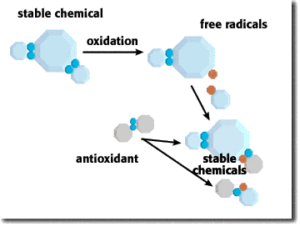
Because they are highly reactive (due to the unbalanced number of electrons), these same free radicals can participate in unwanted side reactions with various other molecules that are part of the cell, resulting in cell damage. They do this by stealing an electron from a nearby molecule in the cell, disabling that molecule’s function.

This is not good. Excessive amounts of these free radicals can lead to cell injury and death, which may contribute to many diseases. (Refer to Wikipedia article on Radical chemistry.) Fortunately, that is not the end of the story.

How do Antioxidants Neutralize Free Radicals?

According to an article by the American HealthCare Foundation:

antioxidantsAntioxidants are stable molecules that have electrons to spare. When antioxidants come in contact with free-radical molecules – they hand over their electrons and stop the degenerative chain reaction of free-radical oxidation.

Antioxidant molecules are able to give up an electron and subsequently become electrically stable.

Some antioxidants are produced naturally in our cells. Other antioxidants can be be found in the food we eat. The body’s primary antioxidant is Glutathione (GSH) which is produced internally by the cells. Some foods high in antioxidants are those containing Vitamin C, Vitamin E, and beta-carotene (which converts to Vitamin A in the body).

However, most people don’t have enough antioxidants to deal with the volume of free radicals being produced.

How can you Avoid Free Radical Damage?

The key to maintaining good cellular health is to ensure that the cell has within it an adequate supply of antioxidants to deal with the free radicals produced as the cell creates energy to do its work.

In part you can achieve this by ingesting foods that are high in dietary antioxidants. However, perhaps the most effective approach is to increase your body’s intracellular glutathione levels (glutathione produced in the cell, by the cell). (Refer to The Body’s Miracle Molecule.)

We live in an ever increasingly toxic world. Our cells have to work overtime to try to deal with the toxins they are exposed to. So we need even more antioxidants than our ancestors needed just to maintain a reasonable balance. You would have to consume huge amounts of antioxidant rich foods to deal with your body’s demand. In today’s toxic environment, that is not enough.

High quality dietary supplements may be the only effective way to maintain adequately high antioxidant levels. And one of the best approaches is a dietary supplement that promotes the body’s own production of glutathione. Intracellular glutathione is many times more effective as an antioxidant than all of the other antioxidants you may ingest.

Get rid of the radicals! If all the cells of your body are healthy, you will be healthy.


Reference: “Role of Oxidative Stress,” American HealthCare Foundation

#freeradical #antioxidant #glutathione

Cancer is Not a Disease

Time Cover 2004-02-23There are probably more years behind me than in front of me. My analytical approach over that time caused me to observe random things and store them. Then later I would try to make sense of them – how did they fit together? Was there a pattern? One of the things I noticed, and I think epidemiologists would confirm it, is that there seems to have been an increase in the incidence of a variety of physical conditions that did not have as a root cause either bacterial infection or a virus. The pattern seems to have started shortly after World War II, but may have originated earlier. You may have noticed the same trend.
The Pattern

When I was growing up in the 50s and 60s, asthma was rare and now it is common among young people. Autism was virtually unheard of and now the incidence seems to be higher than 1 in 100 male births in Western society. Cancer was not as rare, probably because smoking was a standard pastime, cigarettes were unfiltered at the time, and people were dying from lung cancer. But the rate of all different kinds of cancers has climbed dramatically over the past 50 years. The same holds true, to varying degrees, for things like Parkinson’s, Rheumatoid Arthritis, Fibromyalgia, Multiple Sclerosis and most other chronic diseases. What was going on? All of these conditions are quite different from each other; but they were all displaying a similar incidence pattern.

The ‘ah-ha’ Moment

Occasionally I like to do a bit of personal research in the area of science and health. Recently I came across an online article entitled What Is Cancer? And in the body of the article was the heading “Cancer is a symptom not a disease.” That brought me up short. And to be honest, I didn’t finish reading the article. My mind went off in a totally different direction.

Cancer is a symptom, not a disease. If that is true, of what is it a symptom? And could it also be true for those other conditions that were displaying this common incidence trend that I found intellectually irritating? I know that there are over 70 diseases and conditions associated with low glutathione. And all of the conditions displaying the trend are on the list. That commonality could not be a fluke.

Sometimes research involves serendipity. A few days later I saw that Time magazine, on the cover of its February 23, 2004 issue, had proclaimed “The surprising link between INFLAMMATION and HEART ATTACKS, CANCER, ALZHEIMER’S and other diseases.” The article inside said:

What does a stubbed toe or a splinter in a finger have to do with your risk of developing Alzheimer’s disease, suffering a heart attack or succumbing to colon cancer? More than you might think. As scientists delve deeper into the fundamental causes of those and other illnesses, they are starting to see links to an age-old immunological defense mechanism called inflammation…

The Mechanism

There seems to be increasing agreement in the medical research community that cellular inflammation is a common cause of most chronic disease in the world. Here’s where things get interesting.

  • Most cellular inflammation results from oxidative stress.
  • Oxidative stress is caused by an over abundance of free radicals in the cell. In fact it is defined as the condition that occurs when the sum of free radicals in a cell exceeds the antioxidant capacity of the cell.
  • Free radicals are produced when the cell does some work. Work can include normal things like breathing, moving, and thinking (depending on the type of cell). The ‘work’ uses oxygen and the result of that process (the exhaust of the oxygen burn if you will) is the production of free radicals. But where things start to go wrong is when the work involved is the cell trying to deal with toxins and other substances that don’t belong in the cell. This activity represents a lot of work and produces huge amounts of free radicals.
  • Antioxidants are the compounds that rid the cell of free radicals. If there is an adequate supply of antioxidants in the cell, the level of free radicals can be maintained at a manageable level. However, if the level of free radical production is excessive (e.g. from the work of trying to deal with a buildup of toxins) the cell’s antioxidants are unable maintain a reasonable balance. The level of antioxidants decreases as they are used to get rid of the free radicals. In this situation, the cell works less and less efficiently, oxidative stress increases and, if left unchecked for a significant period of time, disease results.

Glutathione is the body’s master antioxidant. In addition to being an antioxidant in its own right it also facilitates the work of other antioxidants. For example, in the absence of glutathione Vitamin C would be unable to perform as an antioxidant. Glutathione is produced on demand in every living cell in the body. It is also a key component needed for many of the cell’s base functions to work. So if there is not an adequate supply of glutathione in the cell, not only is the cell unable to deal with free radicals but it is also unable to perform its main cellular functions at an optimal level.

Since glutathione is key to ridding the cell of free radicals, most researchers use the level of glutathione in the body as the primary measure of oxidative stress. Low levels of glutathione equals high levels of oxidative stress.

The Key Component

Glutathione is a tripeptide composed of three amino acids. These are glutamic acid, cysteine, and glycine. The cysteine amino acid contains a sulphur group responsible for many of the chemical properties of the whole glutathione protein.

Glutathione is produced on demand in the cell. The level of glutathione produced by the body is normally high during childhood and is at its natural peak at about age 20. The level then diminishes at an average rate of about 1% to 1.5% per year. Production is dependent on the availability of the raw materials – the glutamic acid, cysteine, and glycine. In most people there is an adequate supply of glutamic acid and glycine. The limiting factor is the availability of cysteine with an intact sulphur group. This compound is not normally found in abundant quantities in our diet.

The natural result of all of this is that by the time people reach their 40s and 50s they are starting to feel their age and the incidence of chronic disease increases dramatically. This is not surprising since their glutathione levels are half of what they were at 20. The level of exposure in our modern society to untold numbers of environmental toxins and other stressors makes the situation worse than it might be otherwise. So in recent decades we see the incidence of chronic diseases, that used to be associated with old age, occurring when people are younger and younger.

The Theory

It would seem that increasing intracellular glutathione (glutathione inside the cell, produced by the cell) would go a long way to reducing a variety of chronic diseases.

There are many ways to increase glutathione levels. Some have minimal effect while others increase intracellular glutathione considerably. I take a glutathione enhancing supplement that study results show increases intracellular glutathione levels several times more effectively than the next best method.

So if there is evolving consensus that cellular inflammation is the root cause of cancer and a variety of other chronic conditions, why have there not been studies done on treatment and prevention of these conditions with large amounts of antioxidants, including increasing glutathione levels within the cells?

The Black Hats

Such clinical studies can be expensive. Most of the money for treatment studies has traditionally come, in one form or another, from the pharmaceutical industry. But the pharmaceutical industry is big business, apparently in the Trillion Dollar range. In May of 2015, Forbes published an article with a headline that read “The Cancer Drug Market Just Hit $100 Billion And Could Jump 50% In Four Years”.

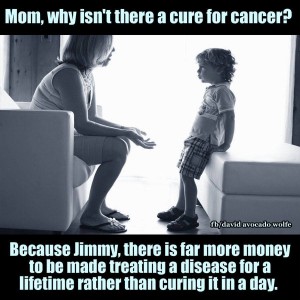
Mom, why isn't there a cure for cancer? Because Jimmy, there is far more money to be made treating a disease for a lifetime rather than curing it in a day.This means that a full 10% of big pharma revenue comes from cancer alone. It is not in the best interests of these companies to fund studies that could result in identification of effective cancer treatments that involve inexpensive natural antioxidants. In fact, it is in their interests to actively prevent that happening. And the committees that make funding decisions in the various disease-focused charities are heavily influenced by the medical and pharmaceutical industries.


It is interesting to note that, because most pharmaceutical drugs are toxic poisons, treatments for diseases like chemo for cancer end up making the cellular inflammation worse – for all the cells in the body, not just the lumps and bumps that they are trying to target. Does anybody wonder why when the doctors manage to kill a tumor, some time later in some formerly unaffected part of the body, a “new” cancer pops up? (But the doctor doesn’t tell you that. He says that the cancer spread.)

The Conclusion

There are many documented cases of non-traditional treatments being successful. The common thread that ties most of them together is each has elements that increase the body’s antioxidant levels significantly. These successes should be applauded and explored for broader adoption – not attacked.

Was the information in the Time article followed up at all with further research? Not that I can see. And it would appear that further articles on the same topic in other major publications were actively discouraged. I find the situation frustrating in the extreme! And if my suppositions are true, what is happening is criminal.

Cancer is not a disease. It is a symptom. First and foremost it is a symptom of prolonged periods of oxidative stress in the body. But it is also a symptom of unnaturally high levels of toxins in our environment, a symptom of a pattern that applies to many other diseases, and a symptom of a powerful segment of the business community putting profits ahead of human life.

What is your view? I urge you to leave a comment.


Fact vs. Hypothesis vs. Opinion

It is a fact that all forms of cancer and most other chronic diseases have cellular inflammation as a fundamental characteristic.

To verify this for yourself, you can use Pubmed. Pubmed is the U.S. government site, operated by the National Institutes of Health, that is a global library of published papers on medical science. Go to pubmed.gov and enter the search terms ‘glutathione’ and the name of any disease of interest (e.g., cancer, melanoma, asthma). You will get a (potentially long) list of published papers. Randomly look at the studies and you will see that all of them show low glutathione levels for those subjects with the condition. Virtually any researcher in the field will tell you that this indicates high levels of oxidative stress and consequently high levels of cellular inflammation.

The corollary is also true. If glutathione levels are raised to optimum levels in the cells in the presence of supporting nutrients, free radicals will be eliminated, oxidative stress will be reduced and cellular inflammation will be reduced.

It is my hypothesis that increasing intracellular glutathione levels to nominal levels will reduce the symptoms of the condition in question and possibly prevent the condition from occurring in the first place. This assertion is based on the logic that the body’s natural functions will protect itself if the necessary ‘raw materials’ are available to do the job. Low glutathione levels represent one such lack of ‘raw materials’. By having an optimum level of glutathione and other supporting antioxidants available in the cells, free radical levels will stay in healthy balance, energy will be available to the mitochondria, and the immune system will be able to function as it was designed.

It is my opinion, based on the mountain of evidence found in the Pubmed studies which suggest my hypothesis holds true, that the pharmaceutical industry is actively preventing the conduct of suitable studies to validate the hypothesis. The evidence that links inflammation to disease has been building for decades. I can’t believe I am the only person to have seen the pattern. The 2004 article in Time verifies that I’m not.

Forensic accountants always tell you to “follow the money” to look for motive. Who benefits from this lack of action? Clearly it is the pharmaceutical industry. More than $100 Billion EACH YEAR can buy quite a few votes in various legislative bodies around the world, can buy modified research results, can buy doctors willing to toe the line on what constitutes acceptable medical practice. Thus my opinion. It is a nasty conclusion to reach; but one I think is justified by the available facts.

#cancer #glutathione #chronicdisease #healthscience

Home Based Business? What You Need to Know

Networking VisualI have been running my businesses out of my home for about 30 years. I started by running a successful international information management conference for several years, I owned and managed two consulting companies, and I got involved with a network marketing company. That last one didn’t work out very well and I swore I would never get involved with another one again.

But the experience wasn’t wasted. I learned some things. And then a few years ago I was introduced to another network marketing business. I was very skeptical, because of my earlier unpleasant experience. But after considerable analysis and thought I realized that this one was different. I will likely continue to be involved with this venture for the rest of my life.

What this shows is that you can run many kinds of businesses from your home. But when we talk about home based business, we usually think of a network marketing or multi-level marketing (MLM) business. Network marketing or direct sales refers to the business model; and MLM refers to a type of compensation model.

In a network marketing business, you buy a distributorship which gives you the rights to sell the company’s products or services wherever the company is set up to do business. The way you do that is by approaching the people you know or meet in the course of living your life – your network of family, friends and acquaintances. This is word of mouth advertising (which is the most effective marketing method known) and it got its name because you are approaching your network of contacts. It is a very legitimate and effective business model.

Most (probably all) network marketing companies have a multi-level compensation plan. There are as many variations as there are companies. But the common theme is that you, as a distributor, in addition to selling your product or service also recruit other distributors. Because you were their sponsor, you are entitled to a small commission based on whatever sales they make. The exact rules are different for each company. Each of the distributors you recruit are independent businesses that can do just what you did, recruit more distributors. And they get a commission based on the sales of their team of distributors. This why it is called a multi-level compensation plan.

The MLM compensation plan is beneficial for the company in that they only pay for sales, not effort. It is much more efficient. It is beneficial for the distributor in that you can realize the advantages of exponential leverage. The more distributors in the various levels of your distributor team, the more total sales will be made and the more commission you can earn. As I said, the specific rules vary from company to company.

As long as compensation is based on actual sales of products or services this is a very legitimate compensation plan. (As a point of clarification, in a “pyramid scheme” the focus is on a distributor being paid for recruiting more distributors. In companies that do that, the product or service generally is secondary. In most jurisdictions in the world this is illegal. But some people still try to set up companies that do that; so exercise caution.)

There are literally thousands of network marketing companies out there. The vast majority of them I wouldn’t touch with a barge pole. As noted above, there are a few that are probably illegal – but only a few. The vast majority are legitimate companies with great products or services. But there are characteristics of many of them that, at least from my perspective, represent risk. The risk comes in two forms: risk of the long term viability of the company and risk that the income you earn may not be worth the effort you had to put in.

So what would I look for in a network marketing company?

Who are the owners? Who is in control?

Look at the founders of the company and those who have a significant stake in it. Did they have solid business experience with a sound track record of success in selling products or services before this network marketing company? Or did they just get into MLM to sell the product or service they came up with? Do they exhibit high levels of ethical behaviour or is it all about the money regardless of what might be right? Do they show, by their actions not just their words, that they respect and care about their customers and their distributors and their staff? Are they people you would be proud to be associated with?

If you are not able to answer positively to all of these questions, there is a risk that the company will not survive in the long run. Or if they survive, you may not be treated well. And those friends and relatives that you introduce to the company may not be treated well either.

I would walk away from such an opportunity because, for me, the risk to either my income or my sense of self worth would be too high. You are betting a large chunk of your future on these people. You must be able to trust them.

What about the product or service?

Is the product or service consumable? Network marketing and the MLM compensation model have residual income as a foundation. In order to ensure a steady stream of commission income month after month following a sale, the customer must be consuming the product each month. Something that is purchased once or only occasionally means you cannot rely on your residual income and you must expend more effort to make sales repeatedly or to repeatedly acquire new customers to maintain a steady income stream.

Is the product or service unique? If it is a commodity item then competition in the marketplace will drive the price down to the point that it is very difficult for the company to pay adequate commission to make it worth your while. For example, if you are in the nutritional supplement business and you are selling vitamin C, you won’t likely get much commission. There are two reasons. First, you won’t have customer loyalty because the local grocery store may have a special on this month that beats your price and they cancel their order. And second, the margins are so thin that there isn’t enough to pay commissions that make selling the product worth your time. If the company’s main selling proposition is saving a little on the price of a product or service, that is a dead giveaway that it is in the commodity space and I would stay away.

Are the product/service claims verifiable? For example, if you are considering a company that sells nutritional supplements, are their claims backed up not just by scientific studies paid for by the company, but by studies where the results are peer reviewed and published in respected professional journals.

If the product or service satisfies these criteria, then ask is the product or service strategic? Is there a large and growing market segment that has a need for what they are selling?

For example, the population is aging and they want to stay healthy and young as long as possible. Health and wellness products and services, if they address real needs, could do well. But a company selling training DVDs when the world is moving to solid state media and internet streaming might not be such a good bet.

Does the compensation plan make it worth your time?

Eric Worre, in his documentary video Rise of the Entrepreneur, says you need to ask three questions: Can you generate some income quickly? Can you develop moderate part-time income in a reasonable time? Is there a possibility of serious full time income?

Robert G. Allen, in his book Multiple Streams of Income, has an additional specific question: In the absence of growing your team, how many customers would it take to earn $500/month in commission? The lower the number the better. (You may want to refer to Comparing MLM Compensation Plans .)

Some company compensation plans are complex. Take the time to figure out the details. Walk through scenarios so that you understand enough to be able to answer these questions.

Also, network marketing is work. If the person trying to recruit you says you can get rich quick or make a lot of money without much effort, don’t walk away – run as fast as you can!

What about the people and supports?

Specifically, are there people and mechanisms in place for you to learn, be coached and be supported so that you can be successful?

Can your sponsor and others provide mentoring and coaching? Is there skills training as well as training on the company’s system? Does the company provide your own company web site? Is there a useful back office site for you to manage your business? Is there a capability (an app) for you to conduct your business from your mobile phone?

And what about the culture of the company? Is it friendly and supportive with distributors helping each other regardless of where they are in the organization? Or are the distributor teams competitive, where they help only those in their own downline?

Another characteristic to consider is, are the people trustworthy? To illustrate my point I’ll tell you a brief story. Recently I attended an opportunity meeting. The presenter had been a customer of the company for a few years but became an associate less than a year ago. He spent the first third of the presentation knocking the competition’s products. It doesn’t say much about your products if their best selling feature is how bad the other guys are.

But what really got to me, and to me it is an ethical issue, is that he lied. Several times during the early part of the presentation he made a point of saying that this was not a network marketing business. Yet when he described how you could earn some money, it involved telling your network of contacts about the opportunity (network marketing by definition) and he outlined a layered compensation plan (MLM). If he was twisting the truth about something this fundamental, how could I have confidence in anything else he said?

Bottom line: Do you like the people and the culture? Would you be comfortable working with the people and the company?

It’s a Business – Not a Job

And finally, remember this is a business. It is based on a residual income stream. It is not a job. In a traditional job you are trading time for money – it is linear. You put in some hours and you get paid for them – end of story. In a non-linear residual income business model, you put in effort without getting paid until you make a sale. Then you get paid commission every month that the customer continues to order the product. And this happens without you having to put more effort into making that sale again. (Refer to Non-linear Income is Key to Wealth.) You need a different mind set when you are running your own business.Say yes now and learn it later

If you need to trade time for money in a job in order to survive, focus on that first. But then get serious about starting a home-based business on a part-time basis.

It can be worth it.

If you would like some help evaluating an opportunity, please contact me directly. I will help in any way I can, bringing to bear my understanding and experience with both the good and not so good.


Worre, Eric. Rise of the Entrepreneur – In Search of a Better way: A Documentary. Wichita: Go Pro Productions, LLC. 2014

Allen, Robert G. Multiple Streams of Income: How to Generate a Lifetime of Unlimited Wealth. Hoboken, NJ: John Wiley & Sons, Inc. 2004

#wealth #mlm #entrepreneur