
The Black Telephone

Antique wall phoneI have a friend that sends emails from time to time to a group of his friends. Sometimes they contain jokes. Occasionally there’s some suggestive photos of attractive young women. (I think he’s got two lists – one for general content and one more restricted. I appear to be on both.) Sometimes there are stories or photos of the “do you remember when…” variety. (I’m old enough that I actually do remember most of those things.) And occasionally there is a story with a message.

A few days ago I received one of the latter variety. I have no idea where he got it. But I thought it was worth passing along. What follows is the content of his email. And I actually remember when our first telephone was installed, a black box attached to the wall. Thanks, Wally.


When I was a young boy, my father had one of the first telephones in our neighborhood. I remember the polished, old case fastened to the wall. The shiny receiver hung on the side of the box. I was too little to reach the telephone, but used to listen with fascination when my mother talked to it.

Then I discovered that somewhere inside the wonderful device lived an amazing person. Her name was “Information Please” and there was nothing she did not know. Information Please could supply anyone’s number and the correct time.

My personal experience with the genie-in-a-bottle came one day while my mother was visiting a neighbor. Amusing myself at the tool bench in the basement, I whacked my finger with a hammer, the pain was terrible, but there seemed no point in crying because there was no one home to give sympathy. I walked around the house sucking my throbbing finger, finally arriving at the stairway. The telephone! Quickly, I ran for the footstool in the parlor and dragged it to the landing.

Climbing up, I unhooked the receiver and held it to my ear.

“Information, please,” I said into the mouthpiece just above my head. A click or two and a small clear voice spoke into my ear.

“Information.”

“I hurt my finger…” I wailed into the phone, the tears came readily enough now that I had an audience.

“Isn’t your mother home?” came the question.

“Nobody’s home but me,” I blubbered.

“Are you bleeding?” the voice asked.

“No, “I replied. “I hit my finger with the hammer and it hurts.”

“Can you open the icebox?” she asked.

I said I could.

“Then chip off a little bit of ice and hold it to your finger,” said the voice.

After that, I called “Information Please” for everything. I asked her for help with my geography, and she told me where Philadelphia was. She helped me with my math.

She told me my pet chipmunk that I had caught in the park just the day before, would eat fruit and nuts.

Then, there was the time Petey, our pet canary, died. I called,
“Information Please,” and told her the sad story. She listened, and then said things grown-ups say to soothe a child. But I was not consoled. I asked her, “Why is it that birds should sing so beautifully and bring joy to all families, only to end up as a heap of feathers on the bottom of a cage?”

She must have sensed my deep concern, for she said quietly, “Wayne, always remember that there are other worlds to sing in.”

Somehow I felt better.

Another day I was on the telephone, “Information Please.”

“Information,” said in the now familiar voice.

“How do I spell fix?” I asked.

All this took place in a small town in the Pacific Northwest. When I was nine years old, we moved across the country to Boston. I missed my friend very much.

“Information Please” belonged in that old wooden box back home and I somehow never thought of trying the shiny new phone that sat on the table in the hall. As I grew into my teens, the memories of those childhood conversations never really left me.

Often, in moments of doubt and perplexity I would recall the serene sense of security I had then. I appreciated now how patient, understanding, and kind she was to have spent her time on a little boy.

A few years later, on my way west to college, my plane put down in Seattle. I had about a half-hour or so between planes. I spent 15 minutes or so on the phone with my sister, who lived there now. Then without thinking what I was doing, I dialed my hometown operator and said, “Information Please.”

Miraculously, I heard the small, clear voice I knew so well.

“Information.”

Information operatorI hadn’t planned this, but I heard myself saying, “Could you please tell me how to spell fix?”

There was a long pause. Then came the soft spoken answer, “I guess your finger must have healed by now.”

I laughed, “So it’s really you,” I said. “I wonder if you have any idea how much you meant to me during that time?”

“I wonder,” she said, “if you know how much your calls meant to me. I never had any children and I used to look forward to your calls.”

I told her how often I had thought of her over the years and I asked if I could call her again when I came back to visit my sister.

“Please do,” she said. “Just ask for Sally.”

Three months later I was back in Seattle.

A different voice answered, “Information.”

I asked for Sally.

“Are you a friend?” she said.

“Yes, a very old friend,” I answered.

“I’m sorry to have to tell you this,” She said. “Sally had been working part time the last few years because she was sick. She died five weeks ago.”

Before I could hang up, she said, “Wait a minute, did you say your name was Wayne ?”

“Yes.” I answered.

“Well, Sally left a message for you. She wrote it down in case you called. Let me read it to you.”

The note said, “Tell him there are other worlds to sing in. He’ll know what I mean.”

I thanked her and hung up. I knew what Sally meant.

Never underestimate the impression you may make on others.

Whose life have you touched today?

#inspirational #personal

Taking a Breath

Asthma Puffer 234x234Yesterday I was in the gym change room just getting ready to go home after a workout. A fellow came in after finishing his workout. There was a light clunk when he opened his locker, a few down from mine. On the floor between us was a small bottle, with a protrusion at right angles out the side of the bottle. I asked if that was his puffer.

It turns out he has had asthma from the time he was a small child. Given that he appeared to be in his mid-thirties, that meant he had been dealing with the condition for three decades or more. He told me he has not had any major episodes in recent years. But he said, “I always use my puffer when at the gym – so that I can breathe.”

According to the Mayo clinic:

Asthma is a condition in which your airways narrow and swell and produce extra mucus. This can make breathing difficult and trigger coughing, wheezing and shortness of breath.

For some people, asthma is a minor nuisance. For others, it can be a major problem that interferes with daily activities and may lead to a life-threatening asthma attack.

According to the Asthma Society of Canada, doctors generally prescribe inhaled corticosteroids over oral (tablet or liquid) corticosteroids, because the inhaled medication is more targeted. In other words, when it’s inhaled, medication goes directly into the lungs where it’s needed. The intent is to reduce the inflammation in the airways for a time.

However, this does not address the underlying issue of the inflammation itself. In the paper entitled Glutathione Redox Control of Asthma: From Molecular Mechanisms to Therapeutic Opportunities, the authors examined a range of studies that looked at the role of glutathione at the cellular level in people with asthma.

GSH and Reducing Free Radicals - 300x196One of the conclusions seemed to be that if there is insufficient glutathione (GSH) available in the cell, the level of free radicals will increase. An imbalance represented by high levels of free radicals results in oxidative stress and cellular inflammation. This state of affairs diminishes normal cell function by interfering with internal cell signalling.
I mentioned before that glutathione is The Body’s Miracle Molecule. One of its functions is to act as the body’s master antioxidant, to maintain a proper balance of free radicals.

In addition to maintaining free radical balance, glutathione in the lungs is also instrumental in the transfer of oxygen from the airways to the bloodstream. A low level of available glutathione is likely to impede that function.

For most of us, breathing is so natural we don’t even think about it. But for someone with asthma, particularly children with smaller lungs, taking a breath is something they are always very aware of.

I was sorely tempted to dump all over this guy, whom I has just met, to tell him all about glutathione and the supplement I was taking that dramatically increased intracellular glutathione and how it might help with his asthma. But I resisted the temptation and bit my tongue. I can just imagine his reaction if I had done that. “Who is this nut case? How quickly can I get away from him?”

But you can bet that if I see him at the gym again I will try to get into conversation. At some point it might be possible to get to a state where he would be receptive to information that might help.

What I find difficult to understand is that our medical community does not seem to want to explore natural compounds as effective, and in many cases superior, alternatives to man-made chemicals. But that is a topic for another time.


Anne M. Fitzpatrick, Dean P. Jones, and Lou Ann S. Brown. Antioxidants & Redox Signaling. May 2012, 17(2): 375-408. doi:10.1089/ars.2011.4198.

#asthma #healthscience #glutathione

Non-linear Income is Key to Wealth

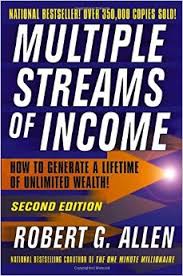
Multiple Streams Of Income book cover imageSome time ago a friend recommended a book. It sounded interesting; but based on the title I already had an idea of the message. So I didn’t get around to looking at it until recently. Before investing in a purchase I borrowed it from the local library. Mere minutes after I started skimming the content, its value became obvious. And a few minutes later, after a visit to Amazon, I had my own electronic version of a book that in my view holds some important wisdom. It was entitled Multiple Streams of Income: How to Generate a Lifetime of Unlimited Wealth by Robert G. Allen.
But, you may ask, why multiple streams? The following is directly from the book.

To answer that question, I’ll ask another: How many streams of income did it take in the 1950s for most families to survive – even prosper? One. Compare that to today, when very few families can survive on fewer than two streams of income. And even those won’t be enough in the future. It’s a volatile future, and you’d be wise to have multiple streams of income flowing into your life.

If you think about it, most people have a job working for someone else and that is their sole source of financial support. But who is in control of your income? Your employer could terminate you, change the nature of your job in ways you might not like, or perhaps go out of business. You are not in control of a vital element of your life. Is it any wonder that people feel stressed?

In the book, Allen offers principles, strategies and other guidance to managing and enhancing your wealth. One of the key principles is that of identifying the type of income stream. Is it linear or non-linear? His position is that only non-linear streams should be considered moving forward.

Let’s start by looking at linear income. There is a simple test. Ask the question ‘How many times do you get paid for an hour of work?’ If you answer ‘only once’ then your income is linear. You are trading time for money.

A unit of your time, whether measured in hours, weeks, months or a year, results in payment only once. After you have put in two hours, or two weeks, or whatever and you get paid for it, you will not get paid again for that time you expended. This is true whether you are a laborer or a lawyer or a dentist or a senior manager with an annual salary. The unit of time, pay period and rate may vary; but that does not change the underlying fact that you got paid only once for the effort spent. In the case of the dentist, you may get paid based on a procedure performed rather than a unit of time; but the principle holds. Once you have spent the time performing the procedure you will get paid only once for it.

Now let’s look at non-linear income. As you might guess, with a non-linear income stream you could get paid multiple times for a given set of effort expended. An example might illustrate this. Consider a famous author like John Grisham. He may have spent hundreds and hundreds of hours writing one of his best sellers. While he is working on the book he is getting paid zero dollars. But after it’s published, he gets paid every time one of his books gets sold. He gets paid over and over again without having to expend any further effort. In the publishing and entertainment industry this is called royalty income. In other areas, it is referred to as residual income.

When you are earning linear income, regardless of how well you may be paid, your income is capped by the number of hours you can expend each day to earn that income. If your effective rate per hour is very high you may appear to be rich, but you have limits just like everyone else with linear income.

What non-linear or residual income provides is leverage. Once you have done the effort to start the income flow you can then focus on something else, like perhaps generating more residual income. This represents a multiplying effect. Each unit of effort expended results in an indeterminate amount of income over time. And there is no inherent limit to the amount of income that can flow in. The result is time freedom.

Earning income is no longer directly tied to the ongoing effort you expend. If you chooses to take a few days off to spend with family, your residual income will continue to flow in.

Allen’s advice:

What percentage of your income is residual? If you’re smart, you’ll start shifting your income streams from linear to residual. This will give you the time freedom to do what you want when you want. And that starts with turning on at least one new residual stream every year.

Another of his principles that caught my attention was to select a stream of income that is “employee resistant.” He provides a solid rationale; but the essence of the advice is to try to find businesses that do not require employees. If you need help, outsource. To me this translated into home-based businesses where your office or base of operations can be anywhere. You don’t want to be tied to an office building, a storefront, a factory or a warehouse with staff to be managed.

I won’t try to talk about the 10 different income streams he identified. Nor will I attempt to summarize all of the solid strategies he outlined. Suffice it to say that I found value in the material and I haven’t yet read it from cover to cover.

I commend it to you for your consideration.


Allen, Robert G. Multiple Streams of Income: How to Generate a Lifetime of Unlimited Wealth. Hoboken, NJ: John Wiley & Sons, Inc. 2004

# business #wealth #entrepreneur

The Body’s Miracle Molecule

image of glutathione molecule structureEvery living cell in your body has this miracle molecule. As with oxygen, water and fuel (food), if this molecule is absent from a cell the cell will die. If it is not at an optimum level the cell will struggle to do its work. This molecule is made by your body and every cell in your body needs it.

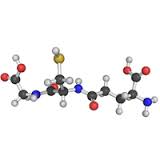
This miracle molecule is called glutathione. Glutathione is a tripeptide composed of three amino acids – glutamic acid, cysteine, and glycine. The cysteine amino acid contains a sulphur group which is responsible for many of the beneficial chemical properties of the whole glutathione protein.

The U.S. government website PubMed tracks scientific and medical studies globally. If you go to www.pubmed.gov and search for studies on Vitamin_C you will find about 55,000 articles; for Vitamin_E you will find about 38,000; but if you look for studies involving glutathione you will find about 124,000. And the rate at which research studies involving glutathione are added to that total far exceeds the corresponding rate for other antioxidants. This indicates a high level of glutathione-related research activity in the medical community worldwide.

The Glutathione molecule was discovered over 120 years ago. Referred to as a guardian molecule, glutathione is:

  • the Master Anti-Oxidant in each cell (removes free radicals)
  • the Master Anti-Inflammatory in each cell
  • the Master Detoxifier in each cell
  • necessary for the production of energy (ATP) by each cell

In terms of energy production, if the mitochondria detects insufficient glutathione, energy production will slow down to prevent the cell from killing itself by using up all the available glutathione.

Abundant glutathione:

  • increases energy
  • slows the ageing process (by protecting DNA from damage)
  • aids muscle and joint recovery
  • strengthens immune system
  • aids cell detoxification
  • fights cellular inflammation
  • robustly supports liver function
  • improves mental focus and clarity
  • improves quality of sleep
  • reduces the effects of stress
  • supports peak athletic performance
  • improves the health and look of skin

Glutathione is diminished by:

  • ageing
  • stress
  • inflammation
  • sun exposure
  • athletic activity
  • sleep deprivation
  • environmental toxins
  • acetaminophen (Tylenol)

These various things diminish glutathione. The cells produce glutathione. If the demand for glutathione exceeds the production levels, the cells in your body will function less and less efficiently, leading to a variety of undesirable effects (e.g., disease).

In terms of ageing, from about age 20 the level of glutathione will go down about one percent or so per year.

Extreme overdoses of Tylenol can kill you and it does so by consuming the glutathione from your liver as the liver tries to dispose of the acetaminophen. This is because the liver is the main detoxifier of the body and it uses glutathione in that process. If all of the glutathione in the liver is used to deal with the Tylenol overdose, the liver will die – and if the liver dies the body will die.

Low glutathione levels have been linked to over 70 diseases and conditions.

Cysteine is an amino acid. Production of glutathione is limited by the level of delivery of intact cysteine (cysteine that has an intact sulphur group) into the cell. This is because there typically is not sufficient cysteine in your diet.

There are a number of ways that can be used to impact glutathione levels:

  • Glutathione taken orally: Glutathione when take orally is simply broken down by the digestive system and rarely survives to render any benefit. The sulphydryl group on the cysteine component is very delicate and it is this that is destroyed by digestion. Generally, taking glutathione capsules is a waste of money. It may increase glutathione levels by 3%.
  • Glutathione taken intravenously: This does deliver glutathione into the system. It is short acting since it does not promote new generation of glutathione and is an expensive medical treatment. In addition, the glutathione molecule is too large to go through the cell wall. So it does not get inside the cell where it is needed to do its job.
  • Large doses of whey protein taken orally: Whey protein does contain cysteine and some of that has the sulphydryl group. Some of this will get through the digestive process. This requires people to take a huge amount to realize benefit. If a person is prepared to do this they might see an increase of 15-20% in glutathione levels.
  • l-cysteine taken orally: Cysteine by itself (exposed sulphydryl group) will typically not survive the trip through the digestive system. Effective treatment would require large doses.

There are a couple of nutritional supplements that deliver intact cysteine to the cells by protecting the delicate cysteine molecule through the digestive system and the bloodstream. These are probably the most effective ways to help the body increase its intracellular glutathione levels naturally.

Look again at the list of what happens when you have abundant levels of glutathione in the cells of your body.

  • increases energy
  • slows the ageing process (by protecting DNA from damage)
  • aids muscle and joint recovery
  • strengthens immune system
  • aids cell detoxification
  • fights cellular inflammation
  • robustly supports liver function
  • improves mental focus and clarity
  • improves quality of sleep
  • reduces the effects of stress
  • supports peak athletic performance
  • improves the health and look of skin

If all the cells of your body are healthy, you will be healthy.  When you think about it, it’s no wonder that glutathione is referred to as the body’s miracle molecule.

#health #science #glutathione


Resources:  goglutathione.com

Those Jobs Are Not Coming Back

image of job loss newspaper headlinesI have been in the information systems business for well over four decades. In the 1970s and 80s there was this niggling question I kept returning to. We were justifying expensive systems projects on the basis of improved efficiency. Each project promised to deliver reduced cost because the system would make the business more efficient. Efficiency usually meant the computer would be doing work that had been done by people. The niggling question: what is the logical consequence of that? Would people lose their jobs?

To reassure the workers we said that nobody would be laid off because there was more work to be done than we had people for. So the staff would simply be doing different things. And as the company grew we might not need to hire quite so many as we would have without the system; but the current staff were assured. That was perhaps a bit disingenuous but it was accepted.

Well time passed. Economic downturns occurred. Some people lost their jobs. And when the economy started to pick up, not so many were rehired. Overall unemployment rates started to climb; to the point that governments started to change who got counted as “unemployed.” Why? Because if you counted everybody that fit the original definition it would make those in power look bad, especially if they had campaigned on promises of reducing unemployment.

About 150 years ago, society faced a similar upheaval. Few people recognized it at the time. It was called the Industrial Revolution – the shift from the Agricultural Age to the Industrial Age. At the start of this upheaval about 90% of the population worked in agriculture. Today, because of the dramatic efficiencies of mechanization, it’s less than 1% and farming jobs are gone – for good.

We are well into the Information Age. You can see the same pattern repeating itself. Three decades ago when I wanted to travel I would talk with my travel agent who would book my flights and hotel rooms. Now I can do that online and most of the travel agents are gone. Remember customer service call centers where you would talk with people? Now you talk to a machine or go to a support web site and most of the customer service jobs are gone.

A few years ago my niece graduated from college. She still has not been able to find a job in her field – and apparently the same is true for many members of her graduating class. These are smart and capable people. What are they doing? The fortunate ones get the opportunity to say, hundreds of times a day, “Would you like fries with that?” But guess what? Fast food outlets are starting to install robotic systems to replace workers. Very soon it will be the computer asking “Would you like fries with that?”

These jobs are not coming back. A post secondary education is no longer a guaranty of a job.

If you don’t want to get caught in this trap, at some point you need to start thinking about something different from the old established patterns. Working for someone and trading time for money (so much per hour, week or year) puts your employer in control of your life.

My recommendation is that you start to think about running your own business. As long as you are able to deliver a product or service that people deem to be of value you will always have income. And you are in control.

Traditional businesses can take quite a bit of up-front investment. So that might not be the best approach for everyone. Possibly a more appropriate option to consider is one of the many home-based businesses. You don’t have the expense of acquiring office space. And in most cases you can start on a part time basis, at least until you are earning enough from your business that you are no longer dependent on employment income. I would be happy to chat with anyone who would like to explore that option. I have been running my businesses out of my home for about three decades.

“The way to get started is to quit talking and begin doing.” – Walt Disney, co-founder of the Walt Disney Company.

#economy #jobs #homebusiness